Cerys Baker on Critic in the Corner
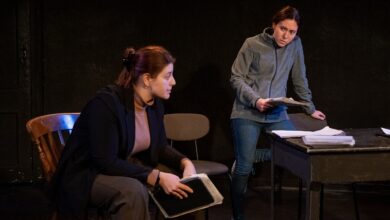
When aging movie star Lorenzo Ford faces a public relations crisis over past misdeeds, the fallout exposes the stark double standards of celebrity culture, power, and accountability. Written and directed by Cerys Baker, Critic in the Corner dives headfirst into the friction between curated public image and private conduct, brought to a head by an uncompromising reviewer who sparks a viral reckoning.
Ahead of its premiere at the Lambeth Fringe at The Bread & Roses Theatre on 15 and 16 October, we caught up with Cerys to discuss turning systemic frustration into compelling theatre, balancing the dual roles of playwright and director, and what it feels like to step on the other side of the reviewer’s desk.
Critic in the Corner explores the fallout when aging movie star Lorenzo Ford faces a public relations crisis. What inspired you to delve into the world of celebrity culture, cancel culture, and public accountability?
I have been feeling frustrated with how this world operates in general for many years. This play zones in on my anger at the lack of consequences that people in power face for their actions. There are many examples of men in the entertainment industry, like Lorenzo, who have allegations against them and seem to be able to recover their careers within a couple of years. Compare this to how women in the public eye are treated and it’s a different story completely.
Cancel culture itself can be brutal and is a tricky subject to tackle, but I think we are seeing a shift in how celebrities are being viewed. Its complex because celebrities are are held to higher standards. They of course have influence and could use that for good (and lots do) but the internet seems to forget that they are people with flaws and PR teams behind them that curate an image. Take those rose-coloured glasses off and its just a very pretty human being who might not think the same things as you do.
Lorenzo’s image has been heavily curated for many years whilst he has acted monstrously behind closed doors. The allegations that come out are from brave women who have helped to shatter that image. As the wealth disparity between normal working people and the insanely rich becomes even clearer, I think we are more receptive than ever to criticism of them. It used to be that critics were of a certain ilk with prestigious journalistic careers. Now, anyone can share their opinions and be a critic from the comfort of their homes and can add to public discourse on a scale we’ve not experienced before. Josephine represents this change in our culture. She manages to create a viral moment simply by sharing her review and therefore capitalises on the PR crisis Lorenzo faces due to his sexual crimes. There’s nowhere to hide now as a celebrity, unless you strive to keep your private life private – I find that fascinating to explore as a writer.
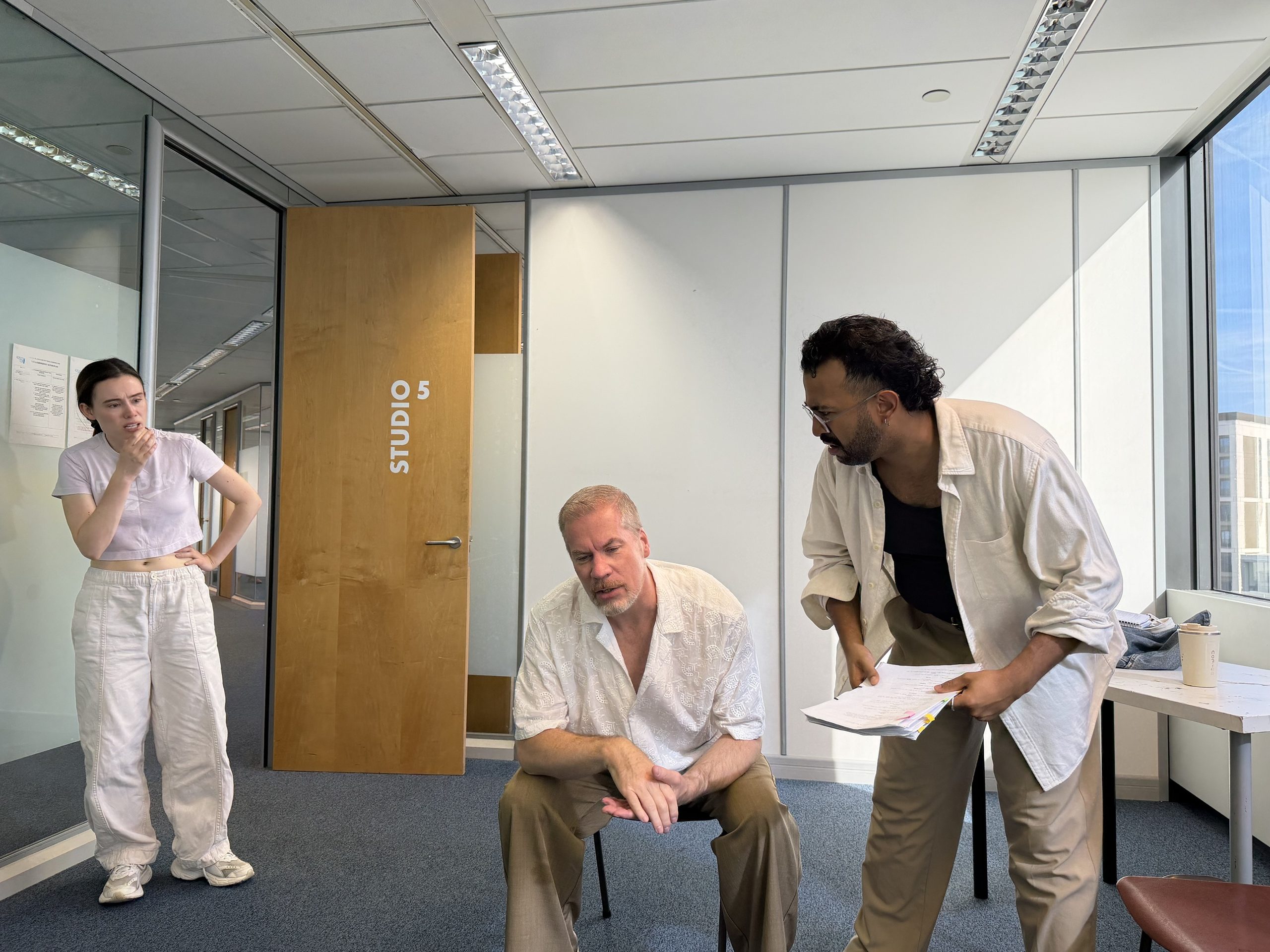
Every play has a journey before it meets its audience. Could you tell us about the writing process behind Critic in the Corner; how long has this story been brewing, and how has it evolved leading up to its Lambeth Fringe premiere?
It’s been a surprisingly speedy process; it communicates thoughts and frustrations I have had for years now which I desperately needed to pour into my art somehow. I’ve had a lot of fun with it and although it has a heavy subject matter, it is quite funny (or at least I think it is). My earliest ideas formed around November 2025. I was writing something else, but what was to be Critic in the Corner just wouldn’t leave me alone. The Epstein files release was dominating the news at the time and was absolutely a factor in inspiring this play. It ignited something within me, I was angry and fed up- I had to get this story out.
I started by writing snippets of scenes and random lines in my notes app on my phone. By February, I adopted a more formal writing process and within a few months’ time, I had a first draft. After completing a few more, I then took a break and let it sit for a bit. In-between then and now its been drafted and edited another handful of times. The characters Josephine and Lorenzo were there from day one. Lorenzo was weirdly quite easy to write. He’s deplorable and so far from who I am that I could really go for it, although, I was cringing at my own words often. I’ve always seen Josephine as a much cooler and braver version of myself, so I had to explore her a little more to figure out what makes her tick. Brian emerged later in the process; he balances the play out seeing as Josephine and Lorenzo’s interactions are so intense.
Bringing in our talented cast and watching it come to life has been surreal and beautiful! As this is the first play I’ve put out into the world, it’s been a learning curve, and incredibly rewarding to look back on how this story and its characters have changed along the way.
Fringe festivals are fantastic test grounds for new writing. What made the Lambeth Fringe and The Bread & Roses Theatre the ideal place for you to debut your work?
I wanted this show to debut at a London based Fringe festival that I hadn’t done before, one that would be the right place to test this show out and has strong core values. Lambeth Fringe fit the bill on all counts. It has a history of championing both early career artists and boundary pushing work, whilst most importantly offering a platform for underrepresented artists. I produced a show at Bread & Roses in 2024 and thoroughly enjoyed working with them. As it’s the home theatre for the festival, it just felt like the perfect starting point for Critic in the Corner. The hero of this story is a strong queer woman who does not back down no matter what is thrown at her. and I think this will resonate with Lambeth Fringe audiences.
Relationships in high-stakes, crisis-driven environments tend to pull back the curtain on human nature. What key dynamics between Lorenzo and the figures in his orbit are you most excited for audiences to see unfold, and what they might be talking about on the way home?
Its definitely an intense time for all of these characters. They all go through a life-changing experience throughout this play, and none of their lives will be the same after the story ends. When writing the show, I wanted Lorenzo to equally repel and draw the audience in. He’s magnetic in a way and the line between charisma and creepiness had to be thin when it comes to him. Some of the best, most hilarious lines in the show are Lorenzo’s but that’s mostly because he isn’t on planet earth. He says the most out of touch, outlandish things and I found this exaggerated Hollywood stereotype interesting to unpack. He’s a caricature in lots of ways but has this eery realistic edge – I can imagine that there is someone out there like him.
Some Hollywood stars have an unexplainable allure to them, but I found myself asking when writing: is this just the projection of extreme confidence and great PR? I don’t have the answer, but I can take an educated guess. So, to come back to the question, I am looking forward to seeing if I pulled this off with Lorenzo. I think the post-show conversations will probably begin with commentary on some of the jokes and twists but will ultimately come back to the core messages at the heart of this show. I absolutely adore Josephine and have a feeling audiences will love her too.
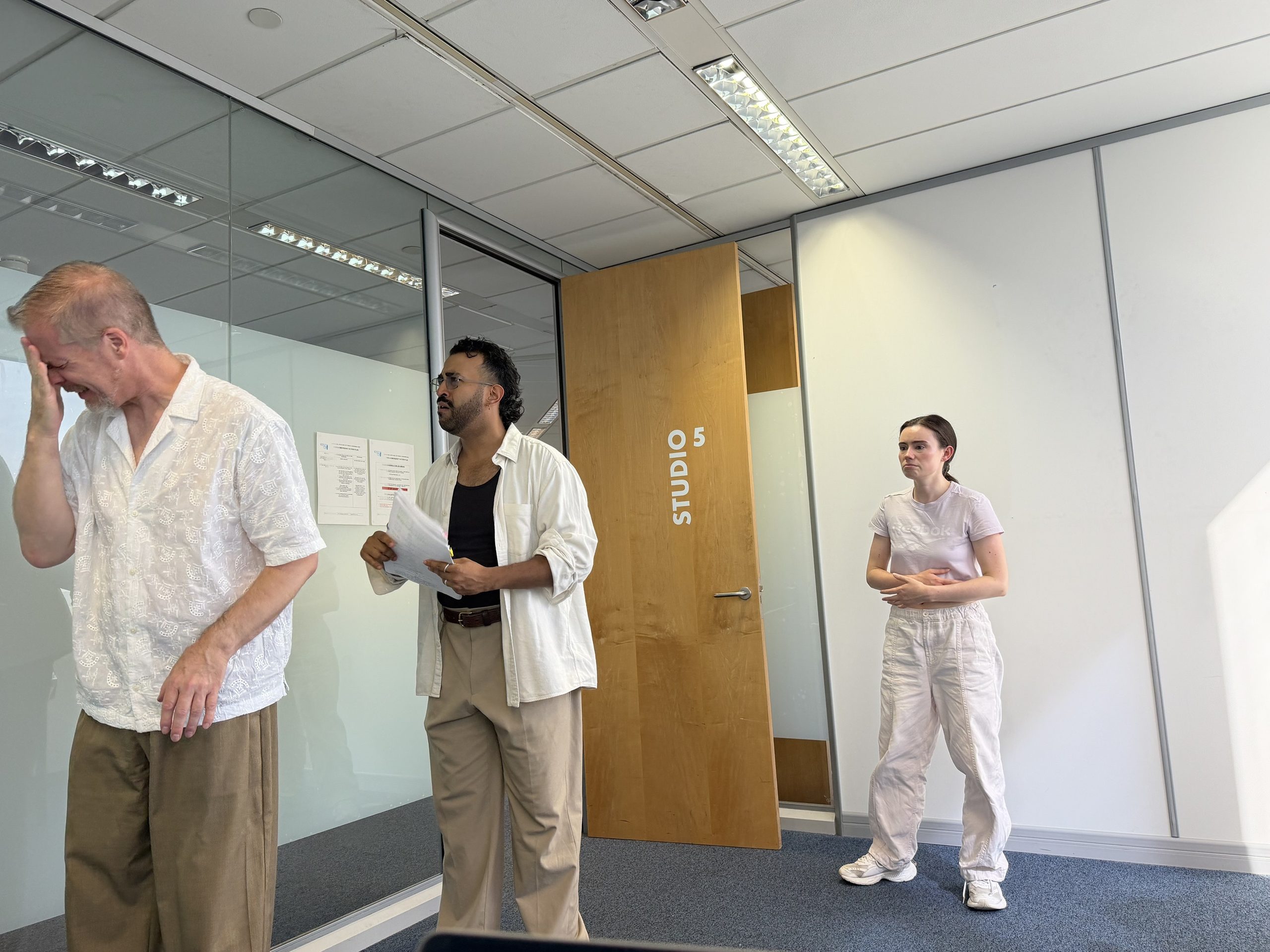
Wearing both the writer and director hats can be both liberating and challenging. How do you separate “Cerys the Playwright” from “Cerys the Director” in the rehearsal room; do you ever find yourself re-writing scenes on the fly during rehearsals?
I’ve really learnt as I have gone along on this show. I’m sure in my abilities as a director but being a playwright is still so new to me. It’s meant that I need to be self-aware so that both roles don’t blur into one and I can still do my job as director effectively. I’ve found that wearing both hats has helped to inform my directorial choices but I’m not being too precious about stage directions or a way I heard a line said in my head when writing- I’ve taken an intentional step back and am letting the magic happen in the rehearsal room as I usually would. Something I’ve found enlightening during this journey has been discovering new angles of my own work whilst we’ve been exploring the text with our cast. I’ve loved seeing the script from a new perspective. I guess that means I have managed to separate playwright and director successfully enough!
I’ve been working with my wonderful AD, Autumn Chapman, who has been my second pair of eyes. I knew from very early on that in taking on both roles that I would need the right person to work alongside me. Having her onboard has made the challenging bits much easier to navigate. I have absolutely made edits throughout the rehearsal process but try not to mid-rehearsal, if I can help it! Autumn and I have been conscious to make the implementation of script changes as smooth as possible for everyone involved.
We should probably mention you also review for us when you are not away writing a play. How does it feel to know this time you will be the one holding your breath to see what reviewers think of your work? And do you feel it might change how you review other people’s work in the future now you’ve been at the receiving end?
The tables have turned! I think my experience as a reviewer with ET has weirdly helped me to feel calm about having my show reviewed. I’ve felt more relaxed than I did for the last show I worked on but then again, the nerves have started creeping as we get closer to opening night. When I joined ET, I’d already had shows reviewed before, so I always approach write ups with empathy because it really is a labour of love. I think it comes down to the fact that I understand the method behind evaluating a show. A good reviewer looks at the full picture and asks what works and what doesn’t, before diving into detail on those deductions. It’s a matter of interpretation, so…what will be will be. I’m the first to criticise myself as most writers are, so I’m just excited to see what people think, whether the opinion is good, bad or ugly. I hope audiences connect with it on some level. The reality of putting anything you make out into the world is that it then belongs to everyone who consumes it. You can’t control what people get and don’t get.
Our thanks to Cerys for her time. Critic in the Corner will play at The Bread and Roses Theatre as part of Lambeth Fringe on Thursday 15 and Friday 16 October.