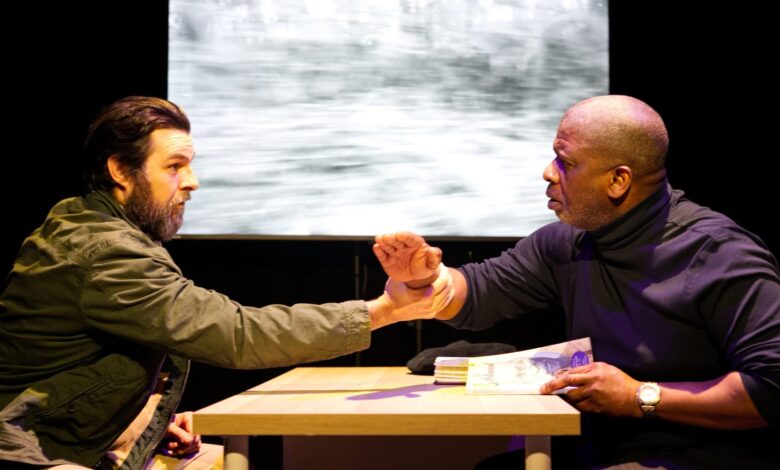
Paul Herzberg sheds light on The Moth at Finborough Theatre
Playwright Paul Herzberg grew up in South Africa but moved to the UK fifty years ago. However, his experience of apartheid and the social division it generates still resonates in his everyday life to this day. In The Moth, a psychological thriller coming soon to the Finborough Theatre, he uses this topic as a departure point to explore how racism continues to shape our world, the limits of forgiveness, and who owns their story. We were keen to find out more so asked Paul in for a chat.
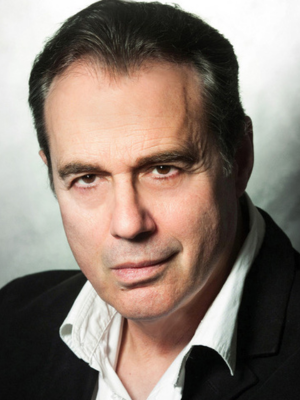
Hi Paul. Thanks so much for stopping by to tell us about The Moth. Firstly, what can you share about the genesis and plot of the play?
The play was developed from a short monologue commissioned by Elysium Theatre Company, based on an anecdote told to me by an Angolan war veteran. That led to 30,000 views on the internet, many film festivals and an award in New York. In the play, a chance meeting on a train between John, a Black British journalist, and Marius, a white South African ex-soldier, triggers an escalating chain of events that reshapes their lives over the next thirty years, as John withholds forgiveness and Marius becomes increasingly obsessed with seeking it. At the heart of the story is Marius’s confession of a terrible event in the Angolan war that haunts him. Finally, before the nation’s television cameras, they face each other to lay bare their conflicting truths. One of the themes I explore is the notion of forgiveness: who has the right to offer it; to demand it — and its place in human progress.
You spent your early life in South Africa; how has that experience fed into your writing?
My parents were both anti-apartheid activists. That made me deeply conscious from an early age, of the iniquities governing everyday life in South Africa: the absurdity and cruelty of a system with racism enshrined in its constitution. While I was a young actor training at the University of Cape Town, the country was going through upheaval. I became involved in its first multi-racial theatre, The Space, which focused on the kind of bold theatre tackling the very issues forcing millions of our citizens to endure ongoing oppression. Because those issues were inescapable in everyday life, to ignore them, seemed incomprehensible. Just after I graduated, the Angolan Border War entered its most intense phase, and I was redrafted. That led to my decision to leave the country. Because of my youth under the yoke of apartheid, my inclination as a writer is to turn towards challenging subjects.
Tell us about your actors and what they each bring to the performance.
We have been blessed with two remarkable actors. Other than the sheer talent they both bring to their roles they are passionately committed to the play. I have seen many actors struggle to crack an Afrikaans accent on stage — not only does Micky Cochrane do it convincingly, he has the uncanny knack of conveying menace and vulnerability at the same time, which is exactly the quality demanded by the character of Marius Muller. His incredible performance led to him winning a North-East Culture Award. Faz Singhateh as John Josana, similarly, captures the character just as I imagined and offers more: a man of startling intellect, uncompromising views and utterly fearless when it comes to defending them. But beneath that, someone who has been damaged by a traumatic youth as the son of an exiled activist from South Africa forced to be constantly on the move.
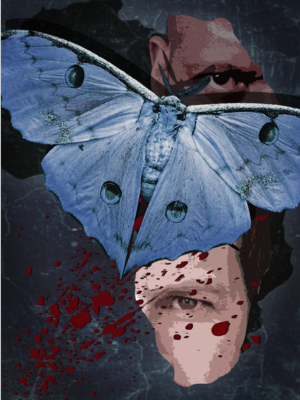
The play was originally a ten minute video monologue. What impact does staging it live as a ‘psychological thriller’ have on the storytelling?
The power of the original monologue was one performer, before a static camera, telling his story to the viewing audience. We had the excellent Victor Power in the role of John. He tells us of his encounter on a train with a white ex-soldier and the terrible confession he made. John passes that on to us. By adapting it for the stage, and bringing the white soldier into the action, it allowed me to explore more themes and fully develop the relationship between the two men. They become locked in an obsessive, conflicting discourse on forgiveness, racism, confession and identity over thirty years. In a final attempt to resolve the issues that have caused this ongoing conflict, John, now a highly successful television host on a show called Confessional, allows Marius to share the platform with him as they take each other on before the nation.
What’s been your experience of working with director Jake Murray?
We have collaborated over many years. When he was a boy, I was acting at The Royal Exchange, established by his late dad, Braham Murray. Years later, Jake, now a successful director himself, championed an earlier play of mine, The Dead Wait, staged at the Exchange in 2002, to great success. Jake approached me in 2019 when he was looking for a piece as part of the “Covid 19 Monologues” designed to keep the spirit of live theatre alive during lockdown. Such was the success of this venture, Jake acted as dramaturg for The Moth’s adaptation for the stage. His is a truly formidable intellect, with a deep understanding of the mechanics of playwriting and theatre, and instinctive sympathy for the kind of subjects I like to tackle. He has that dual gift of great directors: a natural when it comes to working with actors and a profound understanding of text.
The stage version of The Moth premieres in London at the fabulous Finborough Theatre, but it’s already toured the north of England to great acclaim. What have the responses been like so far?
In a word: remarkable. Just to give you one example, we had a very famous French footballer who came to see the show and who had never been to a play before. He said that the youth John Josana described in The Moth, was uncannily similar to his own experiences growing up as young man in Paris and he was very taken by the production. From working men’s clubs to major northern establishments like The Lowry, audience engagement was potent and very moving. People were eager to talk afterwards, reflected in the highly stimulating post-show discussions we had. The critical response was overwhelmingly good. The sense we got was that people were craving the chance to discuss, in depth, the issues the play is attempting to explore.
And finally, what’s the future for The Moth after this run?
The play has been published by Bloomsbury and we are very ambitious for its future. There has already been contact with a colleague in America. In short, we are hoping for this production to have an even wider audience after The Finborough, and for the script to lead to further productions internationally.
Thanks very much to Paul for shedding light on this fascinating production. The Moth runs at Finborough Theatre from Tuesday 27 October to Saturday 21 November.