Interview: Peter Pan, Polka Theatre
Celeste Denyer and Aziza Brown on working class representation

It’s a (w)rap on underrepresentation, in this high energy hip hop Christmas show
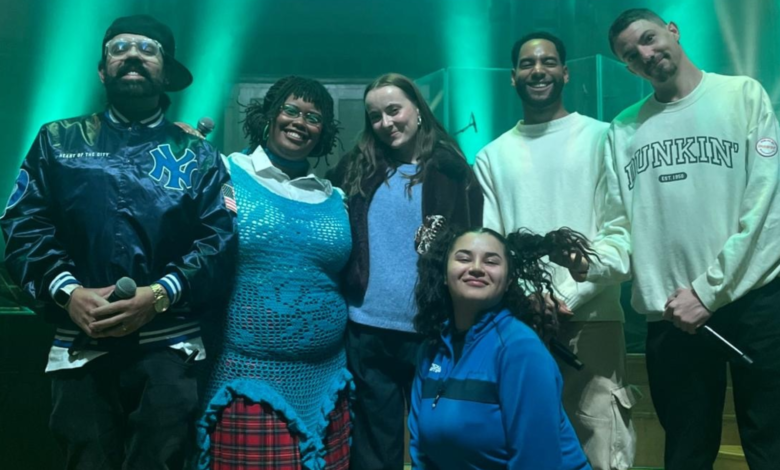
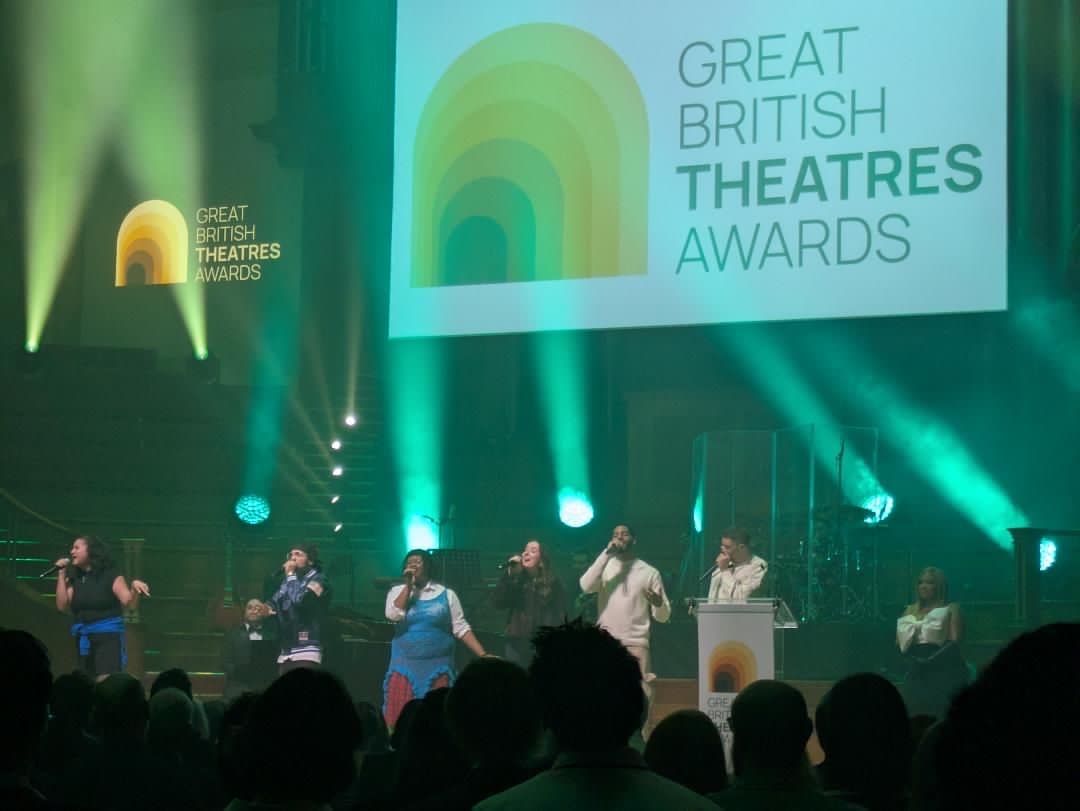
Recently, the Theatres Trust hosted a hugely glamorous event at Westminster Central Hall to celebrate Great British Theatres and Polka Theatre attended, winning a Great Community Connection award. A venue steeped in history, Grade II-listed and gloriously elaborate, this is also a distinctly rarefied cultural space that your average working class person wouldn’t necessarily feel confident strolling into uninvited. As part of the evening, however, the team from Polka’s Christmas show, Peter Pan, was asked to perform, delivering a beatboxing, hip hop highlight that had the crowd wowed. With fewer than 10% of creatives in the theatre industry being from working class backgrounds, it was a refreshing opportunity for them to stage their street skills with authenticity and really have their cultural worth validated.
Underrepresented creatives being celebrated together with underrepresented Theatre for Young Audiences on a national platform like this suggests the real possibility of change happening. We were delighted, therefore, to talk to cast members Celeste Denyer and Aziza Brown about how they hooked their roles in Peter Pan, their backgrounds and how working class stories can add richness to an evolving theatre industry.
Hello both. Thanks very much for stopping by to chat today. So, how did it feel being on stage at the fabulous Westminster Central Hall next to Marisha Wallace as MC? Did you ever think you could do that?
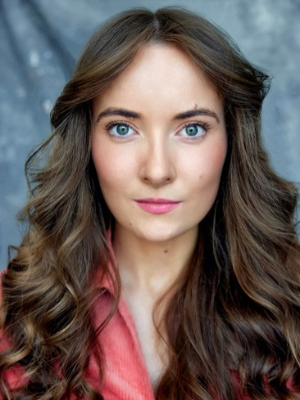
Celeste: It was…absolutely epic! If you’d have told me a few years ago that I was going to end up performing on that stage, in front of so many incredible industry professionals, I’m not sure I would have believed it! I have spent a lot of time thinking I’d never be up to the same level as others and that I don’t quite fit in to the musical theatre world – but to be sharing the same stage with a leading MT figure like Marisha Wallace was a dream come true!
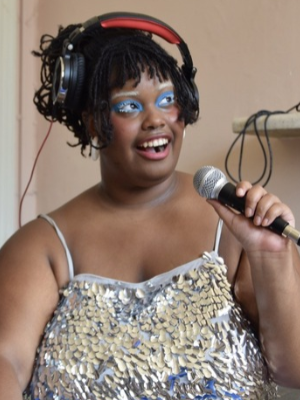
Aziza: To be completely honest, with theatre tickets being as expensive as they are, I had never heard of Marisha Wallace. We were all sharing a dressing room backstage and I saw her hair and makeup team and thought “Woah, that’s a big shot there”. Celeste told me who she is and had just thought I had a tremendous poker face up until that point!! I was absolutely blown away when she sang to close out the event, what a voice!
This Christmas season you’re in Polka Theatre’s Peter Pan. What can you tell us about the show and your roles in it?
C: This Peter Pan is like no other. Firstly, all music in the show is created live via beatboxing, rapping and vocals. We have two UK champion beatboxers in the cast, ABH (Alex Hackett) and Apollo (Alex Hardie), and the sounds they make are mind-blowing! A lot of the music, composed by Conrad Murray, is hip hop, with beautiful ballads mixed in, and this exciting new score makes for a refreshingly unique take on the tale. The songs tell the story, but they are also incredible in their own right!
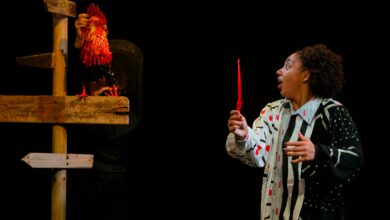
Wendy (played by Nadine Rose Johnson) has a bigger voice: she doesn’t just dream about Neverland, she raps about it, and is confident and opinionated. I play Peter Pan and see how this Wendy challenges him on a deeper level, making him confront his fear of growing up. There’s also plenty of multi-roling in the show, with Khai Shaw playing four different characters
A: I play Tink, and that is so cool to me! Tinkerbell is normally an ingenue type, you know? Thin, blonde, etc. When I saw the opening line from Tink was “Wagwarn my fairies!” I was so excited! A fairy that speaks MLE? Get in! The live, acapella music makes the show feel so alive! Having to lock in and pitch each song to each other is a skill we have developed over years of collaboration and it’s amazing working with other award-winning beatboxers and performers.
Can you tell us a bit about your backgrounds and how you got involved in theatre?
C: I grew up in Windsor in a council house: growing up in social housing in an extremely middle class town is a strange dichotomy. I felt constantly embarrassed about my lack of money and would never be open about it for fear of judgement. Then, when people hear you are from Windsor and have an RP accent, it is often assumed you are rich. How do you tell them you are actually struggling for money and always have – that you are in debt and worried about paying for basics? Would they believe you anyway? I learnt how to fit in with those who are financially secure and extremely confident; I gained the skill of covering up from a young age. In a way I was acting throughout my childhood without realising and it became second nature – so when I was introduced to the world of drama and theatre, it was comfortable and I felt at home.
A: I grew up with food insecurity in a council estate. As a kid I got involved with free projects like English National Opera’s summer programme, Brixton Youth Theatre, Inner Voices choir, which taught me to sight read music. I was then nominated for a scholarship at the summer chorister course at Eton.
I was clever enough to be the first person in my family to go to uni, and instead I wanted to do what, follow my dreams? Selfish! Instead of applying for a performing arts college I just took drama at normal sixth form and then started a uni course. I later passed an open audition for Frantic Assembly’s ignition project which led to my being put forward for a LAMDA audition. I got the scholarship and dropped out of uni. On the course there was a module run by Conrad, who asked me to audition for Frankenstein: How to Make a Monster, and we’ve had a working relationship since!
In your experience, how much more difficult is it for someone from a less economically secure background to get a foothold in the arts, and why is it important for working class stories and creatives to be given visibility on stage?
C: If you are from a working class background there are endless barriers to entering the arts. With zero financial support your time and mental capacity is dominated by worrying about affording life, leaving little space left for what you are working so hard to do. When I was offered the foundation course at Mountview the fee was £8,000. I worked double shifts at Byron Burgers before it started and managed to save £2,000 but I hadn’t saved enough, so they let me pay in instalments. This meant that during the foundation I would do a 1.5-2 hour commute into London from where I live, do the day of training, commute home, and work in a bar evenings and weekends.
So much of my energy went into worrying about how to pay the course off, I was sure I would get kicked out. I was completely exhausted, anxious and kept getting ill. At times it felt impossible to enjoy the very course I was working so hard to pay and it was a really lonely experience. I am still paying that course off now. The working class are systemically pushed out of the arts because it is not set up for people with financial insecurity.
When each acting contract ends you must start from scratch to build up another job and income. As a working class performer, the temptation to leave the industry can become overwhelming when there’s no support to stay. It can feel like the arts are only for the middle classes.
If working class people are underrepresented it is unlikely that authentic working class stories will be told on stage. Like me, many of the cast in Peter Pan grew up in social housing, so it is pretty cool that our cast is full of people with a different experience to the majority. If we can normalise and set up organisations that facilitate this (like Conrad has with Beatbox Academy, completely free training at BAC) we are contributing to the notion that the arts is for everyone.
A: In my experience, every single role I’ve secured has come from someone championing me. Be it informing me of an open audition, selecting me for a scholarship, putting my name forward even when I missed an email! I am lucky to be born in London with so many free opportunities to engage with the arts. Without these, I would’ve been unable to develop the skills necessary to access the arts. Grassroots projects for underprivileged kids are a vital component in getting more working class people into the system.
How do you feel reimagining a classic tale like Peter Pan in a hip hop format might enlighten and engage audiences from a variety of backgrounds, whether or not they’re familiar with the style?
C: This Peter Pan reinvents the traditional: we are rapping, beatboxing – we are the band and our voices are the instruments! In Liam Bunster’s awesome design Pan isn’t wearing green tights and a tunic, he’s wearing big orange trousers and work boots! The language and vocabulary is what you’d hear in London today; words and slang people will recognise and resonate with.
The cast are all unique in their own right and many are from backgrounds you don’t often find in the arts. Aziza grew up on a council estate, as did Nadine. Catriona (Malbaški) was in care and statistically all odds were against her. But she is there on that stage all the same.
Catriona also co-facilitates the ‘Free Falling’ group at Polka Theatre, a group for vulnerable young people who have similarly grown up under challenging circumstances. She is the most incredible role model and those kids get to see that it is possible for them, too, to one day be on that stage. And the music really is the heart and soul of this show. I genuinely believe that kids from all walks of life will have something they can relate to in it.
A: Peter Pan is a classic tale that despite its image as a potentially twee, cutesy story, has themes of existentialism and fear of death: Hook, followed by a memento mori crocodile counting his days; Pan, in perpetual boyhood refusing to acknowledge time’s passing; Wendy, afraid of leaving her childhood behind and using stories as escapism. JM Barrie actually originally conceived the tale for adults! These themes are truly universal across class barriers as they’re vital to the human condition.
Conrad’s writing excels at not condescending to children; complex rap flows and hardcore hip hop beats, alongside audience interaction and silly jokes! Rap is a fantastic narrative structure, and the backing music being done live gives a kinetic, constantly changing feel. After our previews, we could hear the children singing the Lost Boys’ crow on their way out, so it’s definitely resonating!
You have clearly proved yourself by your association with Polka, one of the UK’s top theatres for children, and appearing at the Great British Theatres Awards. Is imposter syndrome an issue for you?
C: Massively! I have always struggled with it. I’ve got a big nasty voice full of self-doubt telling me I’m not good enough – and I know I am not alone in this! It’s perhaps to be expected in an industry where working class creatives make up under 10% of the total. Money gives you confidence, extra training and extra contacts.
I try to remember I am in the room for a reason, and to trust myself – which is much easier said than done. I put extra focus on the character I am playing to leave less room for those thoughts and Peter Pan is an excellent role to play for this reason – I am sure he has never felt imposter syndrome!.
A: I personally don’t have imposter syndrome, and I’d actually say I think framing it as an individual complex can detract from the systemic and socioeconomic barriers in place for working class actors.
On my courses, I have been tokenised and acknowledged in an uncomfortable, pedestalised way. When I was at LAMDA, it was often incredibly lonely and dehumanising, fighting against people’s preconceived notions. Despite these experiences, the skills I gained have been invaluable and I in no way blame the institutions as the syllabuses were fantastic. As a working actor now, I do have to codeswitch and it can be hard not being my authentic self, but it’s worth it to get my foot in the door and hold it open for working class people coming up behind me, just as Conrad has!
You’re at Polka until the end of January, but do you have an idea what the future holds after Peter Pan?
C: I am part of some potential new work that I am super excited about. I know for sure that my heart is with more work like Peter Pan that is new, unconventional and written for everyone.
A: After Peter Pan, I plan to dedicate time to working on a musical that I’m writing myself! It’s about business espionage with the Big Bad Wolf being a mega corp owner, huffing puffing and blowing down small businesses as he monopolises industries. The music takes references from UK garage, disco, 80s pop, 90s boybands and more! That and working retail to pay the bills whilst I develop it. I am also inviting agents to come and see me in Peter Pan so I can work towards my goal of doing theatre full time.
Thanks very much to Celeste and Aziza for sharing their inspirational stories with us. You can see them in Peter Pan, which is aimed at ages 5-12 years, at Polka Theatre from Saturday 14 November to Sunday 24 January.