A well-intentioned retelling of Euripides that promises a dialogue between past and present but delivers only parallels, offering little catharsis and even less hope.Rating
Ok
Walking into the empty, intimate studio at The Space to find six women in plain white, frozen in poses that hint at the terror to come, couple with a haunting drone that fills the room, sets expectations high. Sadly, The Trojan Women of Today doesn’t quite meet them.
The blurb promises Euripides “in direct dialogue with our time”. Perhaps it’s my fault, but I imagined something like a grieving mother whose son died in a modern conflict, meeting Hecuba and finding something that helps her to move forward. The costumes seemed to hint at this too: the women wear white dresses, while the only male actor, who plays the soldiers and heralds, wears black trousers and army fatigues.
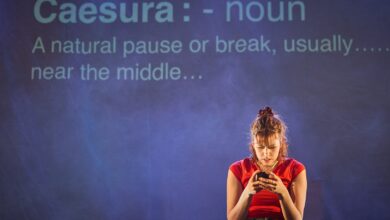
What unfolds is a fairly straightforward adaptation of the Greek text. Occasionally the action stops, a spotlight isolates one actress, and she delivers a testimony about recent war crimes in clinical, citation style: name, age, quote, source, year. When Hecuba mourns a child who will be killed, we pause for a Save the Children report about a boy killed because his father was wanted. The link is clear, but it is a parallel rather than a dialogue, and the interruptions break the momentum rather than deepen it.
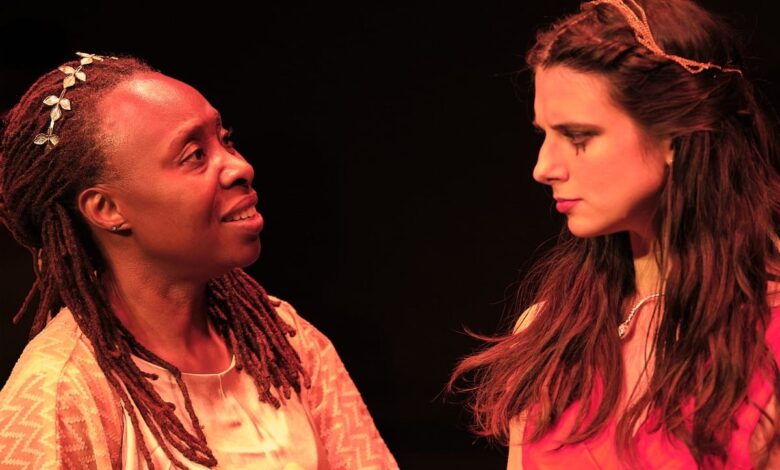
The acting is pretty solid, the space feels intimate, and the cast often reach the raw emotion the material demands. But there is a lot of sighing. When one woman is told her child will be killed, she seems more inconvenienced than devastated. The chorus is also underused, a couple of times they echo what is being said, lending urgency and power, but otherwise – in a very monologue-heavy script – most performers simply look around. Some lines stuck, such as “Fear without cause is a shameful thing”, and the stompy, raw musical number near the end lands well.
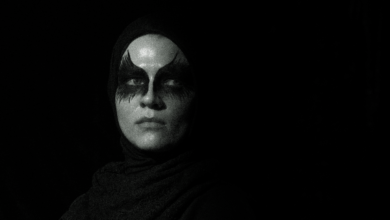
Technically speaking, the lighting needs work, with a couple of spotlight and lighting cues missed during the testimonies. The makeup, meant to suggest grime, reads under the harsh lights as heavy contouring. The sound design, however, is good throughout and compliments the play well.
The play offers an unflinching look at sexual violence and the cruelty of ancient and modern warfare. Such looks are needed, but they are not enough on their own. It ends with the women walking into the fire, dying with their city and their husbands. Is that the takeaway or the solution?
There is no catharsis, just a lot of bleakness, which makes it feel exhausting emotionally. By revealing the full horror of wartime atrocity within the first fifteen minutes through clinical reports, it leaves itself nowhere to go, nowhere to escalate to.
There is also a question of positionality. Despite citing very recent sources, up to 2025, the show never mentions Gaza, or even Ukraine, which makes sexual violence in war feel like something that happens far away, committed by “our enemies”. I’m sure that is unintentional, but the production is linked to a fundraiser for Save the Children, whose main emergencies include Gaza.
This is an important theme precisely because the situation can change. There have been attempts, there have been victories, there is life after tragedy and a path forward. The show evidences the same horrors that recur, but not the wisdom, will, nor effort that have tried to stop them, and that is the dialogue between past and present I wanted to see.
Original text by Euripides
Directed and produced by Georgina Dimopoulou
Text coach and performer: Giulia Rose
Artistic consultant: Sanjeeb Kumar Dey
Voice coach and performer: Funké Raji
The Trojan Women Today has completed its run at The Space