Interview: Talking trauma with teens through immersive theatre
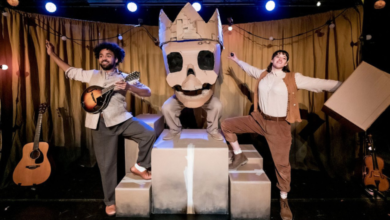
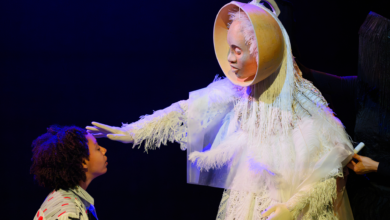
Bones in the Desert, Half Moon Theatre

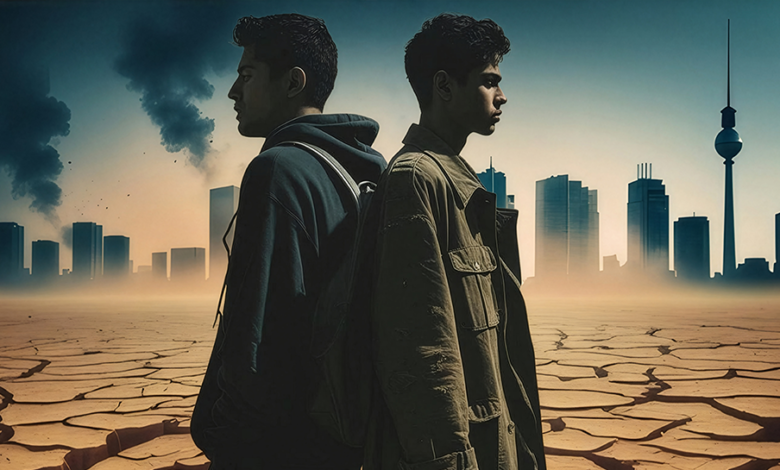
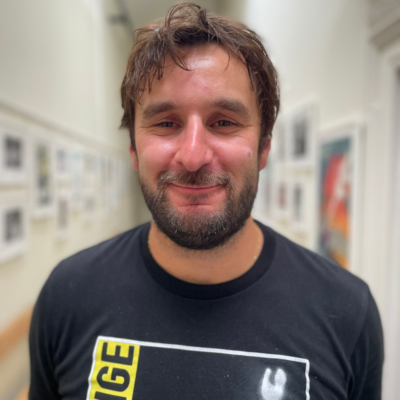
Joe Nerssessian uncovers Bones in the Desert
Theatre crafted especially for Young Audiences often creates opportunities to explore difficult subjects in a safe space. At Half Moon Theatre this season, Bones in the Desert by British-Armenian playwright Joe Nerssessian is one such example of this, exploring themes that include the legacy of the Armenian genocide. We really wanted to hear more about the production so called Joe in for a chat.
Hi Joe. Thanks so much for talking to us today about Bones in the Desert. Firstly, what can you share about the plot and the themes of the play?
Thanks for the opportunity. The plot centres on the stories of two male characters, Artur and Hagop. We land with Artur, a Syrian-Armenian living in Berlin, traumatised by his escape from the Syrian civil war and the subsequent journey to reach Europe. He faces racism and is struggling with loneliness, grieving his childhood and his mother. Hagop attempts to help Artur but is in fact, really just a teenage boy stuck in a purgatory-like state following his death a century earlier during the Armenian genocide. I was really drawn to the recycling of history – Armenians marched through the Syrian desert in 1915 and Syrians fled their homeland (and over the bones of the Armenians buried in the desert) in the 2010s during the civil war – and inherited trauma.
Tell us about your own background and how it feeds into the story.
I was born in a seaside town in the UK to a British mother and an Israeli-born Armenian father. My paternal grandfather survived the genocide with one sister, the rest of his family were killed. He ended up in Palestine which had become Israel by the time my father was born there.
My grandfather actually survived death a second time during the Jewish insurgence when the bakery he worked in was blown up. He was out doing a delivery!
Armenians who survived the genocide often ended up in places where further turmoil and disruption came: Syria, Lebanon, Iraq, Iran. Yet survival persists. It summons the quote by William Saroyan which goes:
‘Go ahead, destroy Armenia. See…if you can do it. Send them into the desert without bread or water. Burn their homes and churches. Then see if they will not laugh, sing and pray again. For when two of them meet anywhere in the world, see if they will not create a New Armenia.’
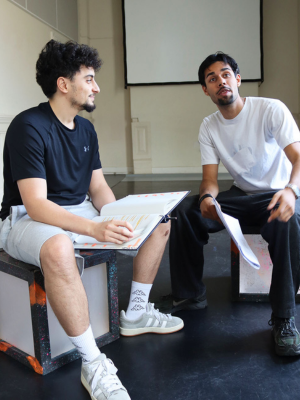
and Adam Seridji
How did you come to write the play with Half Moon Theatre and why was it important to you to focus on a young audience (from age 13 upwards) rather than adults?
I was working as a journalist when a huge shift in my life led me to reconsider where I was at and what I wanted. I started to write more creatively and was fortunate to be part of a programme by Half Moon titled Narratives of Empathy and Resilience, in 2021. The programme supported us to create stories that reflect our diverse community, as well as support under-represented artists in developing their practice.
I was drawn to working with younger audiences due to my own experiences of engaging with art and theatre as a young man. Stories made me understand the world in a way other forms of education couldn’t. I wanted to explore that from the storyteller’s perspective and see how I could understand a topic I was interested in and learning about in inherited trauma, while engaging a young audience.
This is an immersive production. How will that play out, and why did you want to present the story to audiences in this way?
The truth to this answer is I am not sure, as I’m writing this before I’ve seen a full rehearsal. But having witnessed some of the immersive pieces of my peers from the Empathy and Resilience programme including Daytime Deewane and Hot Orange, I saw how captivated the audience become as the characters brush past them. Everything feels alive, intense and real. I’m really excited.
Why did you choose to have the two characters exist in separate time periods?
In a way, to explore the idea of inherited trauma I felt like it was really crucial.
My initial short play, The Bench, which I developed during the programme with Half Moon in 2021, was actually with two characters in the same time period. However, one was a young boy, and one an older man. And there was something in their ability to connect across different ages which felt important.
Yet when it came to writing for a slightly older audience (The Bench was aimed at 8+) I wanted there to be a connection across ages yet a disconnection too.
I have written about the Armenian Genocide extensively as a journalist and interviewed and heard many stories from survivors and their descendants. There was a reality of that time I wanted to express, and the trauma inflicted on the generations to come.
The question also goes back to my earlier point of history regurgitating. During the 100th anniversary of the genocide in 2015, I couldn’t shake the idea of Syrians fleeing towards Turkey over the bones of the Armenians.
What can you tell us about the music in the production?
The soundtrack runs for the entire production, and has been composed by the award-winning composer, sound designer and musician Nick Powell.
I spent a day with Nick in the spring where we did a read-through and I answered some questions.
His attention to detail really shone through and I just remember him beaming and exclaiming ‘I love the dukuk’ when I told him it was an Armenian instrument.
He’s also recorded an original version of an Armenian lullaby with a London-based singer with Armenian roots, Sona Koloyan.
With such traumatic themes being raised, how do you keep the show from getting too distressing for the audience? And will there be opportunity for them to get involved in discussions around the content?
I think this is a great question and one I’ve really wrestled with. Firstly, I trust the director Chris Elwell wholeheartedly to keep the audience feeling comfortable and safe, despite some of the traumatic themes. He has been a mentor to me in engaging with young audiences and in my writing more broadly.
The co-production approach also means that teenagers have wrestled with the content and provided really clear and honest and direct feedback on the material – including its tough themes.
In terms of the writing process, I have tried to retain levity in places where it’s appropriate, and although there is an open-endedness to the piece, I do think there is an uptilt when I’ve heard it in rehearsals.
All that being said, there are some really tough moments where I’ve leant on the experience of friends, colleagues and people with lived experience to guide me. I thank everyone who has shared their thoughts so generously with me.
In terms of an opportunity to get involved in discussions around the content – yes, absolutely. After each performance there will be discussions with the cast and crew around the themes. I’ll be at some of them as well and am really intrigued to hear what people think, what they found challenging, and where their experience has left them.
Bones in the Desert premiers at Half Moon before going on to an extensive tour. Can you tell us about that?
The show runs at the Half Moon from Thursday 12 November, including a joint-performance with the Armenian Institute in the evening of Saturday 14 November where there will be a discussion between myself and Dr Suzan Meryem Rosita Kalayci, a lecturer in Women’s History at Pembroke College, University of Oxford, whose research explores silence, memory, and war in the Eastern Mediterranean and the modern Middle East.
The tour goes from Sheffield to Winchester, Bedford to Canterbury. I’m really excited about the Canterbury performance at the Gulbenkian Theatre on Tuesday 1 December as I was born in Canterbury and the host venue is named after the famous Portuguese-Armenian Philanthropist Calouste Gulbenkian.
Thanks very much to Joe for sharing this amazing insight into what promises to be a fascinating show. Bones in the Desert is aimed at ages 13+ and young adults. It plays at Half Moon Theatre from Saturday 12 to Tuesday 17 November before touring across multiple venues in England.