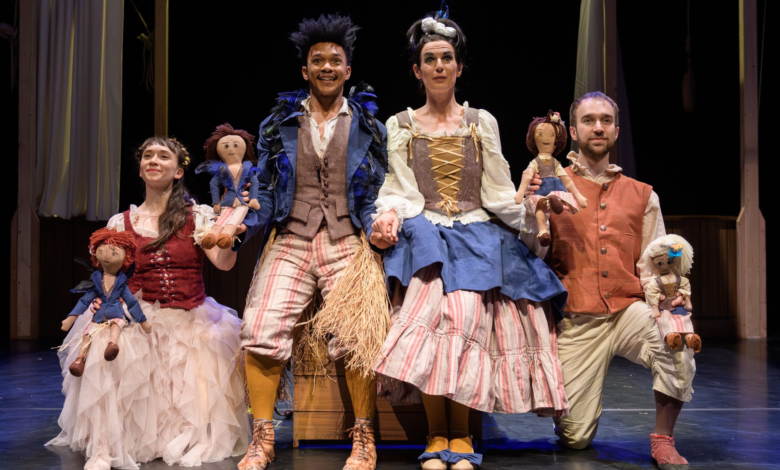
Luca Silvestrini blows the whistle on Protein’s dance-theatre version of The Magic Flute
Mozart’s The Magic Flute is an all time classic opera, which made its debut in 1791. Its longevity across centuries testifies to its popularity, with audiences consistently coming back for more. This season it’s particularly exciting to see Luca Silvestrini’s dance company Protein taking the piece on a UK tour in an innovative dance/theatre format that is specifically tailored to engage children as well as adults. We wanted to know more about this playful approach so asked Luca in for a chat.
Hi Luca. Thanks so much for stopping by to talk to us about The Magic Flute. Firstly, can you tell those of us who are unfamiliar with it what the story is about?
In The Magic Flute Tamino, a young Prince from a faraway land, receives a quest from the mysterious Queen of the Night, to rescue her daughter Pamina. Tamino is accompanied by the Queen’s bird-catcher, Papageno, and they both receive magic instruments to help them in their mission. As the story unfolds, we get to understand the real reasons why Pamina was taken away from her mother, and why the wise leader Sarastro has taken custody of Princess Pamina in his Sanctuary of the Sun. It’s a story full of twists and turns, of colourful and mysterious characters, a story where light triumphs over darkness, and where love and friendship prevail over hatred and revenge.
Do you have to be an opera fan to see the show?
Absolutely not. In fact, a common feedback is that our dance-theatre adaptation of The Magic Flute is a great introduction to opera, especially for the young ones. We kept some of the singing by choosing the most iconic arias, which are beautifully performed, both live and as a voice over, by soprano Donna Lennard.
What is it at the core of The Magic Flute that makes it particularly appealing for an intergenerational audience?
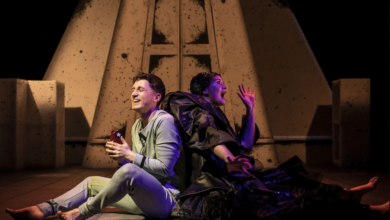
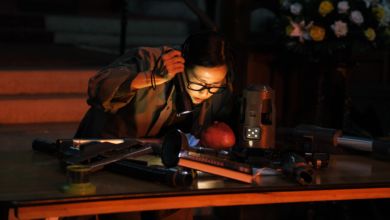
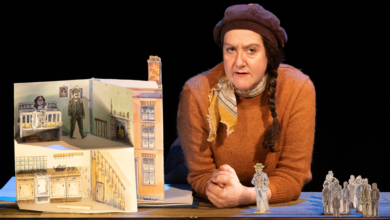
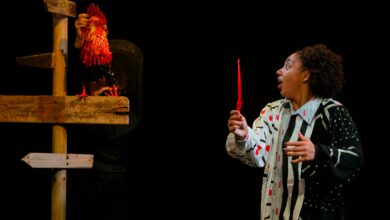
The Magic Flute is a story for everyone because it contains all the archetypes and universal messages of a timeless fairy tale. It’s at the same time fun, dark, surprising, magical, educational and entertaining. Although punctuated by spoken word and lyrics, we have invested in the visual telling through set, costumes and props by Dick Bird, film and creative captions by Douglas Baker and lighting by Rachel Shipp.
Opera is sometimes considered elite, but you’re opening it up in a number of ways that invite in wider audiences. Can you tell us a little about how you’ve reimagined the piece and how this adds to its accessibility?
This is a dance-theatre adaption of the opera, and this is why it opens up to a wider audience. It’s primarily told through the universal language of dance and movement, and even when it is sung, we have layered it with dance and physicality to enhance the factual and emotional journeys of the characters. The presence of animated captions throughout makes it even more accessible.
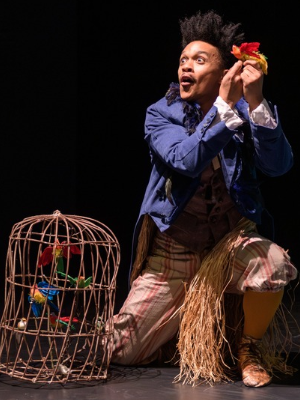
Who are your performers, and what talents do they bring to the stage?
We have a cast of four exceptional performers, three dancers (Nathan Bartman, Jacob Lang, Mette Nilsen) and a soprano (Donna Lennard), all playing an array of characters with amazing energy and dedication. The key to this cast is that they dance, act, sing and transform whilst maintaining a true and warm connection with the audience.
You have amazing composer Frank Moon on board, adapting and supplementing Mozart’s original score. What can you tell us about that?
After collaborating with Frank in 2018 for the making of our adaptation of The Little Prince, it was an honour and an absolute joy to embark on another creative journey together. He’s a great composer and collaborator, someone with great skills and a sense of play. This time we were facing an existing musical masterpiece, a very loved and respected piece of work and we knew that Mozart was going to be in the room with us. I am very fond of what came out as Frank’s wonderful and clever rearrangement of Mozart’s music is the result of a thorough and joyful process, nurtured day by day in the studio with the cast. Frank’s work has really brought out and enhanced all the narrative and emotional power of the existing score, whilst creating exciting and perfectly suited new music.
The show has been around for some time now, with new dates being added into the New Year. What’s the reception been like for The Magic Flute?
The show opened last year, with two acclaimed Christmas runs at DanceEast and The Place, who originally commissioned the piece. This year, we have been touring since October, and the reception has again been amazing everywhere. The great feedback from both young and less young tells us that this is a production that everyone can enjoy, and that an opera can turn into an accessible show without losing its theatrical and musical appeal.
This is the second production you’ve crafted for young audiences, following on from the award-winning The Little Prince. Do you have more planned for the future?
I do not. It’s been a true joy turning these two classics into stage shows for the whole family. I hope another one of these ageless stories will come my way soon.
Thanks very much to Luca for giving us an insight into this innovative and imaginative production. The Magic Flute is aimed at ages 7+ and is currently touring across England until May 2027.
Woolwich Works, London, 5 December 2026, 3pm
Chichester Festival Theatre, Chichester, 30 January 2027, 2.15pm & 7.15pm – 31 January 2027, 2.15pm
Watford Palace Theatre, Watford, 16 February 2027, 6pm & 17 February, 11am
mac, Birmingham. 19 February 2027, 2pm – 20 February 2027, 11am & 2pm
CAST, Doncaster, 7 April 2027, 2pm & 5pm
Theatre Royal Winchester, Winchester, 17 April 2027, 3pm – 18 April 2027, 11am & 2pm
Lowry, Salford (not on sale yet), 8 May 2027, 3pm & 7pm