An examination of changing intergenerational attitudes to neurodivergence Rating
Good
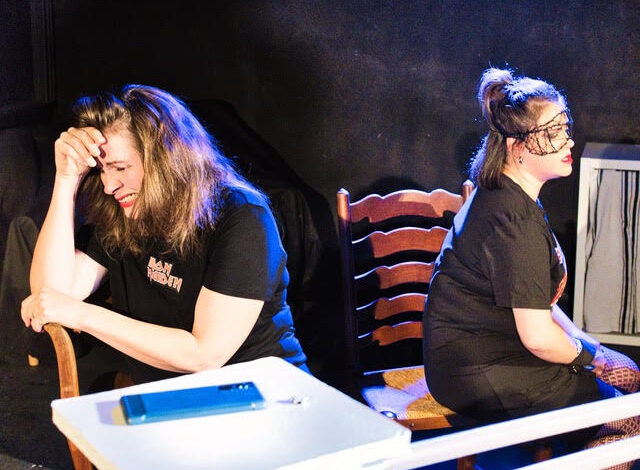
The Girl in the Mask grapples with difficult family relationships, grief and autism. The father, Trevor, has just passed away, leaving Celia (Laura Fitzpatrick) alone with their teenage daughter Amy (Emma Riches). Amy is a metalhead who is obsessed with Iron Maiden, so much so that she wants to wear a band t-shirt to her father’s funeral; her mother is at her wits’ end with Amy.
Celia knows Amy is ‘different’, but in times of grief she wishes Amy could be a ‘normal’ daughter, someone she can go shopping with, have chats, and get a much-needed hug from. Amy is neurodivergent, and the family doctor turned boyfriend to Amy, Kieran (Edward Jobling) suspects Amy has hereditary autism, which is implied through stories of her father and is evident in Amy’s Aunt Jo (Samantha Parry).
Orsolya Nagy‘s direction is sensitive and well-paced. This family drama packs in a lot of emotion, but it never gets hysterical. Nagy tries to add some humour into the scenes, but it doesn’t always land.
The cast of The Girl in the Mask are exceptional. In particular, Fitzpatrick’s portrayal of a needy and emotionally manipulative mother is outstanding. She makes the audience empathise with her, but it is clear Celia herself is not neurotypical. We’re told Celia often locks herself in the adjacent room to Amy to make sure she can be heard crying. Celia is emotional and controlling, letting her feelings get the better of her, and can be nasty at times, but Fitzpatrick balances her motives well, and she doesn’t as the villain.
Riches as Amy has a stoic façade. She displays the angst of a teenager with little compassion and struggles to navigate her emotions. Thankfully, she has Kieran to help her. He is trying to get her to acknowledge her neurodivergence, but Celia has been rejecting these ‘labels’ doctors enforce on people. Jobling gives an even temper to his performance, which is needed amongst the family drama.
Amy is left feeling shame because she doesn’t approach the world the same way as everyone else. This makes her want to go no contact and incites her to start a successful YouTube channel where she exposes every detail of her life. As an homage to her love of Iron Maiden, Amy changes her name to Eddie and begins wearing a mask for her channel. This mask is a symbol for her wanting to be who she is – or is it? Masking in neurodivergence is the act of suppressing natural traits or behaviours to blend in with neurotypical expectations. Jo can be seen to mask her autism when she uses social scripts and practices what she is going to say. And Amy uses the physical mask to show that even when she goes no contact, she is not being her true self.
Amy and Jo have a close relationship, both struggling to dissect the meaning behind people’s actions. Parry’s performance as Jo is wonderful. She stims by fiddling with her ring and twisting the edge of her jumper and never makes eye contact. Jo is a representation of previous generations where neurodivergence was not fully comprehended by the public. She has clearly done her best to assimilate and hide by masking.
The Girl in the Mask could have been insensitive and overwhelmed by the combatting emotions of the characters but under Nagy’s direction this play explores the responsibility within relationships with an even temper. I didn’t leave the play believing that one character was in the right and another in the wrong but felt compassion for these people trying to express their needs to the best of their abilities.
Written by Brad Sutherland
Directed by Orsolya Nagy
Produced by Maiden Productions
The Girl in the Mask has completed its current run.