Featherstone Pictures brings In Aulis to the Camden Fringe
After the success of our 2025 Camden Fringe Interviews, we thought it only right to attempt a repeat for 2026. So throughout July we published over 60 interviews to give a taste of what to expect from London’s best fringe theatre festival. The plan was to stop there, but as shows are still coming to us asking for interviews, we thought we’d do a few more! But we have to stop soon, we’re also very busy seeing the shows now.
You can find out more about Camden Fringe, along with details of every show playing here. You can also find all of this year’s interviews at here.
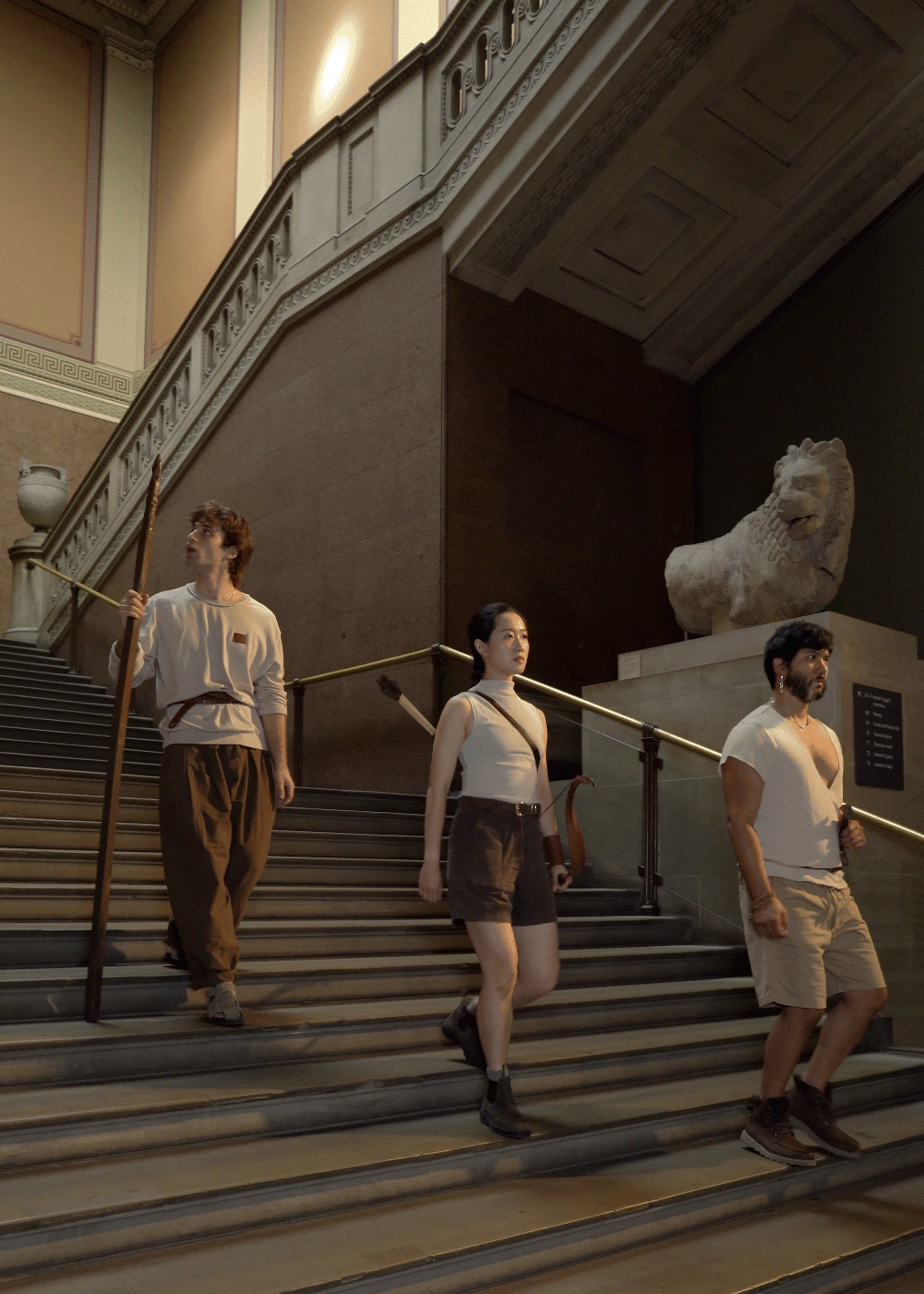
At a time when hard work no longer guarantees security and the promise of a stable future feels increasingly out of reach, In Aulis turns to an unexpected mirror: ancient Greek tragedy. Inspired by Iphigenia in Aulis, Featherstone Pictures’ modern dramedy strips away ancient heroism to interrogate what today’s generation is quietly forced to sacrifice for a “better life.” Ahead of their run at Young Actors Theatre Islington, writer Sylvia Wang and director Phoenix Zhao sat down with us to discuss modern economic anxieties, bringing real-world expertise into the rehearsal room, and why the ultimate metric of success is the argument that happens in the pub afterwards.
If you had to describe the vibe of your show in just one sentence, what would it be?
An economic fantasy dramedy.
Why is 2026 the perfect time for this show to be seen?
In Aulis is a play inspired by the Greek tragedy Iphigenia in Aulis with a modern sensibility. It asks what we’re quietly sacrificing for a so-called better life – career, security, the promise that hard work reliably pays off – at a moment when that promise is visibly breaking down for a whole generation. In the myth, it’s rarely questioned whether the greater good was worth the cost. In 2026, everyone is. That’s the very contemporary instinct the play runs on: three adventurers arguing about what they’ve given up, why it was ever necessary, and whether there’s another way.
What was the ‘eureka moment’ that made you realise this story had to be told right now?
It came from the Antigone rewrites, oddly. Sophocles’ version is about religious duty and the rites owed to the dead; Anouilh, writing in wartime, quietly drops all of that and makes it about defying the state. Same story, completely different argument, because the audience had changed. That’s when it clicked for me.
Agamemnon had a choice and called it the greater good, and for centuries that framing went largely unchallenged. Right now, nobody’s willing to leave it unchallenged – not with an economy and a job market that stopped paying out what they promised. That felt less like a story I wanted to tell and more like one that was already being told everywhere except on stage.
What is something a performer has brought to a character that completely surprised you?
There’s a beat where Paladin has messed up and set the team back, and he apologises. I hadn’t written an action line for it, in my head it was simple: he knows he’s responsible, and he shows he’s sorry. Earl Wan, who plays him, made it something else entirely. He plays it physically, so you can see Paladin is genuinely sorry, and equally see that he can’t bring himself to say it straight.
That one choice does more character work than a page of dialogue. Paladin holds traditional values, and this is the cost of them: the strong warrior, the dependable man, finds it almost physically difficult to admit he’s wrong. The audience gets his honour and his blind spot in the same moment. None of that was on the page, Earl found it in the room.
What is the “secret sauce” that makes your group dynamic work?
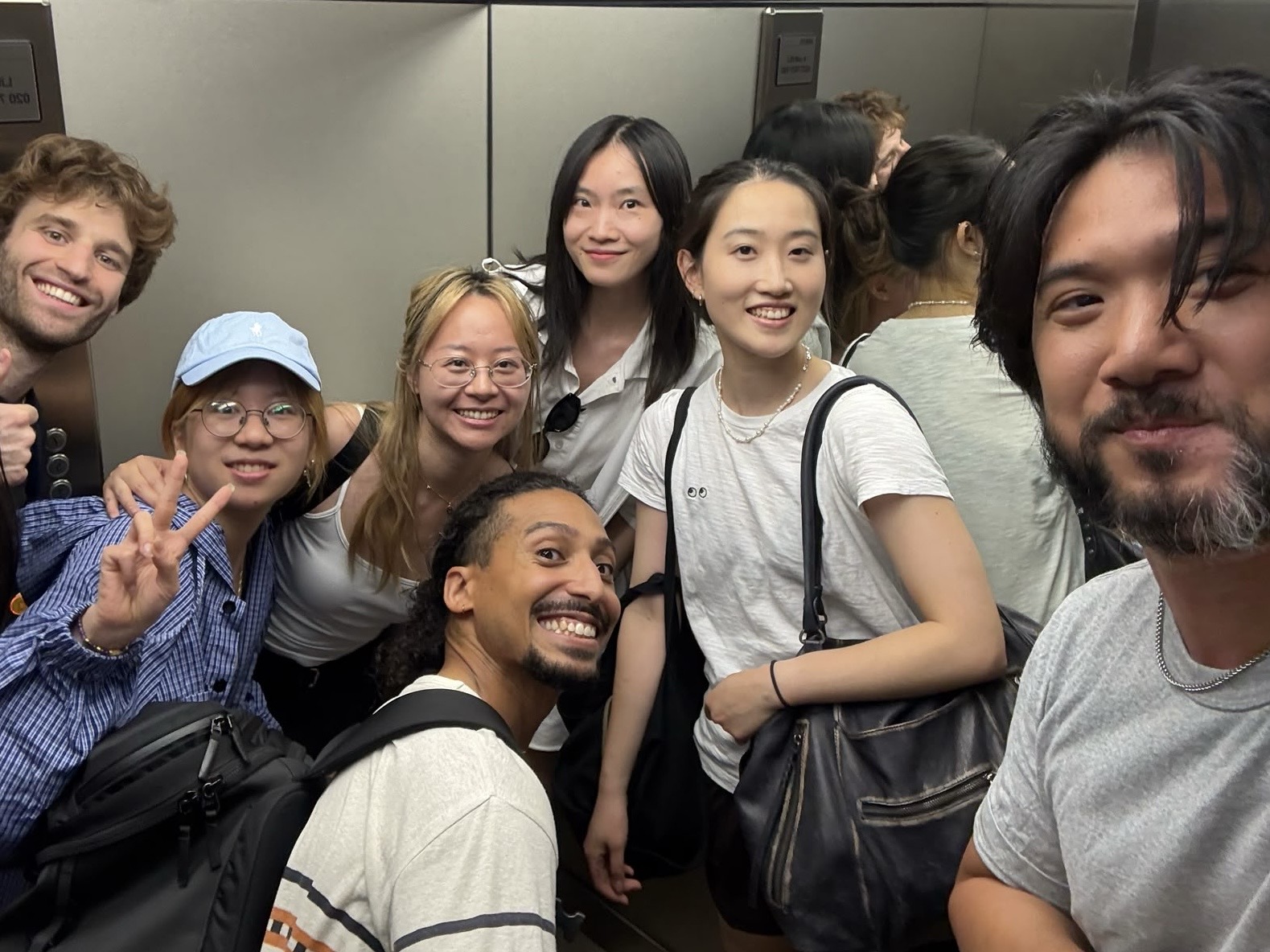
Nobody in this room is only doing this. Our set designer is an architectural designer by day, our costume designer works at the Royal Ballet & Opera, our sound designer works full time in a recording studio, and rehearsals happen in evenings and at weekends. That could be a liability, but it’s turned out to be the opposite: everyone brings their day-job expertise straight into the work, and everyone is living the exact tension the play is about. Nobody has to be talked into the themes.
The other half of it is that we don’t rehearse to prove anyone right. Phoenix directs by letting the room surprise her rather than defending the original idea, and the actors have reshaped these characters considerably because of it.
What does “success” look like for you this August, beyond just selling tickets?
Success is the argument continuing in the pub afterwards. The play doesn’t resolve anything, it just lets three characters sit inside the problem for an hour. So if audiences leave comparing notes about their own Aulis, we’ve done our job. We never reveal what our characters have actually given up, and we don’t want to answer that for anyone; the hope is people walk out asking what would be taken from them, and what they’ve already lost without noticing.
We’d also love it to reach older audiences, so that what younger generations are up against reads as a structural problem rather than a failure of effort or resilience.
If you had to describe your show as a colour what would it be?
Bright orange – check our poster and you will know why.
If your show was a love letter to a specific place?
Ancient Greece, the stories are three thousand years old and still the sharpest way we have of arguing about our own lives. And that love ran so deep that the British Museum decided to grant permission to film in their Greek galleries after reading the script.
Many thanks to Sylvia and Phoenix for their time. In Aulis plays from Saturday 8 and Sunday 9 August as part of Camden Fringe.