Taking Spare Room from London to Edinburgh
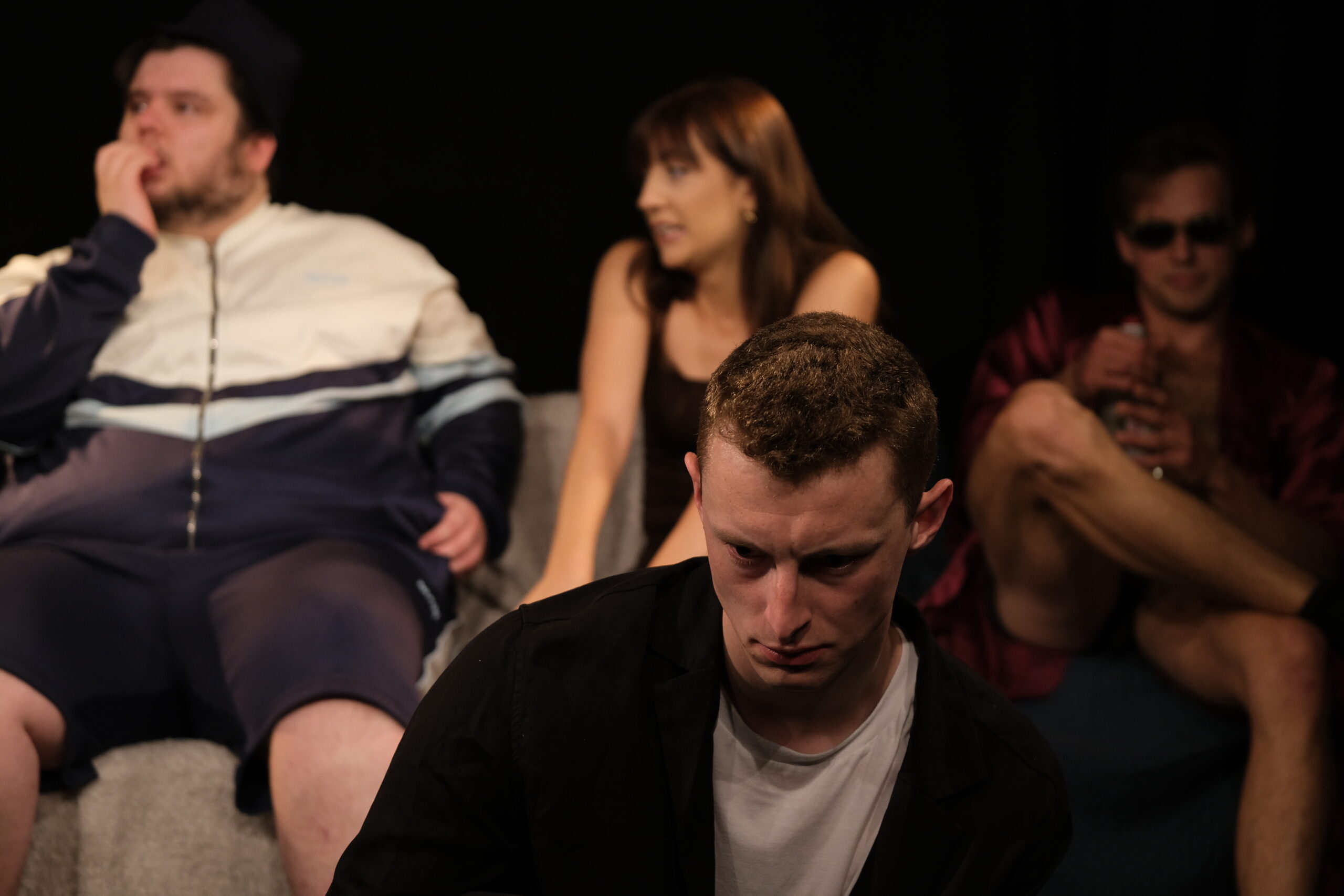
Navigating your twenties is chaotic enough, but moving into a houseshare with four male strangers takes the madness to an entirely new level. Enter Spare Room, Blue Duck Theatre Company’s award-nominated dark comedy co-written by Georgina Housby and Sam Dinnage. Inspired by true events, the play follows Jodie as she dives headfirst into an unfiltered world of “chunder charts,” thin walls, and unrestrained lad culture. Beneath its rapid-fire comedy lies a raw and sharp exploration of unchecked misogyny, mental health, and the grey areas of consent.
First staged at the Camden Fringe at the Hen and Chickens Theatre, Spare Room has spent the past year evolving. Now, the team is stripping back the chaos, refining its ensemble staging, and taking the transfer to the Edinburgh Festival Fringe. We caught up with Georgina to discuss shaping complex characters, balancing heavy social commentary with dark humour, and what it really takes to prepare a hit fringe show for the biggest arts marketplace in the world.
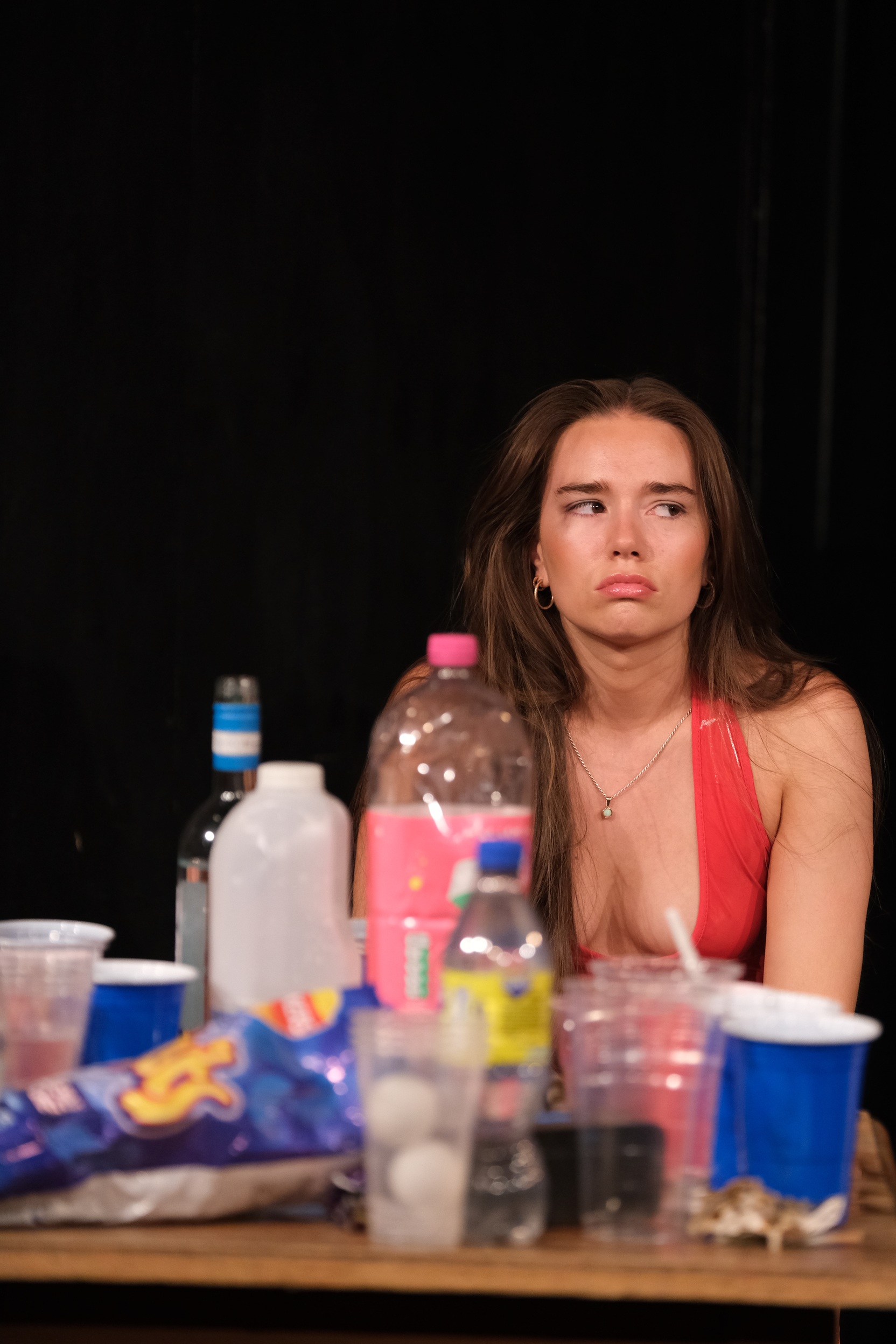
Our review of your Camden Fringe run praised the energy of your large ensemble, but noted that the play was at its strongest when stepping back from the chaotic “laddism” into controlled, intimate moments. How have you worked on pacing and ensemble focus to balance the high-octane atmosphere with those quieter, punchier beats for Edinburgh?
Our objective was to find a natural balance between those high-energy moments and allowing the story to breathe. University social life feels chaotic at times, especially during freshers week or if you find yourself in a ‘party heavy’ household. However, another element of living with others is when you end up in one-to-one moments with your housemates; the quiet conversations you have when no one else is around. The dichotomy of these two scenarios was something we wanted to replicate in our play. We went back to the script and constantly asked whether the pacing and shifts in energy were serving that balance. We also made sure that scenes were ordered in a way in which audiences weren’t getting too much chaos without it being broken by the quieter, more intimate moments. The result is a show that still captures the chaos of student life but gives those quieter moments more room to land. Those intimate moments are where audiences really begin to understand what is driving our characters to act the way they do.
What did you learn from your Camden Fringe run last year and the responses from both audiences and reviewers. How has this influenced the changes you’ve made?
Both audiences and reviewers reinforced something we’d already started to suspect: that sometimes less really is more. This is particularly noticeable in the changes we have made to the montage section in the middle of the show. We realised that we could still get across our narrative messages without relying on so many short scenes that were likely adding to the ‘uncontrolled chaos’ of last year’s run. Uni life is chaotic but the ‘controlled chaos’ that we have achieved this year means the show is leaner, clearer and more emotionally impactful.
The show is billed as being “inspired by true events.” Georgina, how much of Jodie’s journey; navigating male house shares, “chunder charts,” and trying to fit in, was drawn directly from personal experiences vs. dramatised for the stage?
The whole conception of the show was sparked by a life-altering experience I had when, just like our main character Jodie, I moved into the spare room of a uni house share. That in itself came with a lot of overwhelming experiences: my first taste of independence and ‘uni culture’, navigating how to fit into the already established dynamics of a house of third year students, struggling to keep afloat financially, etc etc. But this particular household was almost exactly like the depicted chaos in Spare Room – with substance abuse and misogyny at its core. Of course, there are many elements that have been dramatised so the story translates effectively onto the stage, but my writing process actually began with me quite literally listing some of the craziest things that transpired and using them as a springboard to write from.

Unfortunately, some of the darker events that occur later in the play also mirror my own experiences, which is ultimately why I felt compelled to write it in the first place. I believe it’s vital that we continue to deepen our understanding of the intricacies of consent, and I hope that experiencing the play through Jodie’s eyes will encourage more empathy and understanding.
The male housemates embody classic “lad culture” tropes (mess, crude banter, thin walls). How did you approach writing and directing these characters so they feel like genuine, complex 20-somethings rather than flat caricatures?
I think it’s really about understanding what’s beneath the ‘bravado’ and what is driving them to say such shocking things. This year we spent time having in-depth discussions around the relationships between the guys, how they all ended up in this situation and whether they are proud of the things they say. Are they acting in this way because that’s how they genuinely feel or is it coming from another place? Perhaps it’s insecurity or a learnt behaviour that they don’t know how to change. By having these discussions, we as actors are able to see the characters as more than just ‘boys being boys’, but rather deeply troubled men who have grown up in social environments that reinforce those behaviours.
Placing one woman in an all-male living space offers a unique lens on unchecked group dynamics. What do you hope male audience members in particular take away from seeing this mirror held up on stage?
I really hope male audience members can see the impact that their words and way of being can have on the people around them. I have met many men who say things to be shocking or because that’s just ‘how it is’ and ‘everyone else should allow them to speak in this way’. Every single thing you do and say has an impact. Even something you might dismiss as ‘meaningless banter’ can perpetuate a harmful stereotype, and every contribution to that perpetuation matters.
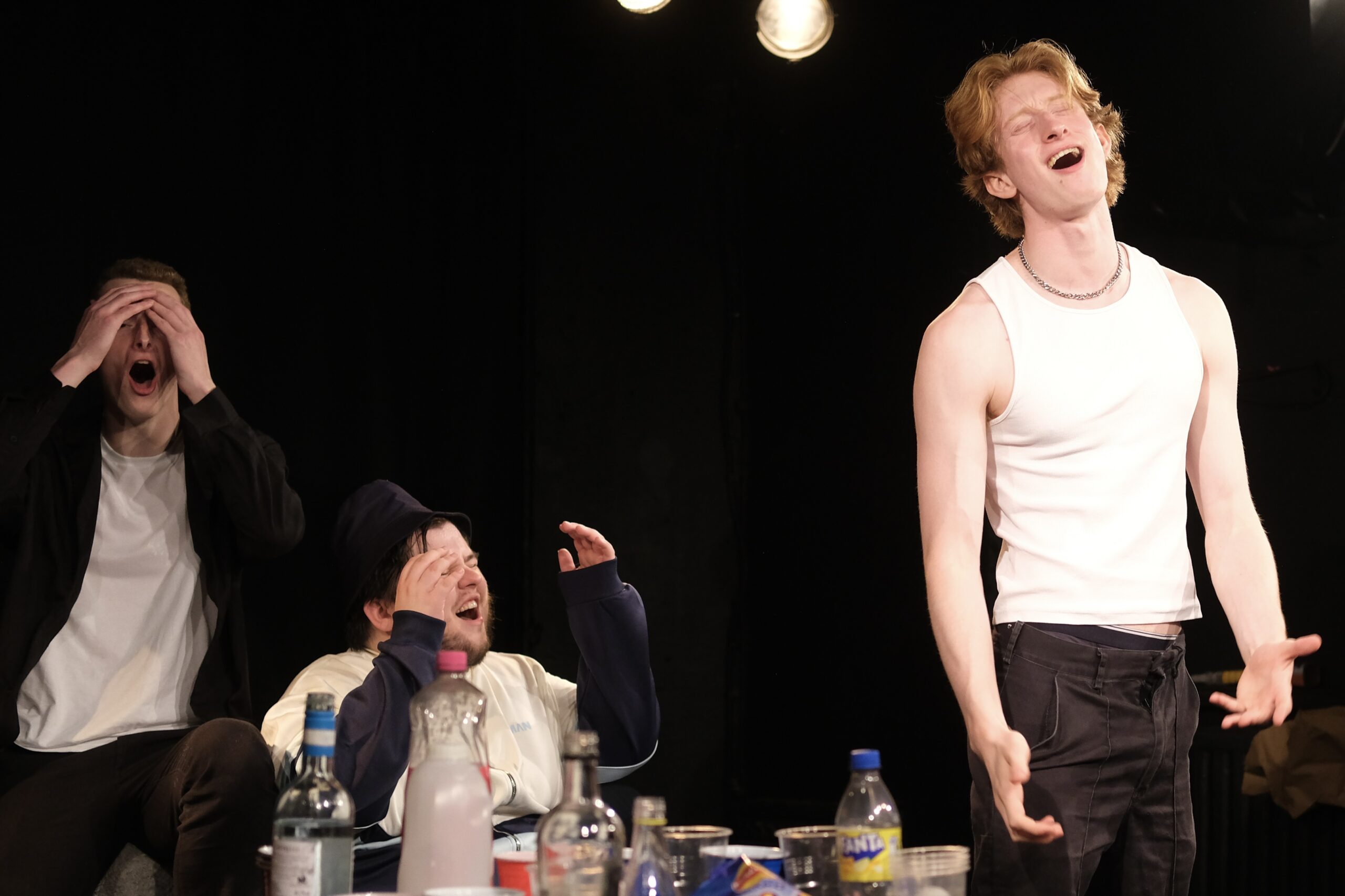
EdFringe audiences see dozens of shows a day. What makes Spare Room an essential watch for festival-goers looking for bold, contemporary UK new writing?
The themes explored in Spare Room have never been more relevant. In recent years we have seen a dangerous rise in misogynistic attitudes in young men fuelled by parts of online culture. This holds a mirror to these attitudes and is unflinching in its exploration of the effects that these attitudes can have on all members of society.
Our characters are authentic representations of people we all recognise, making it a deeply relatable piece of storytelling.
While we’re sure your cast and team are nothing like the characters in the play, how do you think you’re all going to cope with what can be a rather intense experience of EdFringe; what will be your escape from it all when you need a break from the chaos of both your play and just Edinburgh in general?
That’s a great question! We’re very lucky to be doing the Edinburgh Fringe experience as a very close-knit group of friends from drama school – so we’re honestly all really excited to get to spend most of August together. We’ll try to find time to do a few more wholesome activities than the ones portrayed in Spare Room: play some games, try some Scottish delicacies, and escape up Arthur’s Seat when we’re all sick to death of each other!
Our thanks to Georgina for her time. Spare Room is playing now at theSpace on the Mile until Saturday 22 August.