Gur Arie Piepskovitz on ‘Earworm’ at Camden People’s Theatre
After the success of our 2025 Camden Fringe Interviews, we thought it only right to attempt a repeat for 2026. So throughout July we’ll be publishing new interviews each day to give a taste of what to expect from London’s best fringe theatre festival. The festival starts Monday 3 August this year, so we may give ourselves a couple of days off inbetween the end of the interviews and the first shows… then again, we might not.
You can find out more about Camden Fringe, along with details of every show playing this August here. You can also find all of this year’s interviews as they are published here.
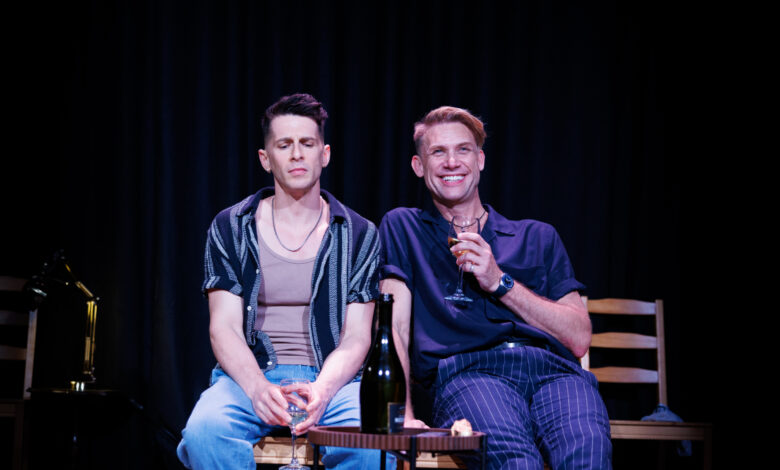
What do you do when a painful breakup leaves your thoughts bouncing around like a broken GPS, unable to articulate anything except short outbursts of memories between crying fits and Spotify karaoke? If you’re writer Gur Arie Piepskovitz you write every thought onto a yellow Post-it, drop it into a glass vase, and turn it into a high-octane fringe play.
Coming to Camden People’s Theatre this August for Camden Fringe 2026, Earworm is a razor-sharp, adrenaline-fueled exploration of loneliness, intimacy, and rumination. Produced by ARiot Theatre, the show structures the messy, chaotic aftermath of a breakup like a pop song; vulnerable, familiar, cringe-inducing, and wildly relatable.
We sat down with the team to talk about facing crippling insecurities on stage, inventing vertical “standing beds” for minimal sets, and getting that raw, salmonella-level first draft out into the world.
If you had to describe the vibe of Earworm in just one sentence, what would it be?
Earworm is the chaotic, relentless thrill of playing a catchy pop song for the 500th time; a heart-squeezing, adrenaline-fueled vibe that manifests on stage through razor-sharp dialogue, upbeat characters, and wild emotional twists that turn the mundane into a wild ride.
Why is 2026 the exact right moment for audiences to experience Guy’s story?
At its core, this is a show about loneliness, intimacy, and rumination. Just putting this holy trinity of nouns together is sufficiently evocative. Guy is the protagonist we yearn for in our hyper-algorithmically curated era. He is unfiltered, volatile, prone to mistakes, and full of contradictions.
The music, the relationships, the endless thoughts shared with the audience, and the specific traits on stage will make you cringe, not because they are odd, but because they feel so familiar. An emotional blurt in a time so overloaded with data is not going to comfort you, but it might just make you feel a little less lonely.
What was the specific “eureka moment” that triggered the creation of the script?
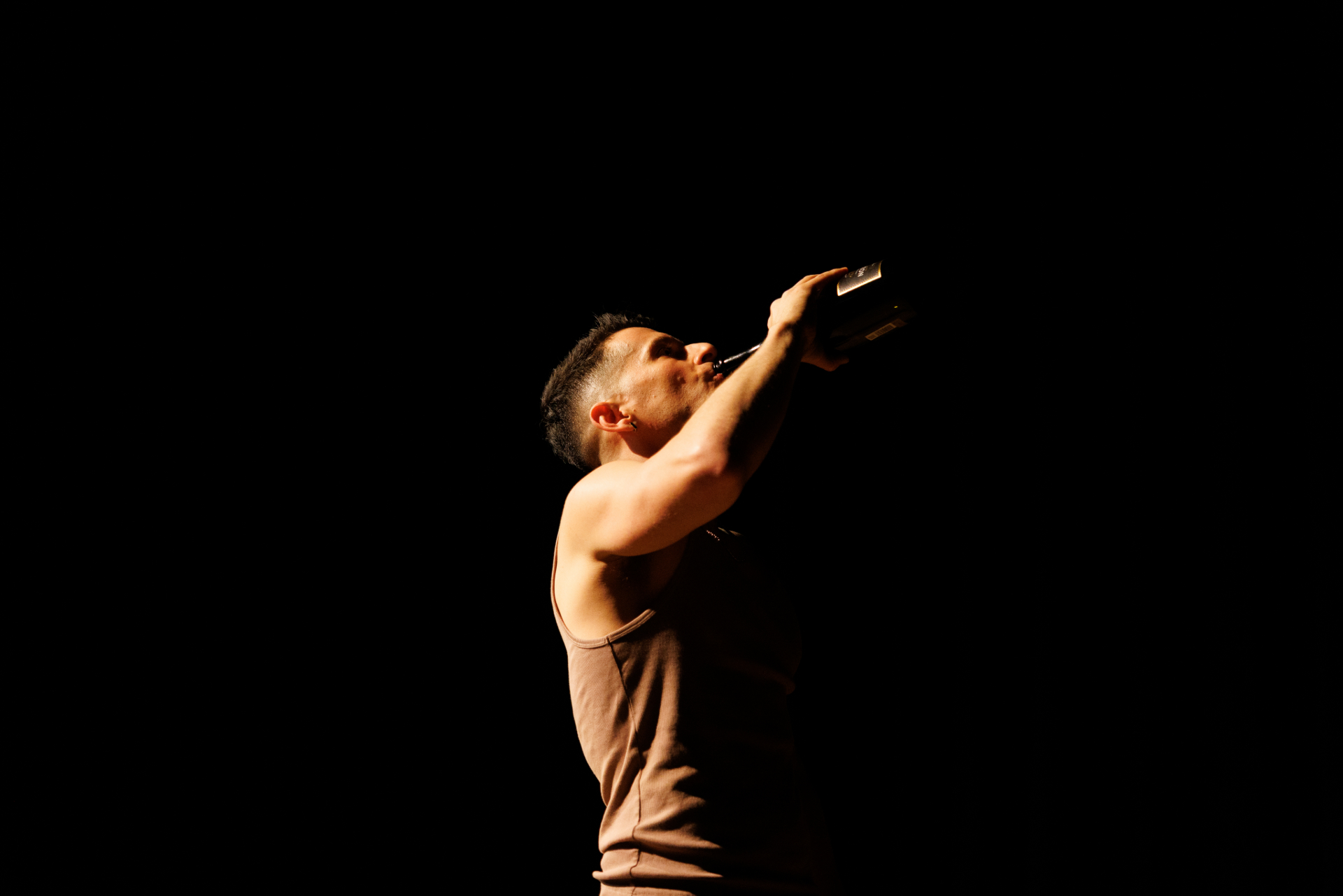
After my breakup, I wasn’t able to articulate my thoughts; my brain kept moving in different directions like a GPS in the wilderness, and all I could articulate were short outbursts of memories and thoughts between longer bursts of crying and karaoke improv to another belting song on Spotify.
Like beading a necklace, every time I had a thought, a moment of clarity within the constant interruption, I wrote it on a yellow Post-it and dropped it into an empty vase. A fortnight later, I had a glass vase full of what looked like wilting petals and ten new curated playlists in an attempt to tame the loneliness. This chain of ideas and songs circling around me clarified how the script would take the form of a breakup song, exploring the end of an intimate relationship and how it navigates the many fragments forming the emotional spectrum of a split.
How challenging has it been for you personally to step into the shoes of Guy on stage?
VERY! While there are so many similarities between Guy and me, Guy’s character has to do the two things that, more than anything, are a black hole of insecurity and crippling self-consciousness for me: dancing and singing.
It took me a while, but as rehearsals continued, I realised that the same insecurity I prayed would stay backstage should actually take center stage in those scenes. Because that collision between a character who isn’t me and those personal anxieties is exactly where the protagonist lives. Embracing these imperfections that are so personally mine, and infusing them into the character, actually gave me the perfect “formula” for how Guy should be portrayed.
Festival stages require super minimal sets. How did you handle intimacy and bedroom scenes without a full flat set?
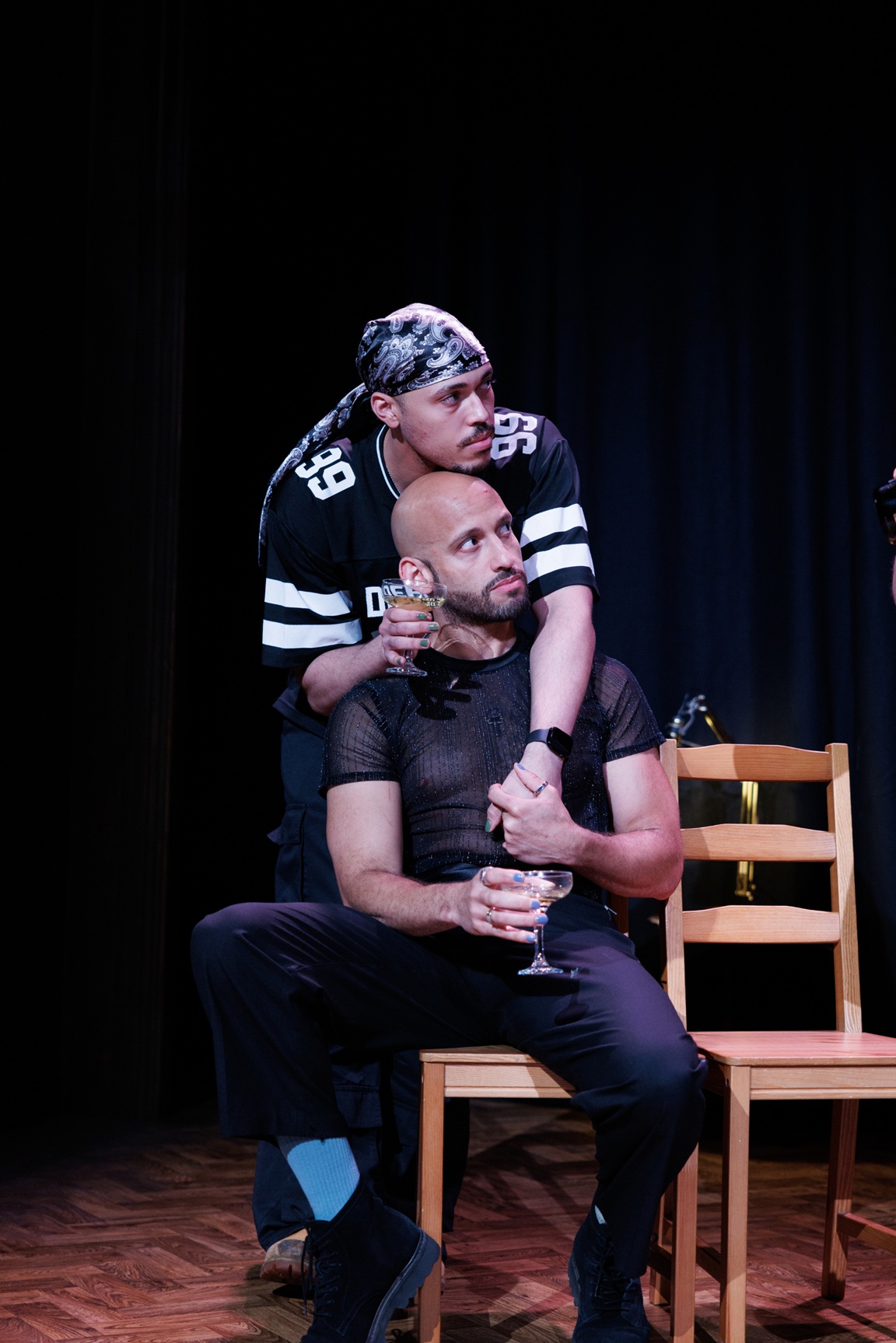
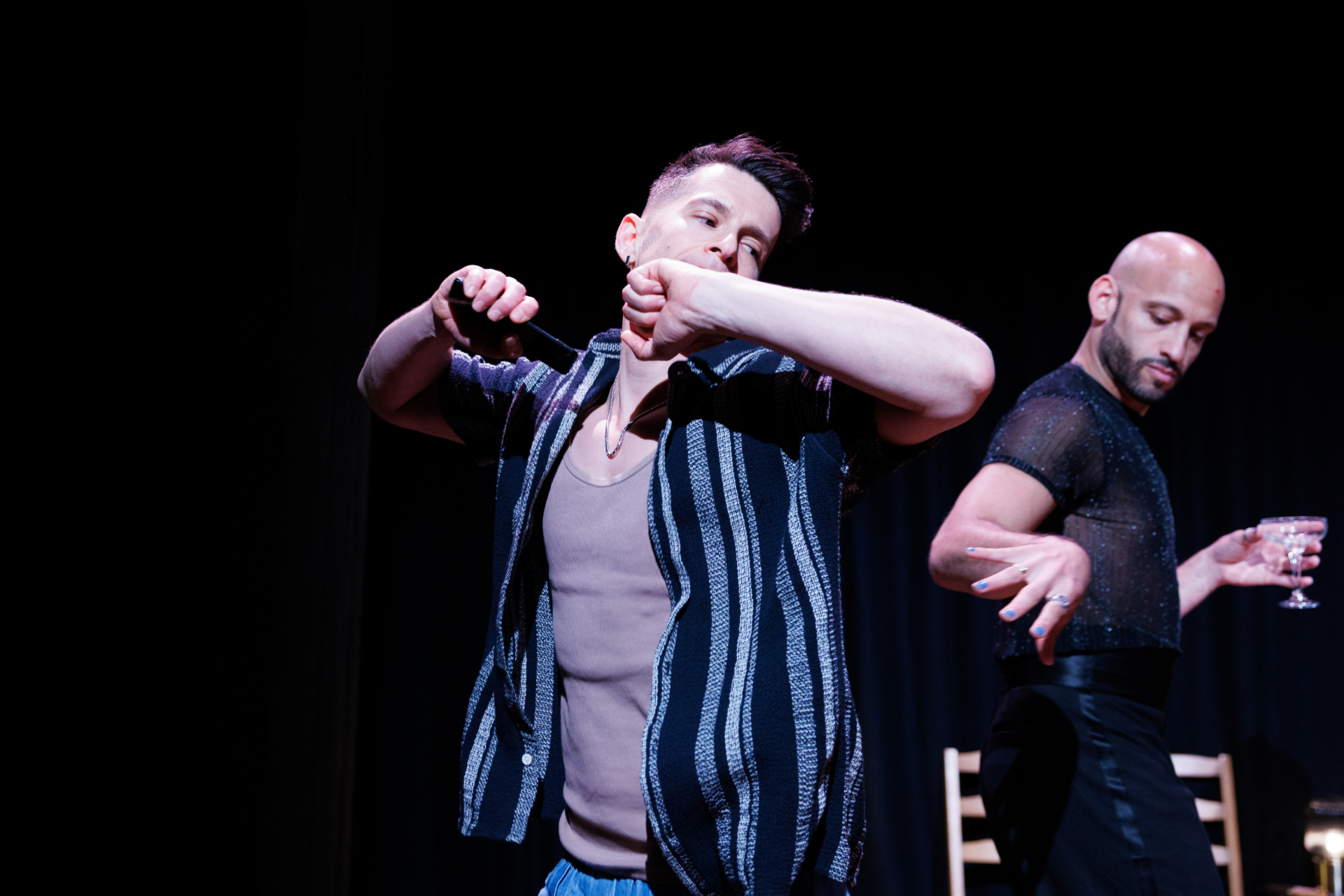
In a perfect world, our set would be a completely realistic London one-bed flat with a lounge and a bedroom. In the world that we actually live in, the kitchen is off-stage, the lounge is four chairs, a coffee table, and some practical lamps. But as we have some bed scenes, that was the hardest part to solve, until we just decided that the back wall of the stage is the bed.
We’ll be standing upright against the wall, holding a blanket, doing some pillow talk, and the audience will just have to adjust their perspective to imagine we are actually lying down. Sure, it was economical, but luckily, it is also theatrically interesting to see!
And if budget or reality was not an issue?
If budget or reality wasn’t an issue, each audience member (let’s say 500 a night!) would write a memory or statement to a past relationship on a Post-it. Near the end of the show, a slow-motion rain of hundreds of Post-its would fly from the rig, landing until the entire stage is covered in endless miniature love letters; lonely thought rangers coming together in a massive pile.
What is the most valuable piece of career advice you’ve applied while writing Earworm?
It is advice I got while doing my MA: get the “gooey” draft out. Meaning don’t wait for the perfect sentence, idea, or even a logical sequence. It was especially conducive to the process when working during a moment in life where I felt vulnerable.
I had the format of a pop song as my structure, the themes, some one-liners, and characters, but once I had to bake the cake, I couldn’t assume the role of a perfectly timed oven. At first, the material was raw, not in a sexy kind of way, but in a way that might give you salmonella! The solidifying process after that first draft, through dramaturgy with Avihud Tidhar and through second and third reads, was crucial. When the adrenaline rush of writing is over, you can step out of the creative woods and look at everything with a fresh perspective.
Many thanks to the team for finding time to chat with us. Earworm will play at Camden People’s Theatre from Tuesday 18 to Saturday 22 August as part of Camden Fringe.