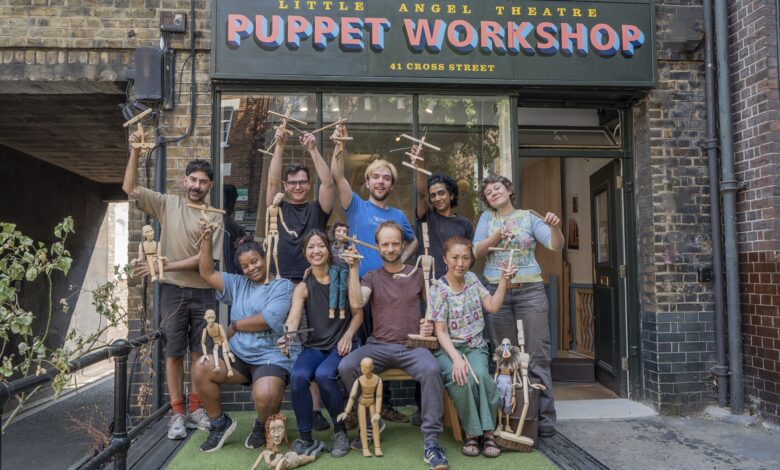
Oliver Hymans takes us behind the scenes at The Sorcerer’s Apprentice.
“It’s really difficult. Really, really difficult.” Standing 12 feet above the stage in 32-degree heat, Associate Director Oliver Hymans isn’t exaggerating. At Islington’s Little Angel Theatre, a team of elite puppeteers is balancing high above the boards, manipulating long-string marionettes for the first time in over a decade. Bringing Goethe’s classic poem The Sorcerer’s Apprentice to life has meant stripping the stage back to its original 65-year-old structure and undergoing an intense, high-stakes re-skilling process. With only a handful of traditional marionette makers left in the UK, this production isn’t just an ambitious piece of storytelling, it is a vital, urgent rescue mission for a 600-year-old artform.
We sent our puppet expert (read fanatic) Mary Pollard along to find out more.
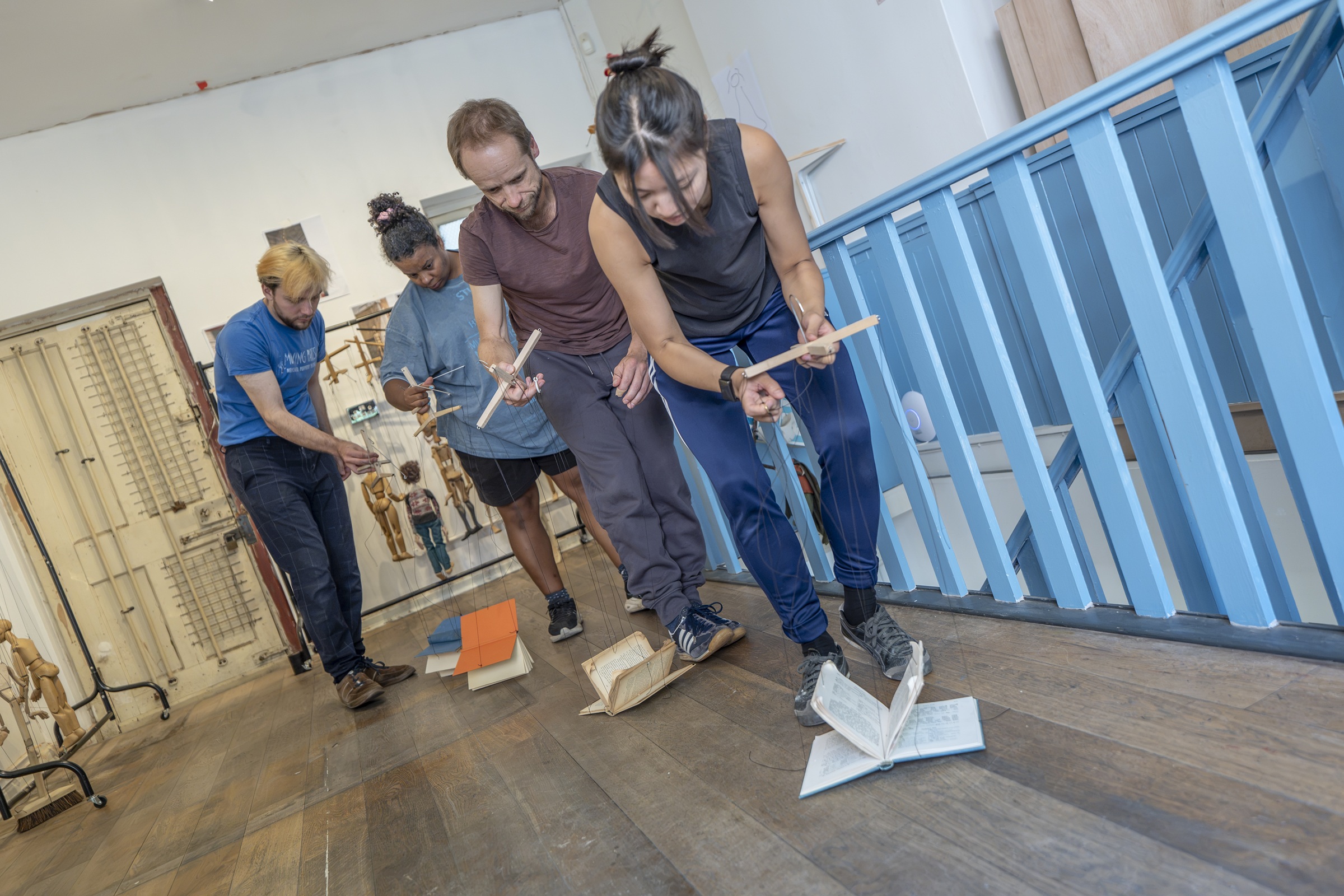
“It’s really difficult. Really, really difficult.” So says Oliver Hymans, Associate Director at Little Angel Theatre when I pop by for a sneak peek at the rehearsals for their new marionette show The Sorcerer’s Apprentice. He’s currently heading up an astonishing legacy project that will bring a long-stringed marionette show to their stage for the first time in over a decade, and is both director and designer for the production.
What’s difficult is primarily the artform itself. Oliver shouts out directions to invisible operators, high above the stage. Six extremely experienced puppeteers (Sam Baumal, Aimee Louise Bevan, Jasmine Chiu, Samuel Dutton, Josh Macrow and Aya Nakamura) were selected from a huge number of applicants to work on this show, becoming upskilled in the process. They are all experts at what they do, yet none of them have touched a marionette string in their careers before now. We pop up to the marionette bridge to say hello and ask the team how the learning curve is going.
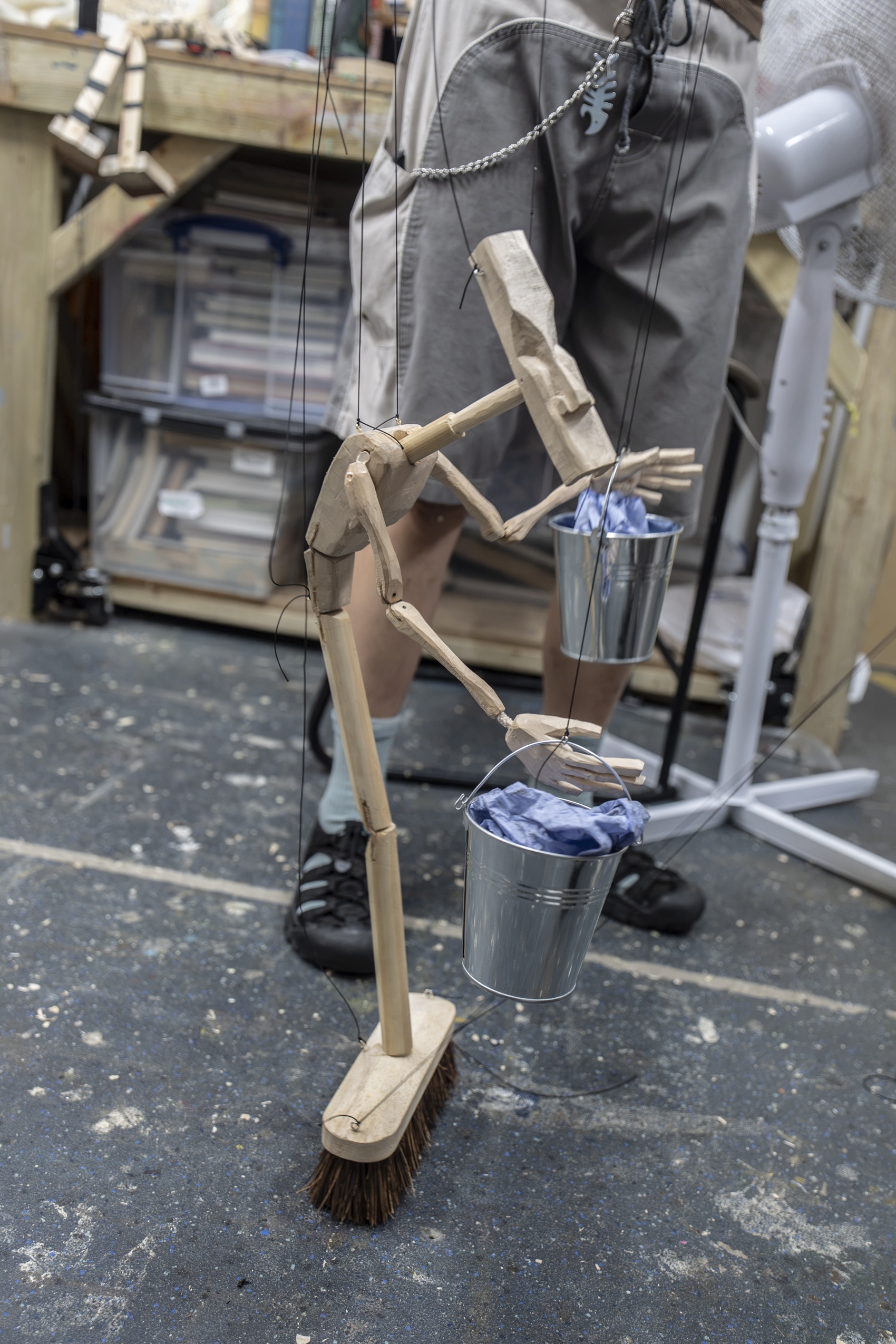
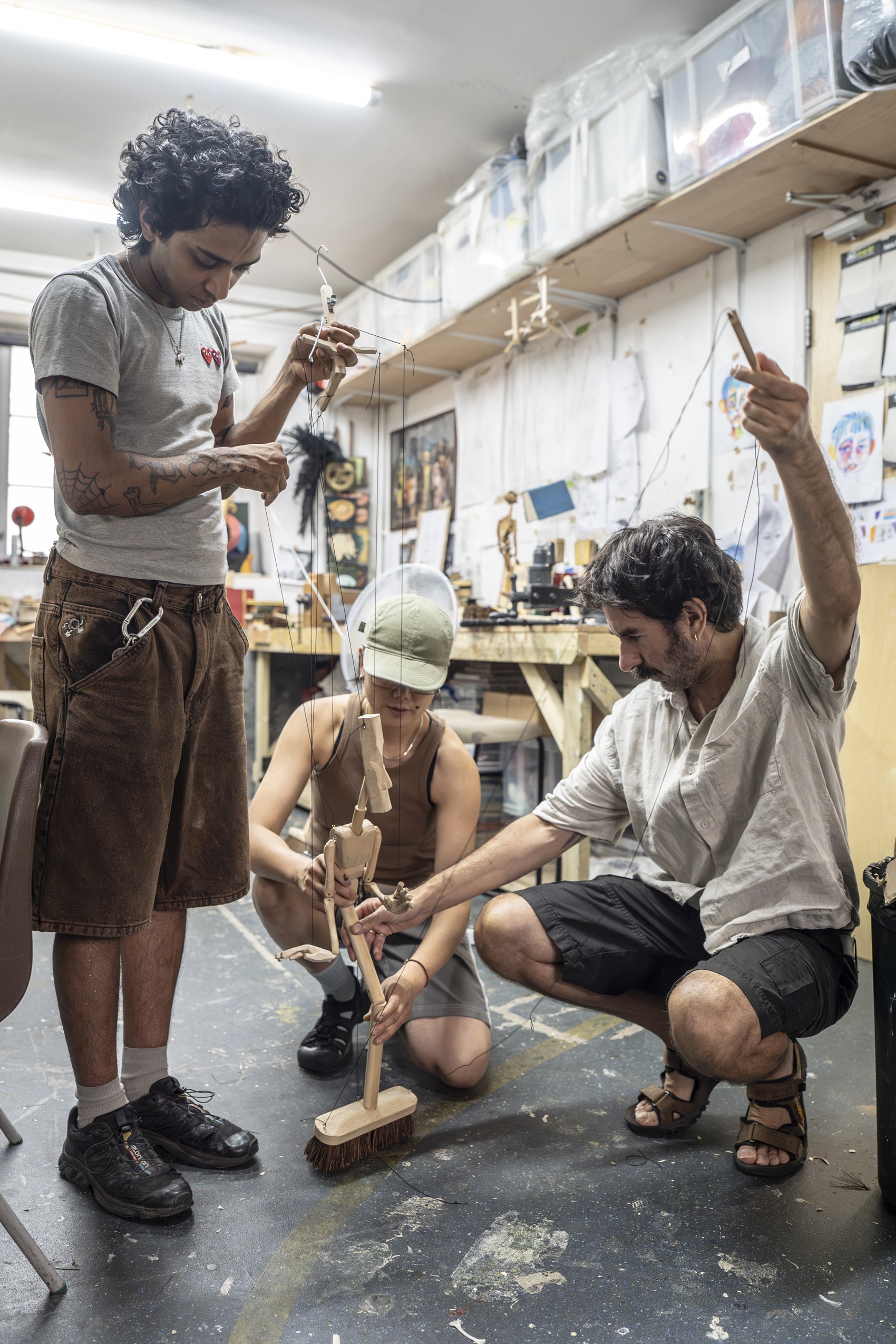
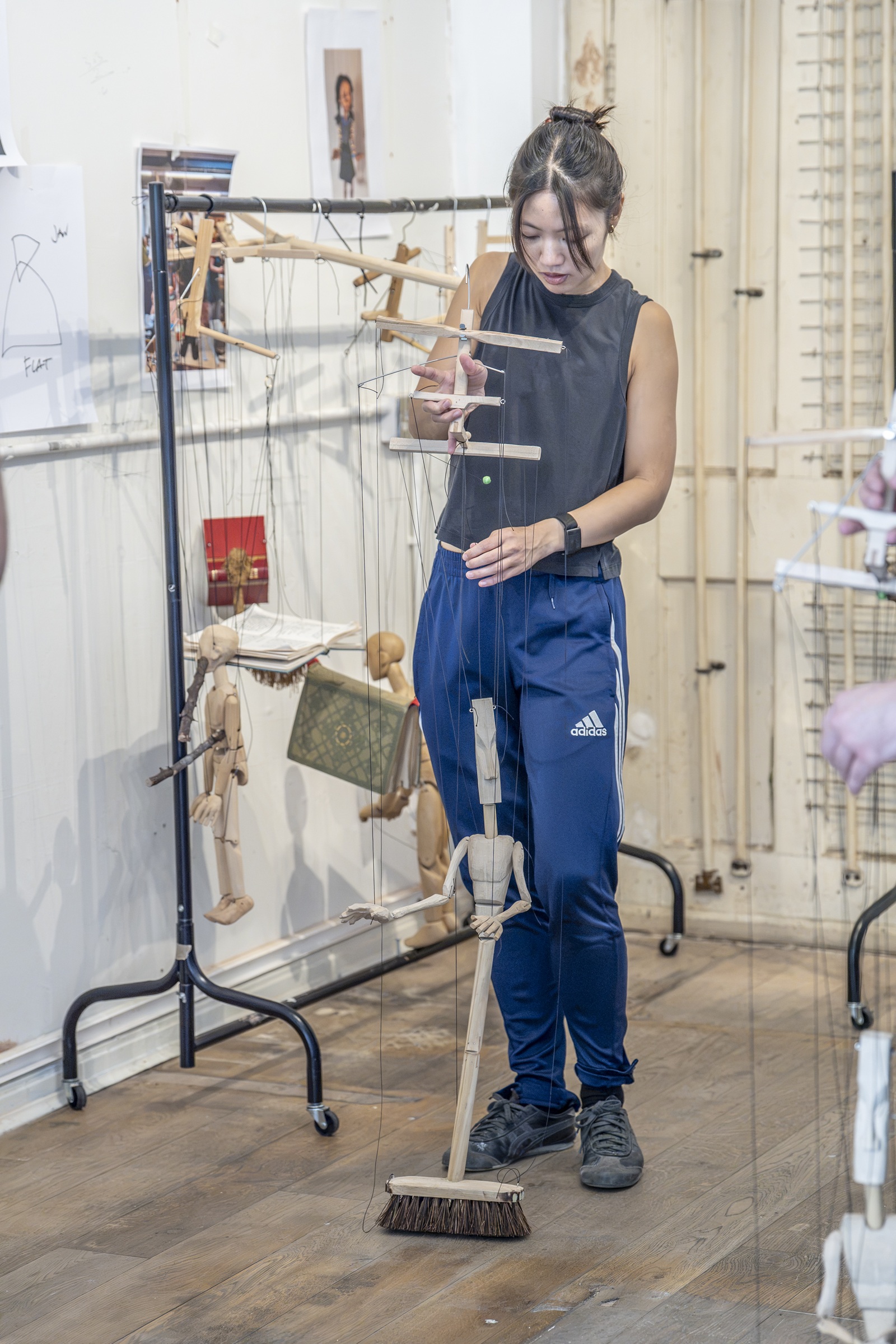
The walls up here are plastered with schedule sheets from shows going back decades; traces of the theatre’s history of commitment to puppetry. These puppeteers are all incredibly excited by the opportunity, and determined to overcome the test that this kind of skill demands. I’m told that they were doing well with the short-stringed puppets in early rehearsals, but coming on to the traditional bridge, which has a drop of about 12 feet to the stage, things become a whole lot trickier. Imagine: you’re storytelling, staring down with no monitors to view what the character looks like or where their gaze is directed; simultaneously you’re working around all the other bodies in the space; occasionally you must pass the puppet over or untangle strings mid-performance, all while co-ordinating the action with a soundtrack and lighting scheme. No mean feat. And hot air rises: it’s 32 degrees outside and that’s all coming up here. Challenging doesn’t begin to describe it.
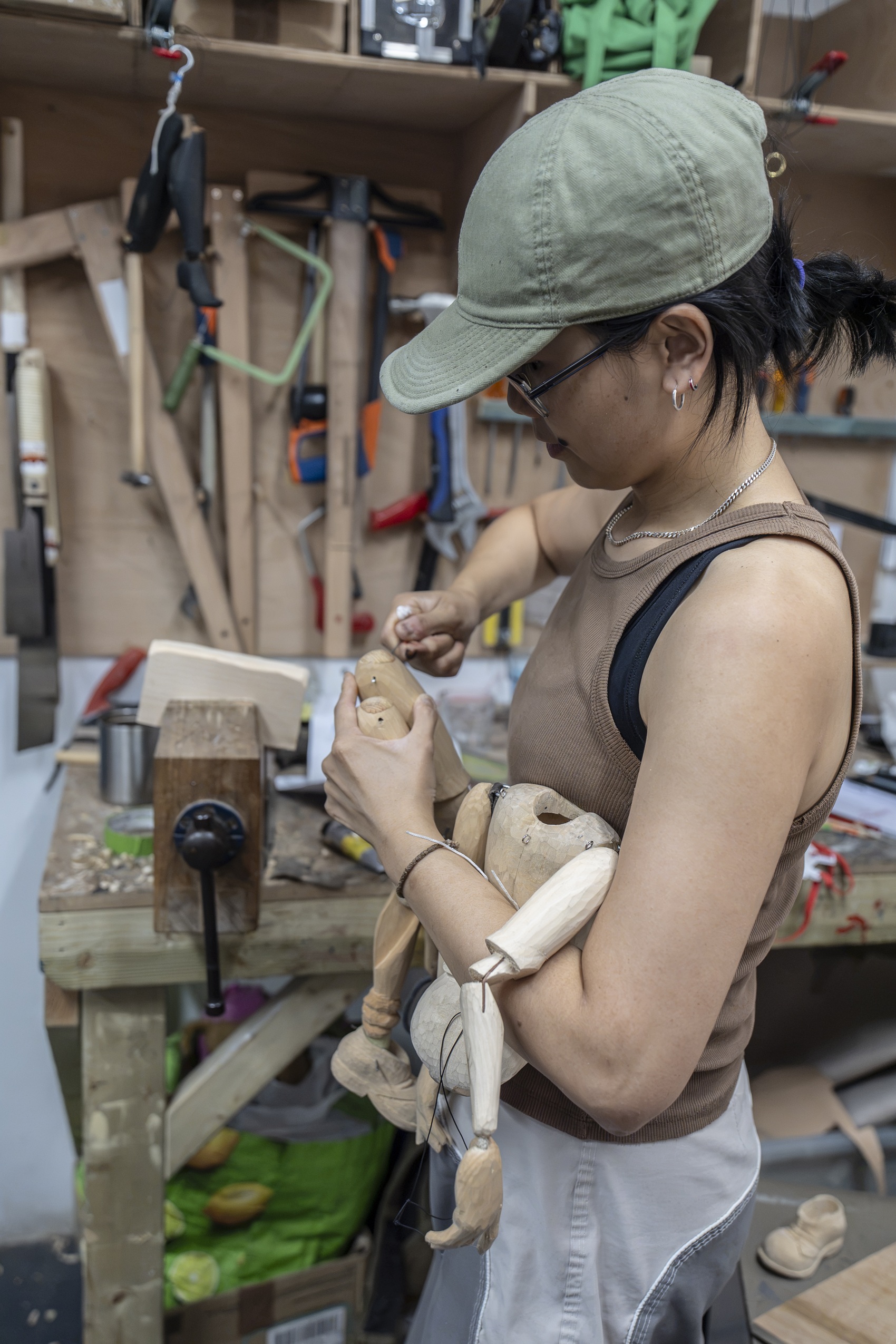
This project is a truly extraordinary one all round, respectfully asking the audience to honour legacy while looking to securing a future for the artform. The outer coverings of the Little Angel stage have been stripped away to reveal the original structure of the marionette bridge that was first put in place 65 years ago; disclosing the letterbox viewing space for the show. And these new puppets, carved using historical techniques, inhabit the stage beautifully, leading us seamlessly into the 21st century. The main character, a boy, is exquisitely crafted by Jess Shead. Puppet maker and performer by trade, this project has enabled her to develop entirely new skills, training to create a gravity-defying marionette for professional use – with all its complexity – for the first time. She is one of only half a dozen marionette makers in the UK today, so much more than just making something lovely, her learning ensures the legacy of the craft by passing it on to a new generation before it is entirely lost.
The music for the show is beautifully sympathetic to the project: modern, yet retaining the sense of magic embodied in Goethe’s classic poem, which is the source material for the play. Composer Ian Oakley previously worked at the Little Angel on an adaptation of modern British poet Joseph Coelho’s Overheard in a Tower Block, so it seems he too is also occupying a space here where awareness of time’s passing is looped and significant.
At the core of this heritage project is the hope that people will enjoy the performance of marionettes, learning about these extraordinary puppets, and securing that knowledge for future generations. There’s a profound sense of passing the baton forward, with training for the new team supplied by exceptional, established performers such as Sue Dacre and Bori Mezo.
Round the corner from the main theatre, in Cross Street, Oliver shows me the new workshop. It’s here that an exhibition is planned which will feature puppets crafted by leading artisans, including Little Angel founders John & Lyndie Wright, Stephen Mottram and Gren Middleton. But it’s not a museum display. It additionally features items by prominent creatives from the present day, with work by Peter O’Rourke, Sarah Vigars and also Ash Appadu, who started their career as a trainee here just a few years ago, specialising in marionettes and subsequently made a QEST Scholar. And there’s no gatekeeping of the craft, with public courses being made available so anyone can learn about it.
The Sorcerer’s Apprentice plays at The Little Angel Theatre from Saturday 22 to Sunday 30 August, with the exhibition running from Saturday 22 August to Sunday 6 September. It’s a unique and exciting opportunity for celebration of a 600 year old artform, determined to secure its future while that’s still possible.
Our thanks to Oliver for this insight into how a new future is being conjured for marionette puppetry.