Boo Jackson & James Wren on If Not Me
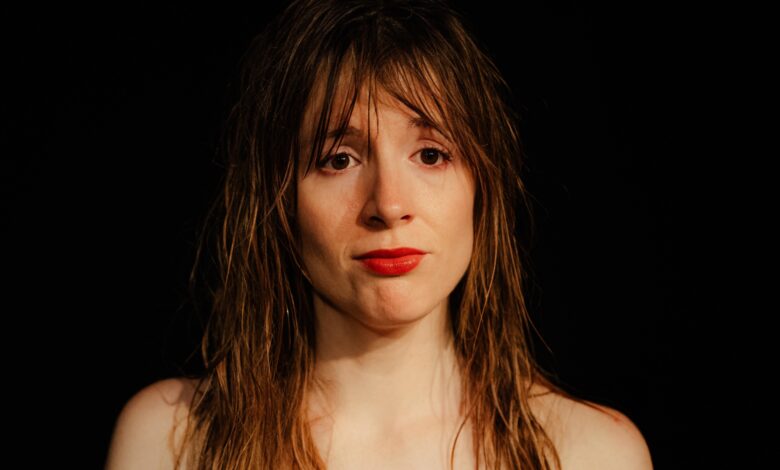
At first glance, Boo Jackson’s If Not Me feels like a warm, off-hand catch-up over a pint, a conversational wander through everyday observations, gym habits, and the oddities of human behavior. But beneath that disarming composure lies a meticulously crafted, slow-burn exploration of mental health, isolation, and the quiet mechanics of obsession.
Born out of Unrestricted View’s Hatchery developmental programme and staged at The Hen and Chickens Theatre for the Camden Fringe, where we called it “carefully crafted” and a “meticulous script” (read our full review here) the piece relies on a minimalist set, a single stool, precise shifts in light, and isolated voice-overs, to build a world where fantasy subtly, dangerously overwrites reality. We sat down with writer-performer Boo Jackson and director James Wren to discuss the evolution of the script, the art of directing single-performer intimacy, and how a throwaway mantra can morph into something far more complex.
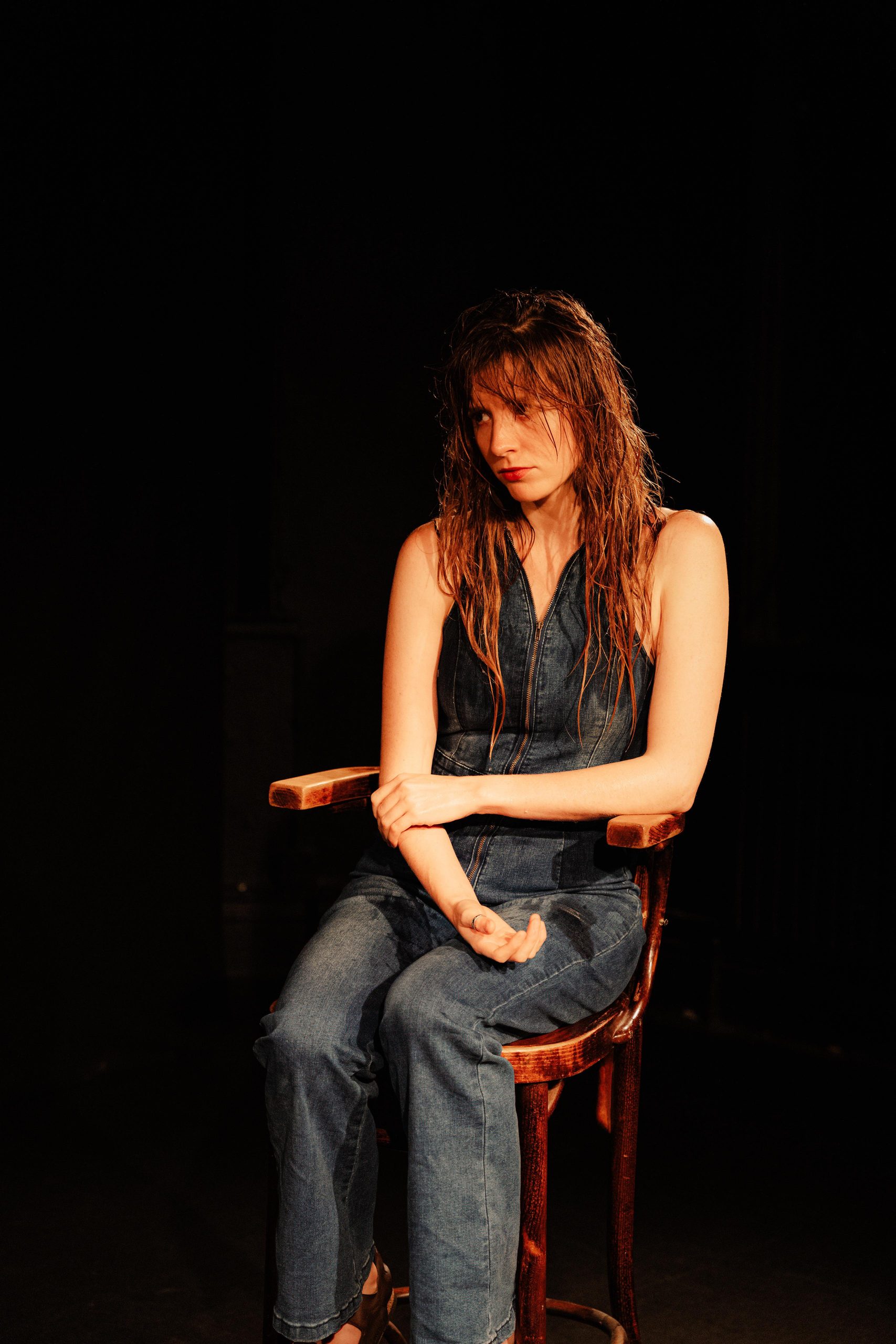
If Not Me grew out of Unrestricted View’s Hatchery programme, evolving from a short monologue into a full Camden Fringe piece. How did that initial kernel of a story develop, and at what point in the process did you realise that this character’s casual musings were leading toward a deeper exploration of obsession and mental health?
BOO: It’s funny, it actually happened the other way round; the obsession came first, the casual came later. I knew I wanted to write a piece about stalking, but the initial ideas I had felt like they were completely lacking in any nuance. If I remember correctly, I think the original conceit was that the whole thing took place within a police interrogation, which I tried to write, but it didn’t quite work. Then for about five minutes I thought it would be cool to set the play in a theatre, and have the gimmick be that this woman had managed to lure the person she was fixated on to her show in a very meta entrapment attempt (a terrible idea, I think we can agree). But quite quickly those ideas were binned (before they were ever fully fleshed out or performed, thank god), and the piece started to look like a much shorter version of what it is now.
I think this version of the story was actually much easier for me to write. While I have obviously never stalked anybody (promise), I definitely have experienced the feeling of having that kind of tunnel-visioned hyper-fixation on something (being completely convinced that I’d fail an exam, so overworking myself every hour of the day to the point of complete burnout, and framing my entire life around that for months and months, to give you a bit of a banal example), so I know what the pull of that fixation can feel like. After that, it was just a case of never judging the character or seeing her as a villain, and colouring her in and adding detail in a way that at least made her actions make internal sense, despite them ultimately being dangerous and destructive.
And how vital in its development has the Hatchery programme been in transforming the show from a short piece to the version that we saw at Camden Fringe?
BOO: Completely integral. I think if nothing else, it’s having a regular set of deadlines, and each of those deadlines being in the form of a performance (however rough). I think I’m someone who could tinker with ideas forever, or never write them down in the first place in fear that they won’t be perfect. But the fact that the regular Hatchery scratch nights basically added a flavour of ‘ready or not, here I come’ meant that I wasn’t able to stand in my own way like I often do. And actually, the bits that I wrote and brought to James saying “well obviously I’ll eventually change this bit, because it’s rubbish, but it can be this for now” would often end up being the bits that worked the best in front of an audience. Being given that permission to draft messily, and also knowing that James (who I trust entirely) would be guiding the whole thing and not let me go on stage and make a complete fool of myself, was genuinely what made this piece feel possible to create.
JAMES: The Hatchery is a safe place to try out and then develop an idea. It can feel a bit deadline-driven to begin with, but ‘just doing it’ is often how ideas reveal themselves, and when they do, that’s when the real work starts, as we develop the show. Boo had so many ideas for the character, but she also has an incredibly honed instinct for what worked and what should go. It was amazing to watch her know this woman was in there somewhere and be relentless in her quest to find her. The Hatchery was a testing ground at multiple stages of that process.
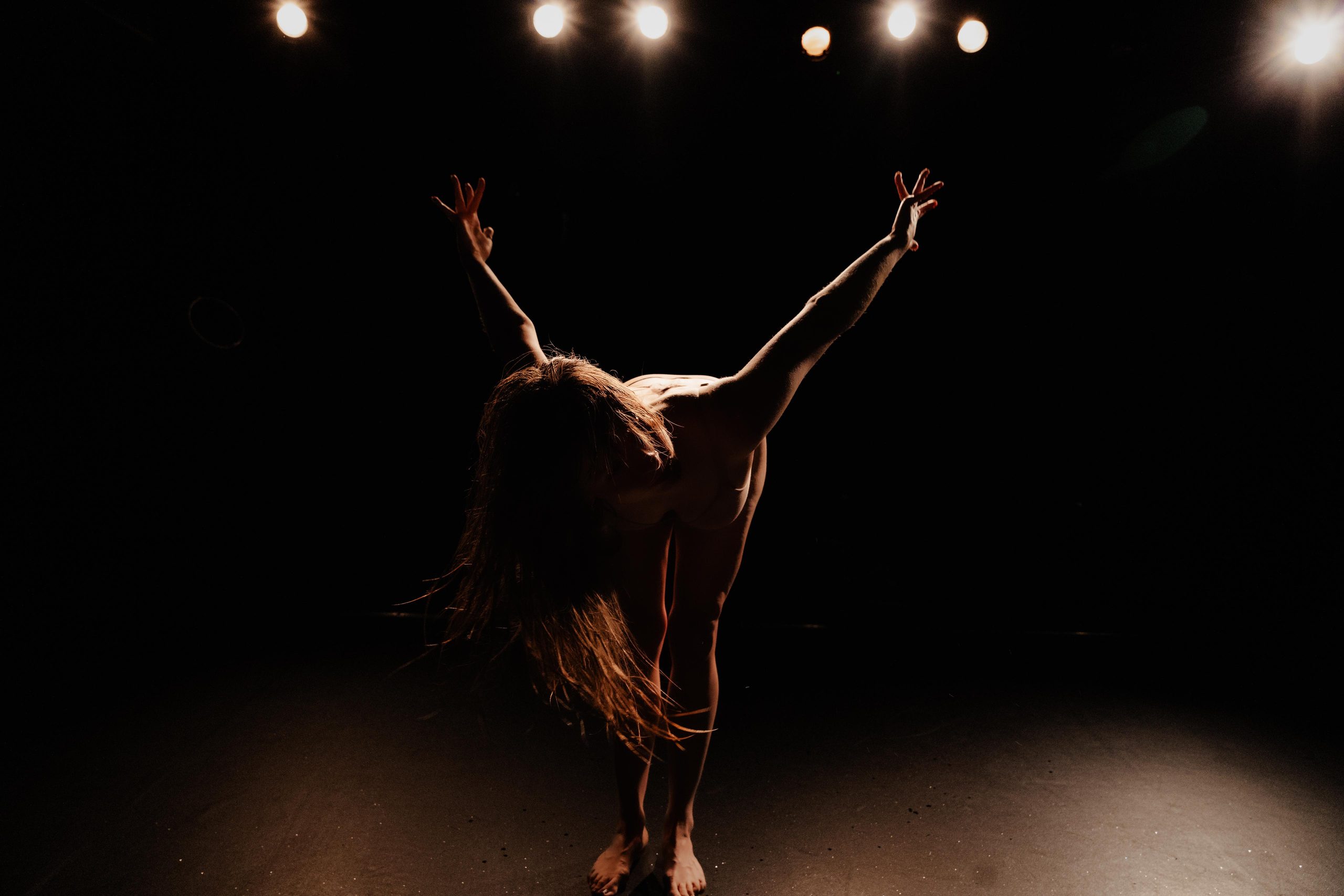
The play’s central mantra, “If not me, who. If not now, when.”, is traditionally a call to action. How did this phrase become the anchor for the piece, and how does it shift in meaning as the protagonist’s internal logic becomes increasingly skewed?
BOO: I think with it being a mantra that she’s called upon since hearing it as a child, it’s something that has almost lost any consistent meaning to her, almost like when you say a word again and again and it stops sounding like a word altogether. It’s about how it makes her feel, rather than what the quote actually means. So, I think the very fact that she finds it emboldening means that it can embolden anything that she wants it to, whether or not that thing is ultimately positive, or even coherent.
The show creates a fascinating tension because the character speaks with such disarming calm and composure, making her extreme behaviour feel logical to her, and almost to the audience. As a writer and performer, how do you keep the audience sympathetic and engaged even as her actions cross into concerning territory?
BOO: First of all, thank you for saying that, I’m so glad that’s how it came across! I think this comes down to what I mentioned before about having found a way to write and conceptualise the character in a way that means that I feel like I understand her internal workings. While I obviously don’t agree with or condone her behaviour, I completely understand the internal logic and psychology of how she moves from A to B to C (to D, to E…), where A is a completely reasonable starting place that we can all likely empathise with, but the final choices and events are completely wild and unacceptable. So, it really is just a case of playing the psychology rather than the actions. I’m not playing ‘I’m going to follow this man’, I’m playing ‘I can’t wait to see him!’, and I think that actually makes it surprisingly straightforward to embody in a way that seems grounded and sympathetic.
James, directing a single-performer monologue on a minimalist stage, with little more than a high stool, requires immense precision. How did you use subtle shifts in movement and lighting to mark transitions in space, time, and emotional state without breaking the intimacy of the piece?
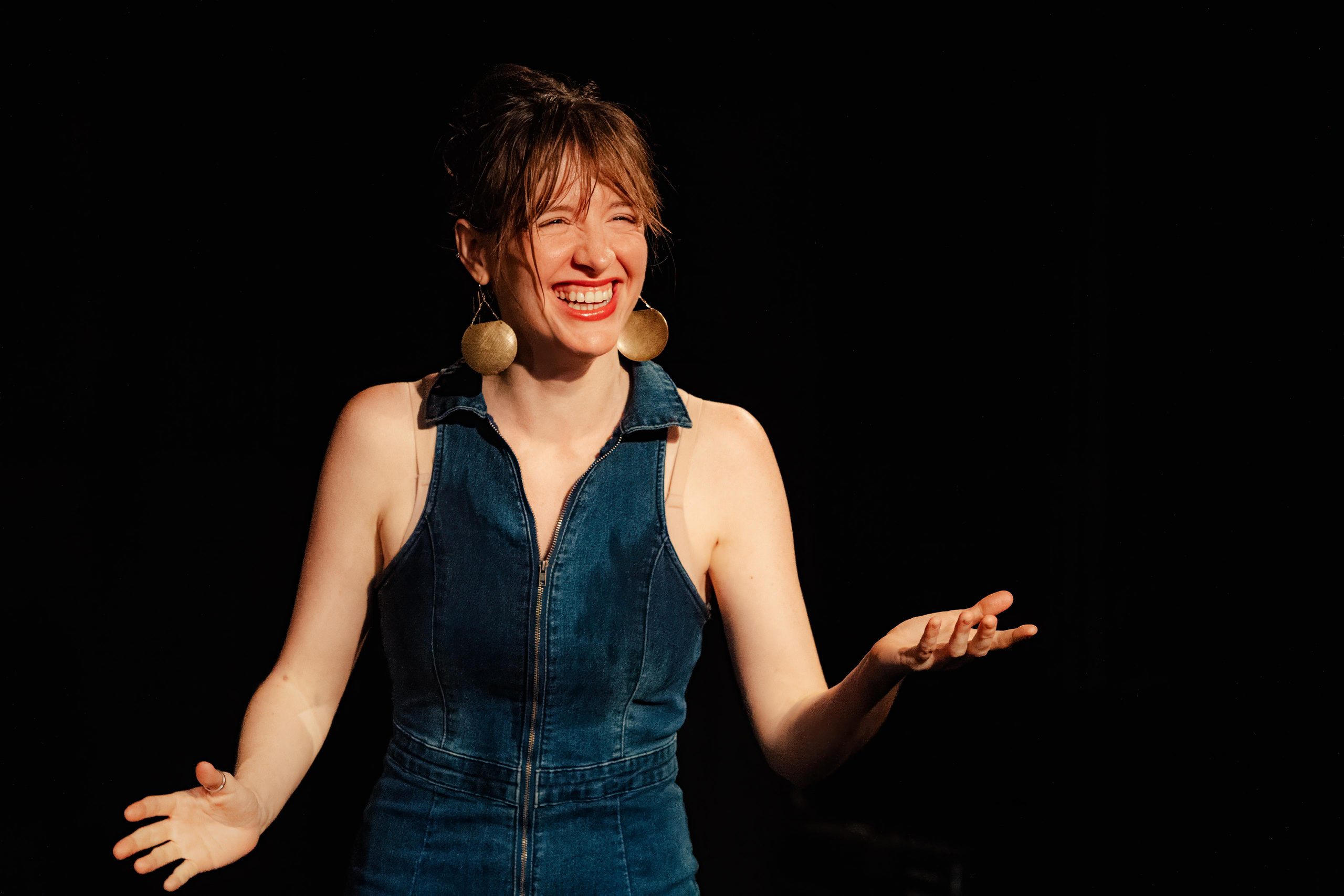
JAMES: Boo is such a meticulous writer and performer that to show the story in the best possible light, it had to be stripped back to the bare minimum. We cut props, other furniture and soundscapes as it felt they distracted us from the character’s journey. Boo plays her so beautifully, she has such a wonderful way of drawing you in and we wanted to hold the audience in that place as there is so much for them to discover in this piece. With that in mind, the staging had to gently meander like a conversation, moving us along with her subtly, never breaking the flow. I wanted the lighting to follow in the same way, complementing the story rather than setting it.
At its heart, If Not Me touches on the quiet, modern forms of loneliness and the unseen mechanics of mental health struggles. What do you hope audiences take away about how easily fantasy can replace reality when someone is desperate for connection?
JAMES: That’s a complicated question… I guess that maybe the scariest thing about loneliness: it doesn’t just make you sad, it makes you a more convincing liar to yourself?
BOO: I thought about this a lot, but I think the honest answer is that there isn’t one single thing that I hope people take from the show. I hope they’re able to understand how these kinds of obsessive mechanisms can feel (at least to me), but beyond that, I’m so happy for people to take from the show whatever they want to. I’ve had people tell me that they loved the character, people tell me that they thought she was “a complete dick” (their words); people tell me that she obviously went too far, and people tell me that she didn’t go far enough. And I think that lack of consensus is great (although cards on the table, I definitely think she went too far…) If we can all at least understand the internal logic of exactly why this character does what she does, I think for me the best case scenario is that we can have a discussion about how those feelings could have been better navigated, and what our understanding of this character tells us about ourselves.
Our thanks to Boo and James for the wonderful chat. You can catch If Not Me when it returns to Hen and Chickens Theatre for one night on Monday 7 September.