Interview: The Pressures of Modern Life, Class, and Regulated Romance
Lambeth Fringe 2026

Sining Gui on 10 LOVES at The Bread & Roses Theatre
What happens when working to sustain the things you love leaves you with no energy left to love them? Ahead of its run at The Bread & Roses Theatre for the Lambeth Fringe, Sining Gui shares the real-life retail inspiration behind 10 LOVES and how her cast created a naturalistic story inside a dystopian premise.
Can you tell us about 10 LOVES and what audiences can expect?
A quiet, intimate relationship unfolding inside a world that insists on counting love.
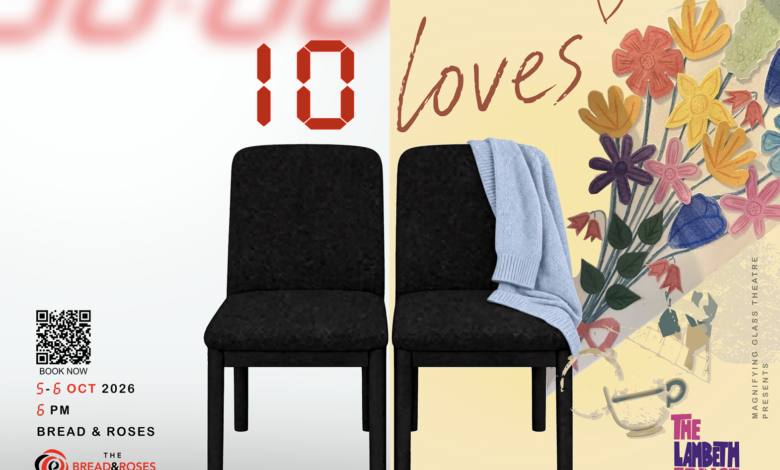
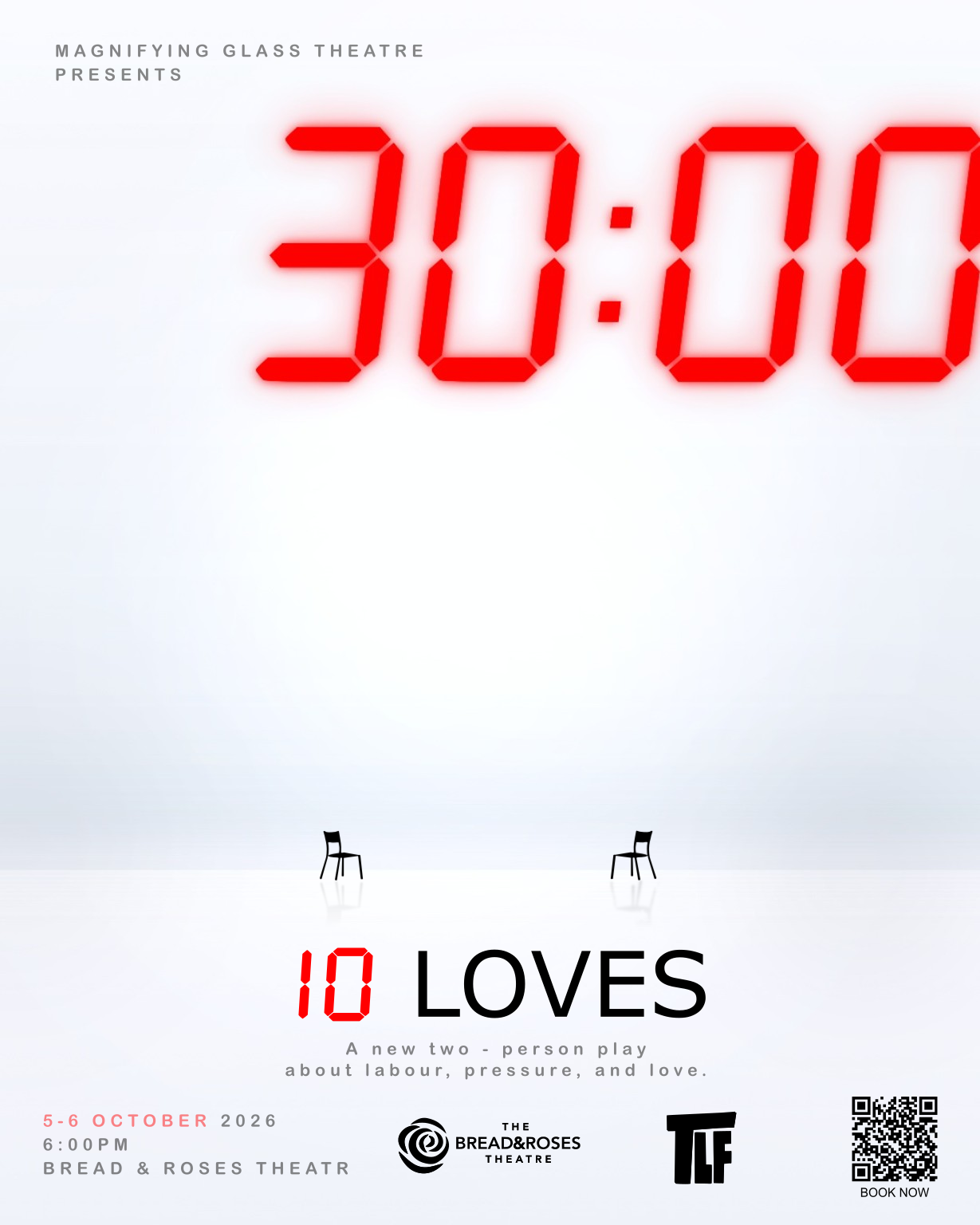
The stage is deliberately minimal: two people, two chairs, a timer and two counters. The law in the play requires couples to say “I love you” ten times a day and spend thirty uninterrupted minutes talking to each other, so these numbers are always physically present. But the relationship itself is very naturalistic and domestic. People get tired, make jokes, sit in silence, look after each other, get irritated. I like that contrast between a system that wants love to be measurable and two people who remain much harder to measure.
Within that, I think the “vibe” becomes quite personal. Some people might feel the tired sweetness and warmth between them most strongly; others might feel the pressure sitting behind every “I love you”, or the sense that something is becoming increasingly fragile. I don’t think those readings necessarily cancel each other out, and I’m quite interested in what each audience member ends up noticing most.
Why is 2026 the right time for this story?
I’m not sure the questions in 10 Loves belong uniquely to 2026. The same tensions may have appeared in very different forms throughout history, and may keep reappearing in forms we can’t yet imagine. But for me personally, 2026 is the year when they have felt most immediate.
I graduated last year and began moving more fully into working life, supporting myself through retail alongside making theatre. It has made me much more conscious of what work can take from us beyond the hours we actually spend doing it: energy, attention, and sometimes the capacity we have left for relationships, creativity or simply ourselves.
So perhaps 2026 isn’t the only time for this story, but it is the time in which I could have written it most truthfully. The law in 10 Loves offers a very neat solution to an old problem: protect love by giving it measurable requirements. Whether that actually protects anything is where the play becomes much less neat.
What was the inspiration behind the show, and how did the concept develop?
There wasn’t really one dramatic eureka moment. It began with a feeling that became harder and harder to ignore. I work in retail to support myself while continuing to make theatre and pursue the things I care about. Over time, I became very aware of how much that work was consuming, physically, mentally, emotionally and in time. Sometimes there was barely enough of me left to keep pursuing those things, or even just to talk properly to friends and family. There was something almost absurd about working to sustain the things I loved while gradually losing the time and capacity to love them.
At first that felt very personal. But talking to other working-class theatre-makers, including the actors in 10 Loves, I kept recognising different versions of the same contradiction. Class became inseparable from the idea. We may not work twenty-four hours a day, but the effects of work don’t necessarily end when the working hours do.
Two questions grew out of that for me: what happens when working for the things you love leaves you with less and less capacity to love them? And what if, when you’re already exhausted, the need to keep loving, creating and feeling human starts to become a pressure of its own?
The concept of 10 Loves grew from those questions. That inner insistence that you have to keep caring, however tired you are, becomes something external and literal.
Can you share a moment from rehearsals that stood out or surprised you?
I don’t want to give away the exact moment, but 10 Loves puts a strong theatrical concept into very ordinary life, so finding the balance between the conceptual and the naturalistic has been very collaborative.
There was one moment where I’d written quite a clear shift in the character’s intention, while during table work the actors felt there might not be a shift at all. Once we put it on its feet, though, something emerged somewhere between the two. Nobody had planned that version. It simply grew out of how deeply the actors understood and inhabited the characters.
That’s something I’ve really valued in working with them: once they’re inside the scene and genuinely responding to each other, they find things that analysis alone can’t. And hopefully, that gives the audience something to recognise and discover for themselves, rather than something that feels designed for them to read in a particular way.
What have been the biggest challenges in bringing this show to the stage?
One of the biggest challenges has been bringing together two theatrical languages that almost pull in opposite directions. 10 Loves begins with a premise that might sound almost dystopian or lightly sci-fi: love is regulated by a system, with a timer and counters constantly making that system visible. But the life inside it is deliberately ordinary and naturalistic.
That contrast runs through the staging too: the cold precision of the timer and counters against minimalist staging and objectless performance. The challenge is keeping the concept and the system strongly present without letting either become more important than the two very ordinary people living inside them.
We’re also making the production with limited time, budget and energy. The actors are balancing rehearsals with their own work, which means balancing not only schedules but the energy and state they bring into the room. I’ve been wearing several creative hats too: alongside writing and directing, I’ve taken on the graphic, prop and technical design, and programmed the timer and counter system myself. There’s a certain irony in making a play about how work and limited resources affect our capacity for the things we care about while negotiating some of those pressures in the process of making it.
What do you hope audiences take away after seeing 10 LOVES?
I’d be very happy if people left the theatre disagreeing with each other a little.
There are questions in 10 Loves that I have my own answers to, but I don’t want the production to settle them for the audience. Is the law protecting something valuable, or damaging it by trying to protect it? What do you think will happen to these two people next? How much power does the law really have over their relationship, compared with everything else in their lives?
I think success would be different people watching the same hour, noticing different things and imagining different futures beyond it. If the play continues a little in their heads after the timer stops, I’d be very happy with that.
If this show were a colour, what would it be?
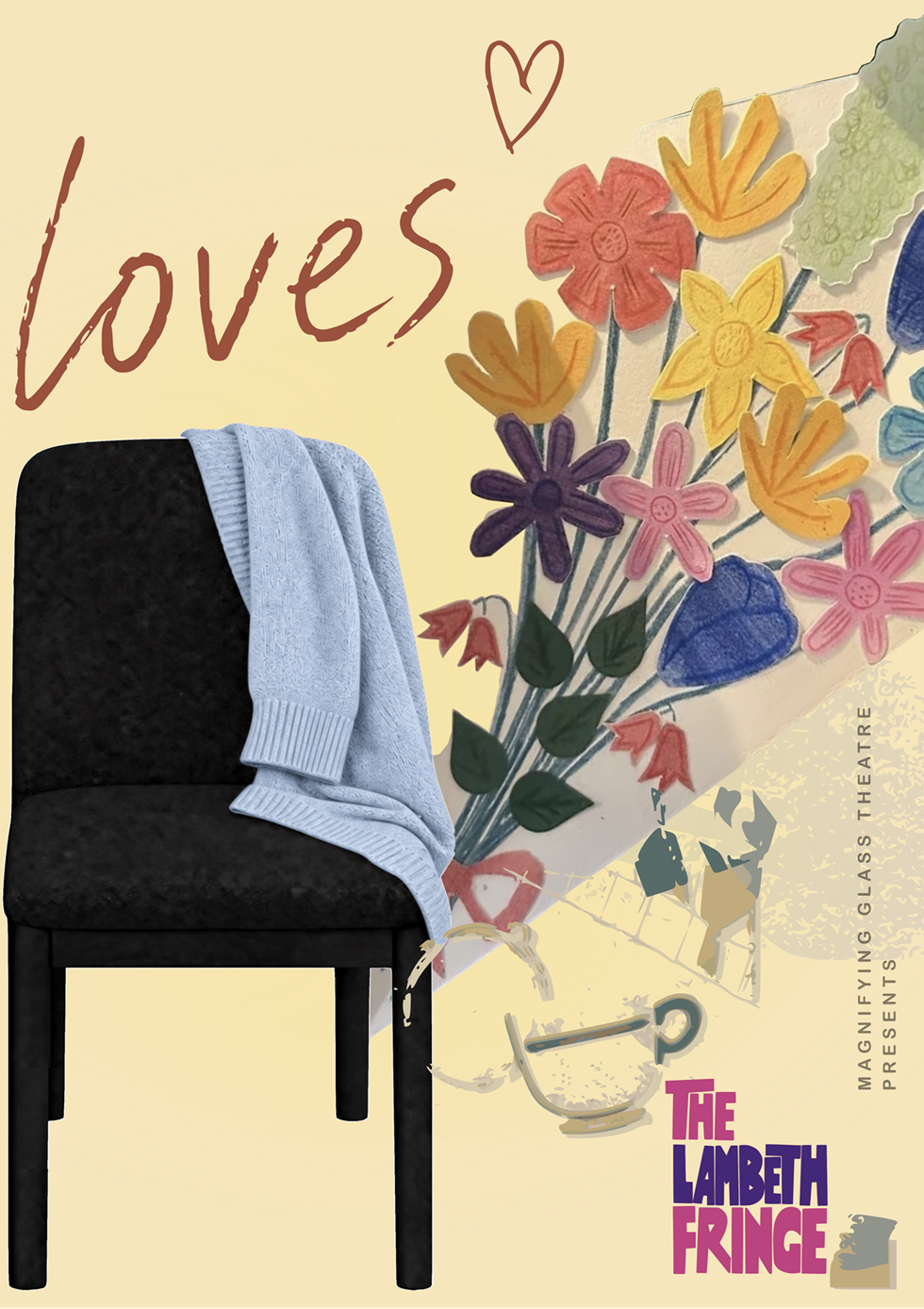
I’m going to cheat a little: the colour of a transparent sweet with a warm yellow-orange centre showing through. Cool and almost colourless on the outside, but you can already see the warmth inside.
If 10 Loves were a love letter, who would it be to?
I think it would be a love letter to anyone trying to hold on to the things they care about under the pressures of everyday life, but especially to my retail colleagues. They’ve given me a lot of the inspiration behind 10 Loves, and they’ve also been some of the first people to come together and support the show. They’re genuinely lovely people, and I think they’ve reminded me of something very simple: however tired we are, people still choose to care, to show up for each other and to love.
10 LOVES plays at The Bread and Roses Theatre on Monday 5 and Tuesday 6 October as part of Lambeth Fringe.