

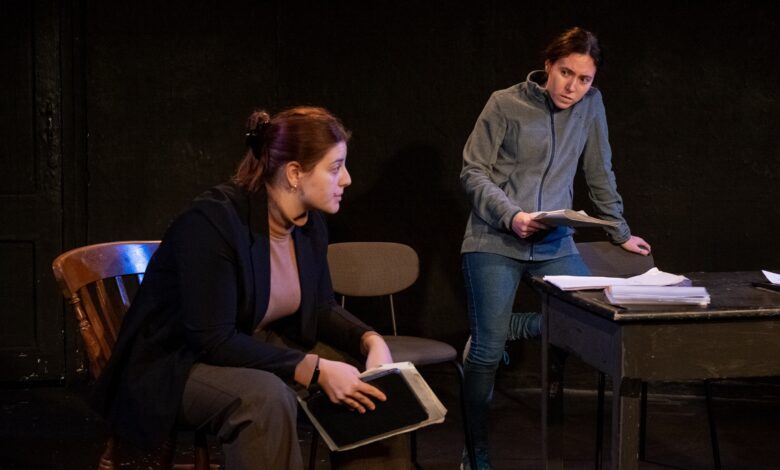
Devised Theatre, Corporate Complicity, and The Greater Good Company at The Hope Theatre
What happens when your dream job demands you trade your morality for a paycheck? Born out of political dread, Rachel Maddow broadcasts, and collaborative devising workshops, The Greater Good Company turns global corporate corruption into a razor-sharp, deeply funny whodunnit. Ahead of their run at Islington’s The Hope Theatre, we caught up with writer and director Emma Wilkinson to discuss the fine art of “outsourcing” directorial decisions, balancing heavy socio-political stakes with laugh-out-loud comedy, and why individual resistance is always worth the cost.
The show draws inspiration from real-world stories of political and social resistance. Was there a specific moment or modern catalyst where you felt compelled to explore how individual morals get squeezed by corporate interests?
In a word: Trump. Specifically, the re-election of Donald Trump in 2024, and the subsequent coverage provided by MSNBC’s Rachel Maddow. In the direct aftermath of Trump’s re-election, and the authoritarian shadow that threatened to cast, Maddow was the first to remind me that, if you take a long-lens view of human history, yes, you’ll find troubling things happening. But, right alongside them, you’ll also invariably find courageous people doing the right thing. Oftentimes, these are everyday people, taking great personal risks despite the impossible situation facing them. The notes of bravery, hope and creativity in these stories are what I wanted to explore.
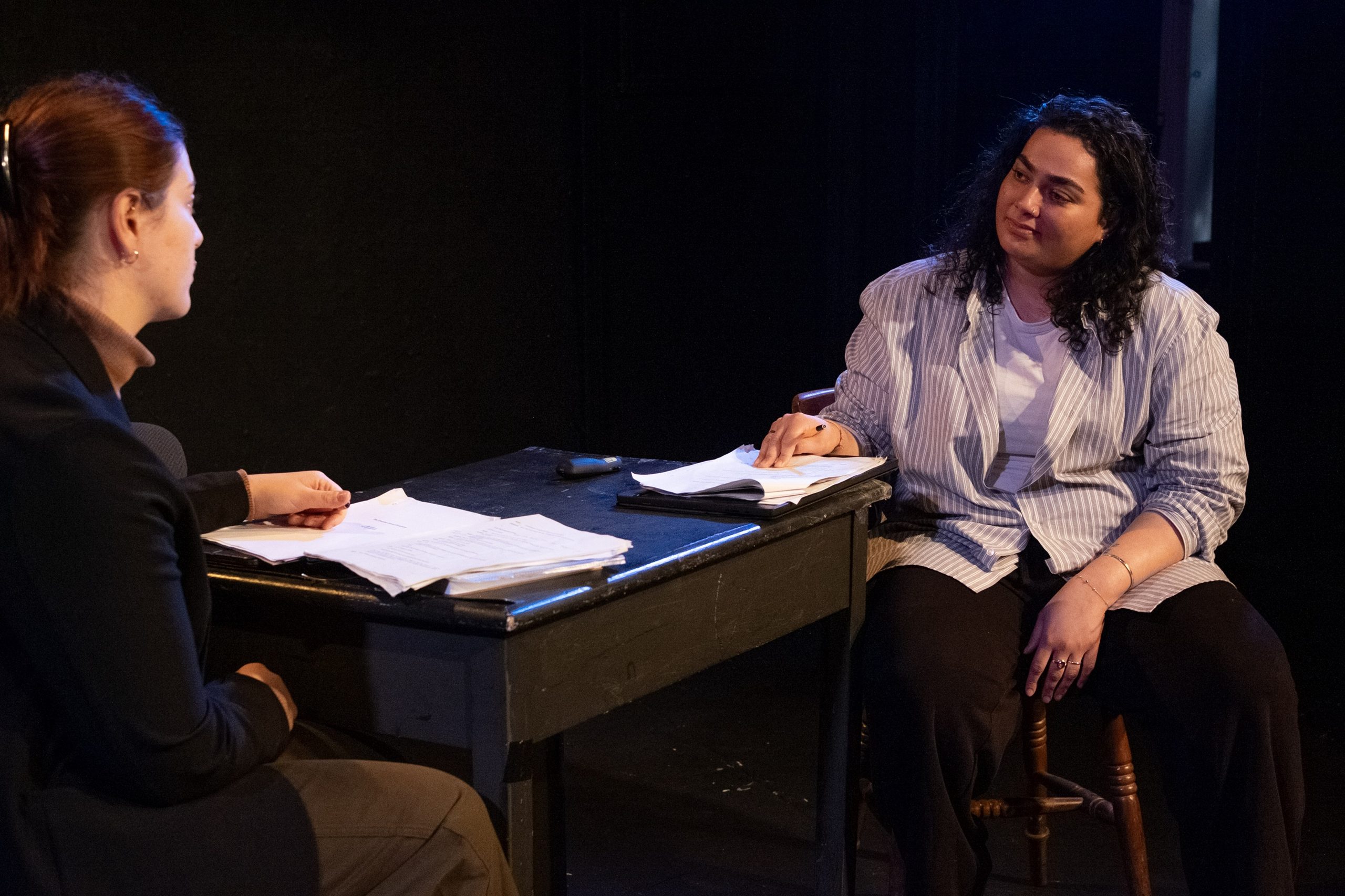
The Greater Good Company was built through collaborative, devised workshops (including support from Theatre Peckham INCUBATE). How did those early improvisational sessions shape the core narrative, and what did devisers bring to the room that wasn’t on the original page?
For me, there’s a natural match-up between the process of building resistance and the process of devising. There are as many different forms of resistance as there are people – and the same is true of actors. As a facilitator and writer, the beauty of this in practice is the element of surprise – you can put multiple brains on one problem, and they will all solve it in different ways. To name just a few story items, the devising process gave us: a diving expedition gone wrong, a suspicious artefact and signals of corporate ill-intent.
Having tested the material in work-in-progress showings at venue spaces like The Old Red Lion, what key discoveries during those early scratch nights fundamentally changed how the story or tone landed?
Getting our work in front of audiences has been crucial for the development process. Throughout the initial devising process, I quite genuinely thought we were primarily making a piece with deep socio-political commentary. Until, that is, I heard the first crowd response to the show. And I then realised that – with all due respect to the cast – I’d spent so much time with them that I’d entirely forgotten that they are deeply funny and charming. Remembering this has allowed us to wear our political roots lightly, focusing instead on how we can create a kind of corporate whodunnit; a caper which still asks deeper questions.
When you’re serving as both the writer and the director on a devised piece, how do you manage the internal conflict between those roles, knowing when to protect a piece of script you love as the writer, versus when to ruthless cut or rewrite it as the director to serve the live pace in the room?
The honest answer is: outsourcing! I’ve essentially put this labour on everyone else – the audience, the producers. I personally find it challenging to simultaneously have a view from both outside and inside. So, for me, that’s where the value of collaboration really comes in clutch. The run at the Hope Theatre is produced by Doubletake Theatre, and I’ve heavily relied on their dramaturgical support to have that outside viewpoint. And once we’re in rehearsals, my personal view is: pens down! No more edits, only practical work.
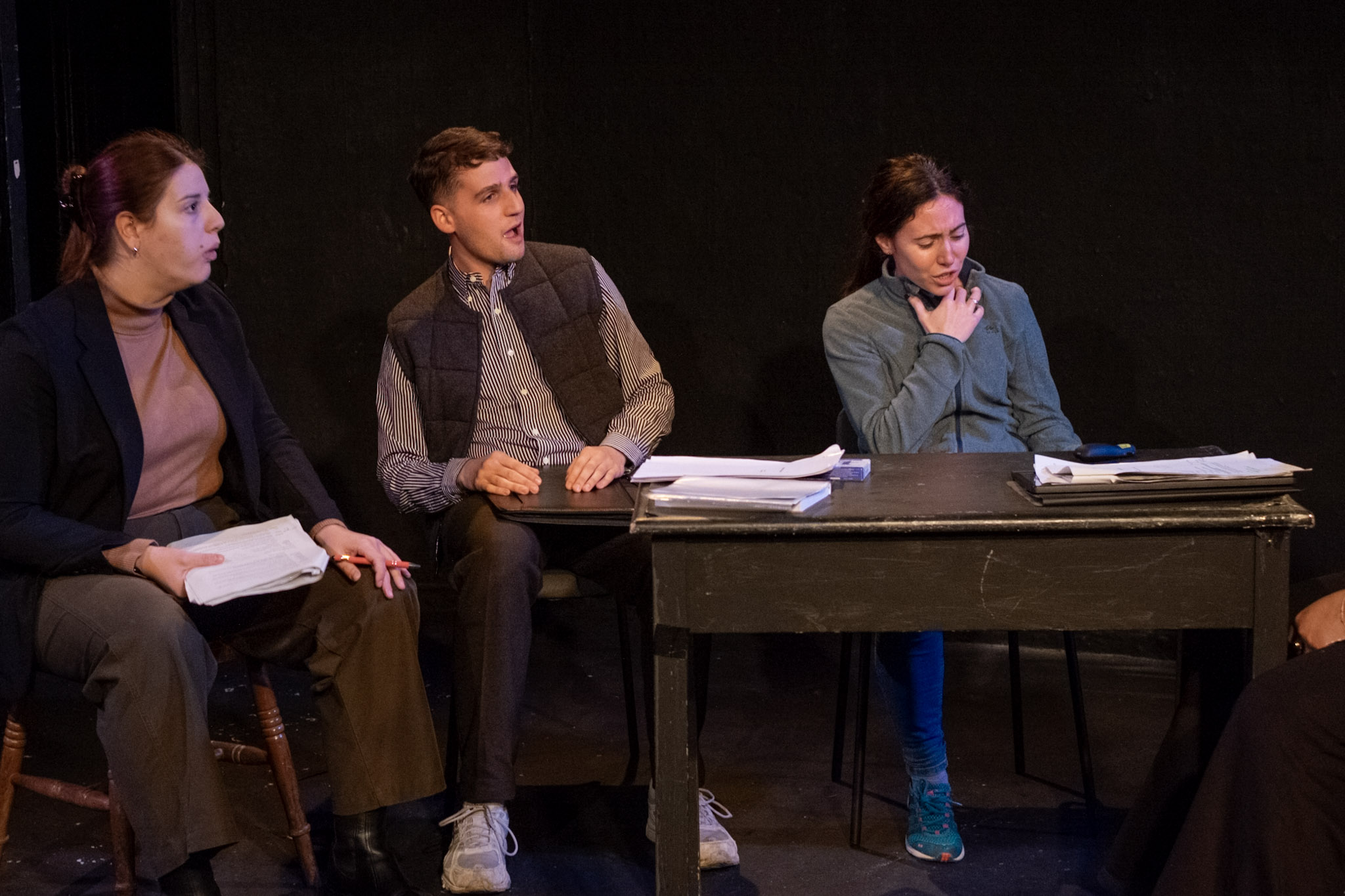
The Hope Theatre is an intimately scaled, highly focused black-box space above a pub. How does staging a story with epic, global ramifications inside such an up-close, claustrophobic room affect the tension for the performers and the audience?
Everything with epic, global ramifications starts with individual humans in a claustrophobic room. As corporate wealth and influence grows, we – as regular citizens – can start to believe that change is inaccessible. We can start to believe that there aren’t individuals at the decision-making table, only corporations. But that simply isn’t true; human agency exists, regardless of organisational scale. So I think it’s useful to present a recognisable, contained corporate environment, and allow audiences to apply their own meaning onto it.
In an era where many people feel powerless against massive institutional and environmental forces, what do you hope audiences take away about the power, or cost, of individual resistance?
That staying true to your own moral manifesto will always be worth it. Even if being steadfast feels small, looks small, takes time, or doesn’t have a splashy impact – it will still be worth it. Our own actions don’t need to look the same as anyone else’s; in fact, significant change relies on everyone bringing their own power in their own unique way.
After taking the show through developmental residencies, work-in-progress runs, and now this London premiere, where do you hope The Greater Good Company travels next as it continues to evolve?
The Company’s bread and butter is solving humanity’s mysteries – and, it turns out, we’ve got plenty of those. So, I’d love for the show to have a life beyond the premiere; be that in its current form, in an expanded version or tackling new mysteries altogether. I’d love for it to meet more audiences and ask them to consider what they tolerate in their own workplaces, their own lives, their own friendships. And then to ask them: what would it take to change this? Could I be the one to do that?
Many thanks to Emma for her time. You can catch The Greater Good Company when it plays at The Hope Theatre from Thursday 10 to Saturday 12 September.



One Comment