The Freedom of Madness: Unpacking The House of Pitman
Edinburgh Fringe Festival 2026

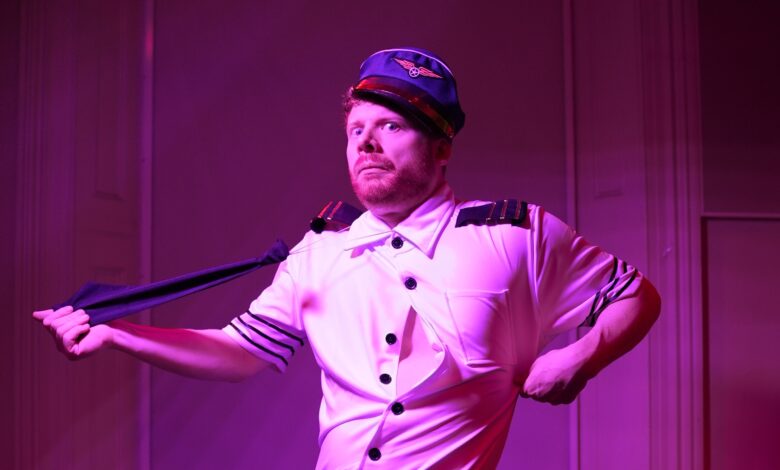
Luke Pitman on neurodivergence, breaking free from people-pleasing, and why the best clowning puts the audience first
Every solo debut is a leap into the unknown, but for Luke Pitman, the creator behind The House of Pitman, it’s also an act of radical self-permission. Built entirely outside the lines of conventional theatre, the show trades traditional scripts and rigid rehearsal rooms for physical instinct, clowning, and high-wire audience play.
Ahead of opening at ZOO Playground for Edinburgh Fringe this week, we dive into the fine line between peace-making and performing, the power of reclaiming personal narrative through neurodivergent-led creation, and why making a room laugh should never come at an audience member’s expense.
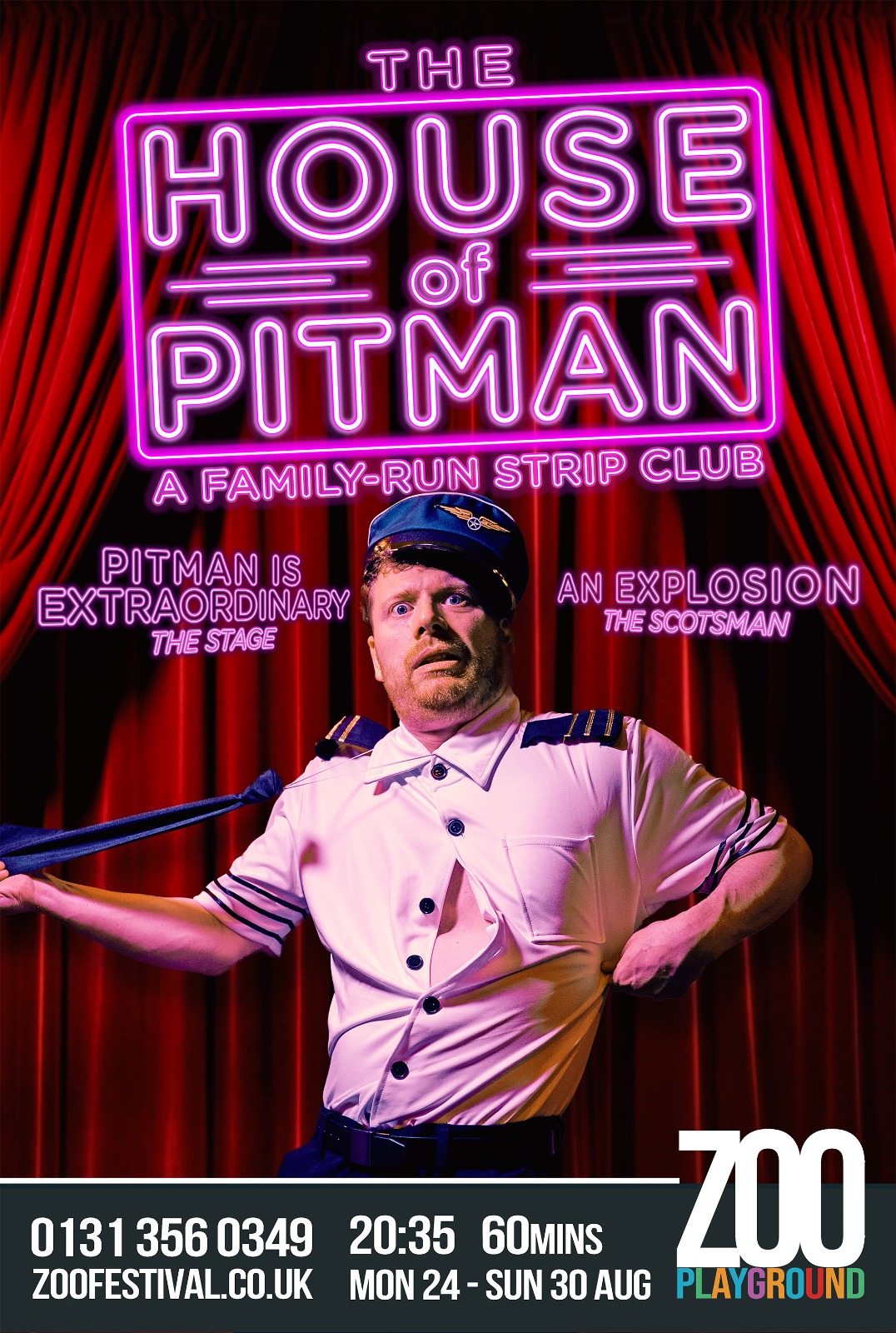
Every solo show starts with a spark of necessity. Was there a specific moment, or a recurring pattern in your own life, where you realised you were constantly playing the role of the peacemaking entertainer rather than claiming centre stage?
I can really relate to that part of Little Pitman, the wanting to win people over and make sure everyone is okay. I think, without really realising it, I’ve always been the person who tries to bring everyone together, make people laugh and make sure they feel comfortable. In a way, being the entertainer and the peacemaker benefits me too, if everyone else is okay, then I feel okay.
Doing a solo show felt like quite a big step away from that. People around me had been telling me for a long time that I should make my own show and give it a go, but this is the first time I’ve really trusted my own ideas and put myself onstage completely on my own.
I think that’s why I wanted The House of Pitman to give me the freedom to really let loose. I wanted to make something where I could be mad and silly and ridiculous, but also actually allow myself to take centre stage rather than always worrying about everybody else.
Stepping into a piece so rooted in personal identity can feel both liberating and exposing. Did creating this show force you to confront any uncomfortable truths about your own relationship with performance and people-pleasing?
Little Pitman is definitely an exaggerated version of myself. A lot of his need for validation comes from wanting his family to be proud of him, and that’s something I can really resonate with.
Being unable to read or write means I’ve had to navigate the world differently. Growing up, people would check in on me, double-check things with me and help me through situations because I had to learn and communicate in a different way. Being the youngest probably added to that too, I’ve often looked to my older siblings to check I haven’t made a mistake or been left behind.
What’s interesting is that my friends and family have never actually wanted me to be the same as them. They’ve always wanted to see me thriving in my own way. I think I’m the one who has sometimes felt like I needed to fit into the same box.
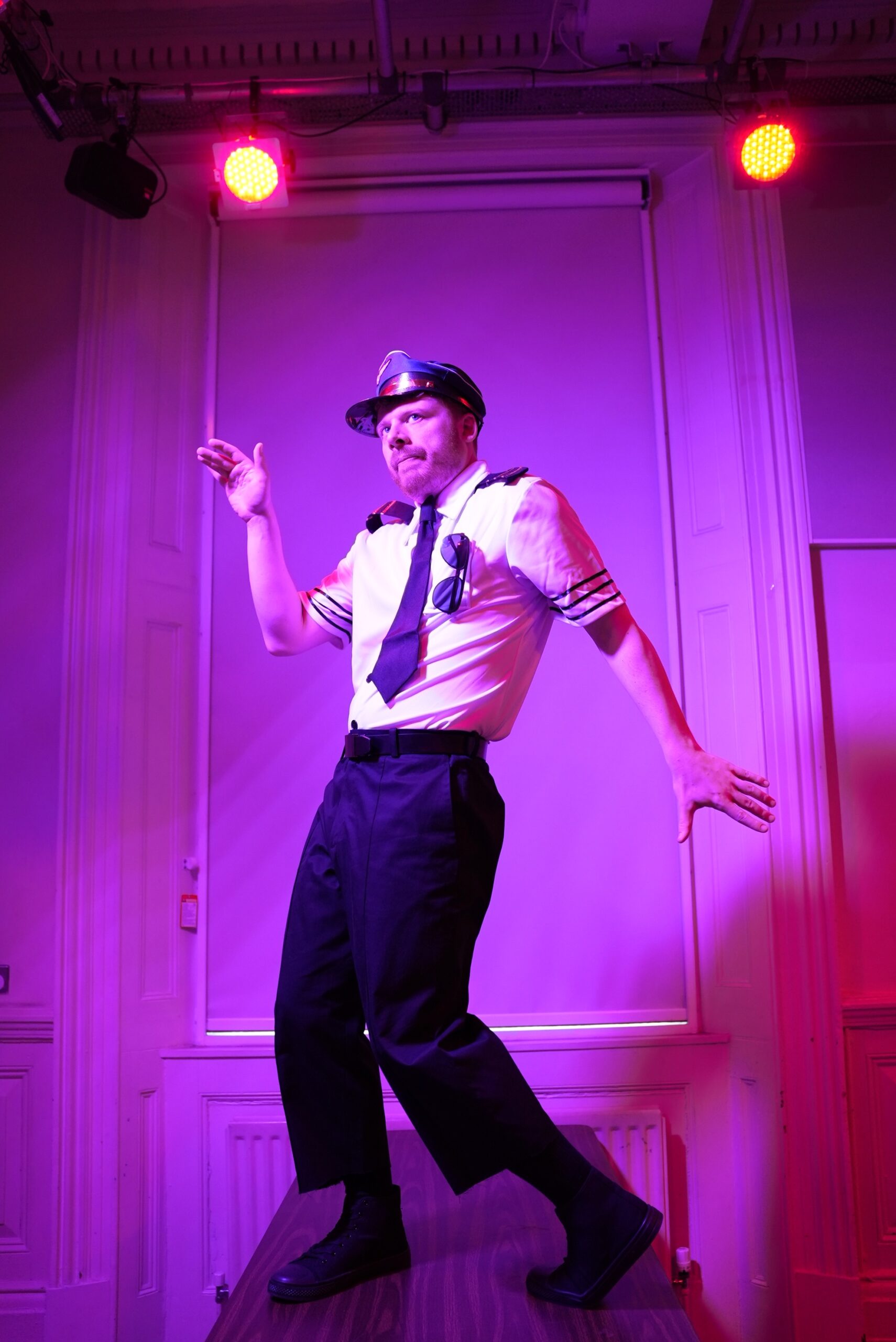
That became a really important part of Little Pitman’s journey. He isn’t a natural stripper, but more importantly, it isn’t what he wants to be. He keeps failing because he’s trying to succeed at somebody else’s version of who he should be. It’s only when he starts choosing his own path that things begin to change.
Making the show has made me realise that maybe I need to give myself that same permission.
For actors who navigate neurodivergence like dyslexia or illiteracy, traditional scripts and conventional rehearsal processes can often feel like a wall designed to keep them out. How did you adapt your creative process to build a full-length solo show entirely on your own terms, and did working without a traditional written script actually free up your physical and improvisational instincts?
The biggest thing for me is that the creative process itself has helped me develop as an artist. The finished show isn’t always the only end goal. I’ve learnt a huge amount about how I work and what I actually need from a rehearsal room.
In previous processes, I’ve sometimes felt overlooked, or like I’ve had to fit myself into a way of rehearsing that wasn’t designed for me. There have also been situations where I’ve been called out by directors or put on the spot publicly. That form of working just doesn’t work for me. It makes me second-guess myself rather than take risks.
For me, theatre should be a place where you can experiment, fail and play, where you can take ideas to uncomfortable places, but also to really weird and wonderful ones. Working with people who understand clown and play has given me the space to push those ideas as far as they can go while still feeling supported.
Not having everything set in stone has been incredibly freeing. We’ve been able to start with the way I naturally work, through physicality, improvisation, character and play, rather than beginning with a written script and asking me to fit myself around it. If something doesn’t work, we change it. If something unexpected happens in the room, we follow it.
It’s taught me that collaboration doesn’t mean somebody else has to know better. I can listen to the people I’m working with and value their ideas, but the number one voice has to be mine. I get the last word.
I want people to see how ideas work in my brain, rather than a version of my work that has been forced to fit into somebody else’s process.
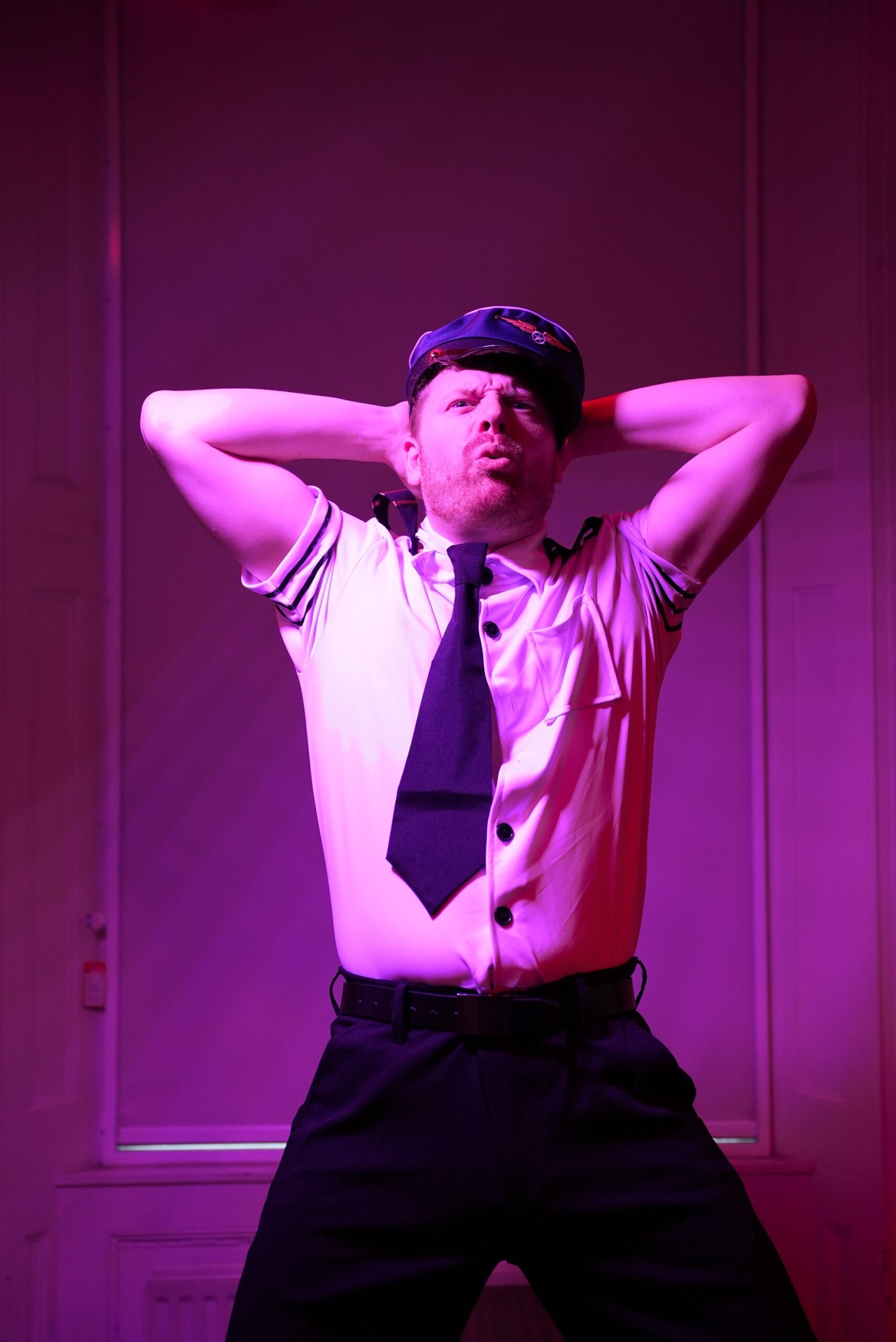
You’ve spent years honing a high-wire skill set; crowd work, quick-fire sketch, and physical comedy, often in service of other people’s visions. What does it feel like to finally turn those same tools inward for your debut solo show, and how do you plan to bring that audience participation energy into a story that is so deeply personal?
It feels great. I’ve spent years learning how to interact with audiences, improvise and respond to what’s happening in the room, often while performing other people’s work. With The House of Pitman, I finally get to use those skills to tell a story that feels like mine.
For me, audience participation is about play. In clowning, there can sometimes be a risk of provoking an audience member or taking away their control because you know it will get a laugh. I’m much more interested in making sure the audience member wins. You’re working with them, not doing something to them.
When I invite somebody to play, they should still get to decide how much they want to give me. My job is to listen and respond to that. The funniest moment doesn’t have to come at somebody else’s expense.
That feels particularly important in this show because Little Pitman spends so much of it having other people decide how he should behave. It would feel strange to tell that story while taking control away from the people I’m inviting into it.
And because the audience are playing with me, the personal side of the show doesn’t feel quite as exposing. It feels less like I’m standing onstage telling everyone something about myself and more like we’re discovering Little Pitman together.
One of the intriguing elements of the show is this haunting, unseen family presence that continually interrupts and undercuts your performance. Technically speaking, how did you construct and calibrate that voice so it feels active and combative rather than just background audio?
The process of creating the voice was really interesting. We started with my producer, Ro, doing it, then experimented with another actor, but ultimately we realised that the voice needed to be my own.
It isn’t supposed to represent one specific member of Little Pitman’s family. It’s more a mixture of pressures, some I’ve put on myself and some that have come from people and experiences throughout my life.
Some of the actual lines have come from things people have said to me. I did a course with Elf Lyons where we explored bouffon clowning and drew on characters and people we’d encountered in our own lives. It made me think about one person in particular who had singled me out and put me down because I couldn’t read or write.
Through clowning, I realised I could take that experience and reclaim it. I could put those words onstage, make them ridiculous and, in a way, metaphorically stand up to that person. There was something quite powerful about taking this image of someone who had held a lot of power in my head and making them absurd onstage.
The relationship with the voice also changes throughout the show. At the beginning, Little Pitman is incredibly obedient to it. He listens, tries to appease it and desperately wants to get things right. Gradually, he realises that he can’t keep pleasing it, and the way he responds to it starts to change. So although the voice itself is pre-recorded, the relationship between Little Pitman and that voice is active throughout the performance.
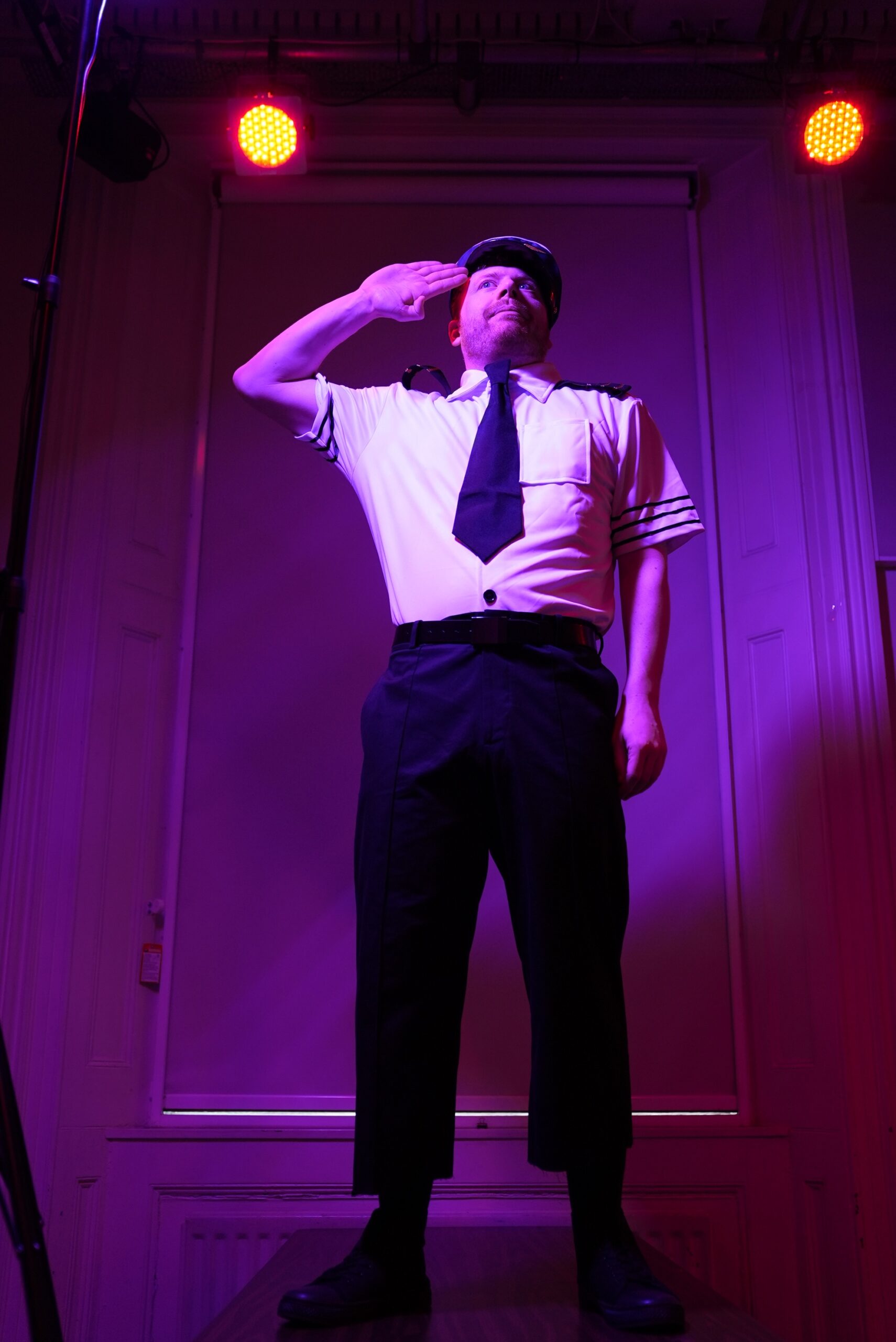
That’s ultimately why using my own voice felt right. Little Pitman thinks he’s fighting against what everyone else expects of him, but gradually you realise how much of that pressure has become internal. There’s something quite powerful about literally standing onstage and having to answer back to myself.
Audiences coming to Edinburgh Fringe see dozens of solo shows trying to strike a balance between high comedy and raw vulnerability. What do you hope lingers longer for someone walking out of the space; the ridiculousness of the journey, or the quiet recognition of their own self-doubt?
Freedom. Madness. Mainly madness.
I want people to walk out feeling like they’ve laughed so hard they need to go straight to bed. Completely exhausted.
And obviously I’d also like them to leave thinking, “Damn, that is a sexy man. Almost too sexy. I don’t know if I can continue existing in a world with a man that sexy in it.”
But I think what’s great about the show is that you can take whatever you want from it. The ending (which I won’t spoil) has really split audiences. Some people leave feeling like they’ve just watched a barrel of laughs, while others have found the final part of the show genuinely quite touching.
I really like that I don’t get to decide which response is the right one. If you recognise something about your own self-doubt in Little Pitman, take that. If you just want to watch a ridiculous man crawl out of a suitcase and have an absolutely mad hour, take that instead.
You take from it what you need.
Although ideally, you also take away the sexiness.
Our thanks to Luke for his time to chat. The House of Pitman will play at Zoo Playground from Monday 24 to Sunday 30 August as part of Edfringe.