The Yorickans on ‘A Two Woman Hamlet’ at the Old Red Lion
After the success of our 2025 Camden Fringe Interviews, we thought it only right to attempt a repeat for 2026. So throughout July we’ll be publishing new interviews each day to give a taste of what to expect from London’s best fringe theatre festival. The festival starts Monday 3 August this year, so we may give ourselves a couple of days off inbetween the end of the interviews and the first shows… then again, we might not.
You can find out more about Camden Fringe, along with details of every show playing this August here. You can also find all of this year’s interviews as they are published here.

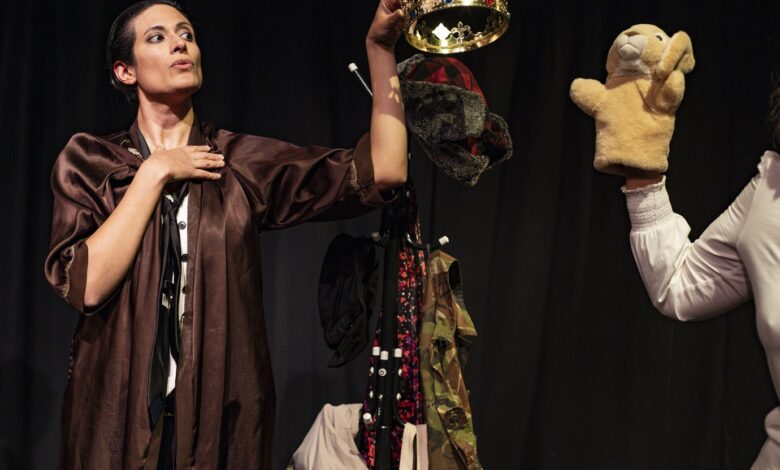
How do you tackle Shakespeare’s most famous, brooding tragedy with just two performers, an hour on the clock, and a fierce feminist heart? You turn it into a defiant, lightning-fast tour de force where two women tackle all 26 roles—and subvert one of classical theatre’s ultimate bastions of white, male authority in the process.
Brought to life by The Yorickans and directed by Early Modern Drama scholar Dr. Nora J. Williams, A Two Woman Hamlet arrives at London’s iconic Old Red Lion Theatre this August for Camden Fringe 2026. Originally created by Mara Sherman, this version leans heavily into trust, vulnerability, and radical theatrical joy.
We sat down with Nora, and performers Sharmila Peake and Deanna Strasse to talk about breaking classical rules, why radical silliness is necessary right now, and the secret star of the show: Rosencarrots.
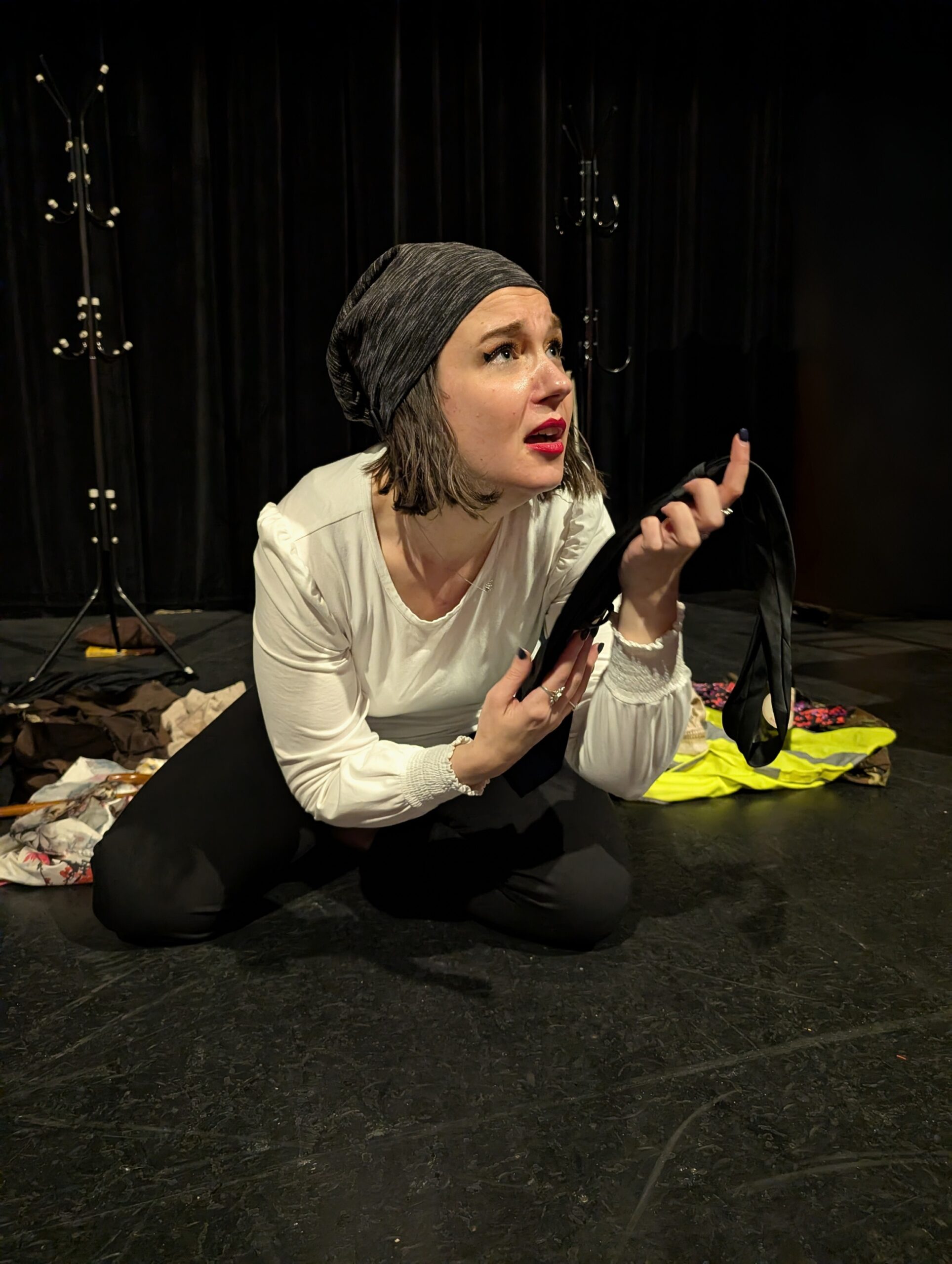
If you had to describe the vibe of A Two Woman Hamlet in just one sentence, what would it be?
Nora: Wacky, with a serious feminist heart. Wackiness manifests through two women trying to play 26 different roles in the course of an hour. Feminism manifests in the way that, despite all that wackiness, the show takes the agency and inner lives of all the characters seriously, comments on toxic masculinity, and fundamentally relies on two women throwing their trust on each other and diving into this wacky ride together.
Sharmila: I have one word: defiant! Defiant in every regard, especially at a personal level; as a company of women we’ve overcome a sense of doing something we’re not supposed, or even allowed, to do.
Why is 2026 the exact right time for this show to hit the stage?
Nora: To get serious for a moment, we’re witnessing a terrifying resurgence of far-right sentiment, not just here in the UK but in many parts of the world. In this context, being silly with one of the pillars of white, English masculinity in a queer, women-led production is a rebellious act. And by gum do we all need a good laugh!
What drew each of you to this seemingly “impossible” production?
Nora: I saw this show performed at Edinburgh Fringe in 2021 and just completely fell in love with the concept. I especially appreciate the way that Mara Sherman, who created and directed the original production, took some risks with the portrayal of Ophelia and Hamlet’s relationship. It’s definitely Hamlet, but it’s not like any Hamlet I had seen before.
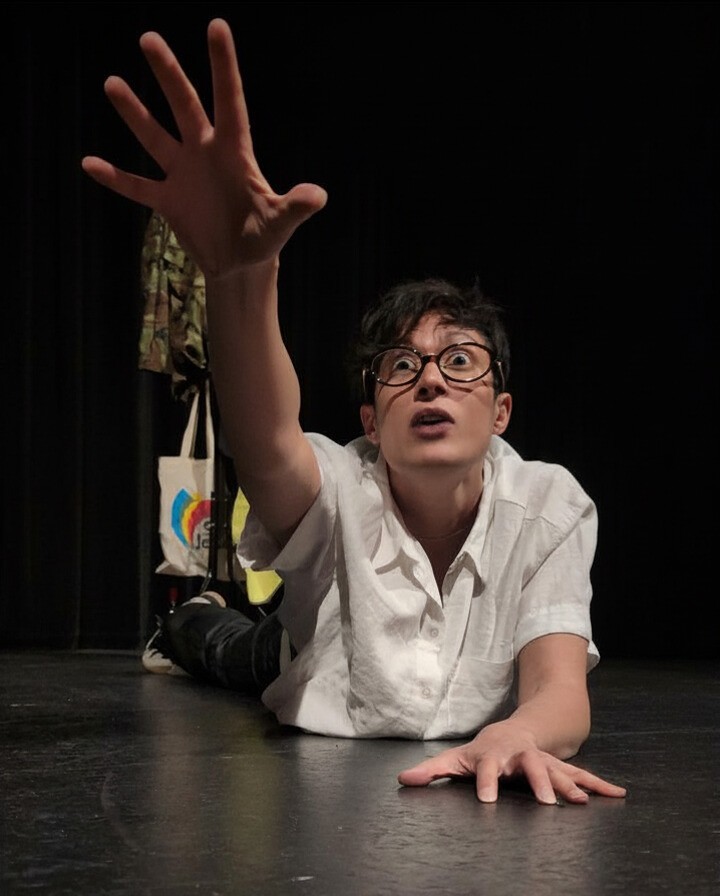
Sharmila: I remember reading the general audition notice which outlined that, just as the title suggests, this production would feature two women playing all the roles in Hamlet. I thought that sounded like an impossible thing and I immediately wanted to know more. Our director, Nora, is a renowned scholar of Early Modern Drama. I had met her in a previous life as marketing officer for the University of Essex and I wanted to discover just how untethered from reality she had become to propose such a mad theatrical endeavour!
Deanna: It’s cliché (I know) but I’ve always wanted to be in a production of Hamlet, even if that meant playing “third Dane from the left” or something. When I saw the audition notice for this show, I knew I had to try. Classical acting isn’t necessarily my traditional strong suit, but I knew I’d be disappointed in myself if I didn’t try. I’m so grateful Nora took a chance on me.
What is the “secret sauce” that makes your group dynamic work?
Sharmila: The key to this show is two women absolutely trusting each other on stage, being vulnerable and authentic together as we rehearse as a team. It’s been a creative process where we’ve felt listened to, respected, and liberated.
If A Two Woman Hamlet were a drink at the venue bar, what would be in it?
Deanna: Imagine you’re at a bar and when asked what you want, you say, “Surprise me.” The bartender then proceeds to take a shaker and throws in a TON of different ingredients: top-shelf gin, lemon wedges, a whole can of Carlsberg, Devonshire cream, a splash of Catalan vermouth, rosemary, and lots of ice.
They shake it twice and pour it into a goblet before garnishing with shredded cheese and the scent of fresh laundry. You are terrified to drink this strange concoction, but you do. And it is amazing! You can’t explain why. You know that it’s not for everyone, but you also know that it’s a darn good drink.
What is the weirdest or most unconventional prop used in the production?
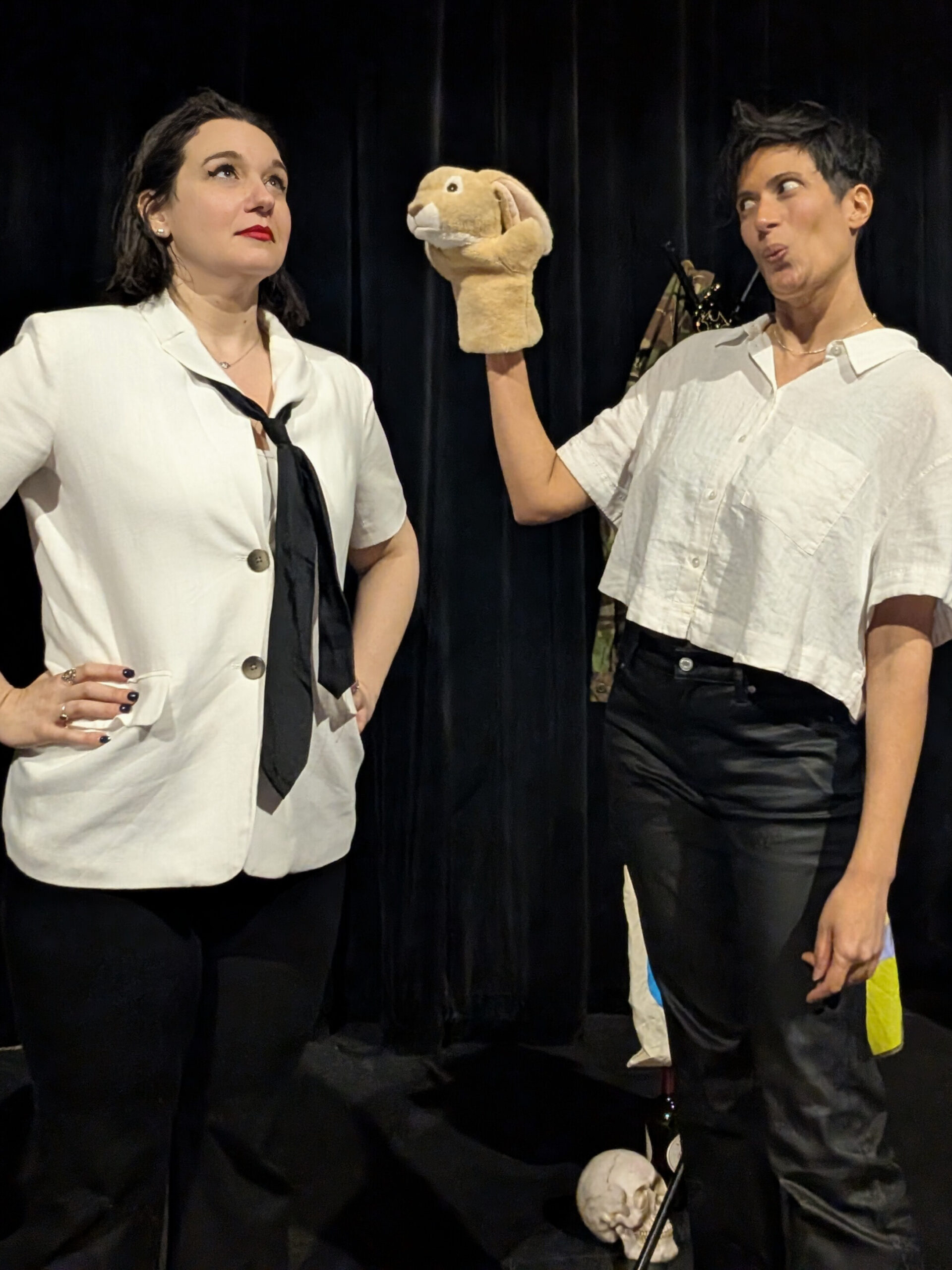
Nora: I think that has to be the secret third woman in the show: Rosencarrots! She’s a rabbit glove puppet that I found by random chance at a garden center when we were testing out different ideas for how to handle Rosencrantz and Guildenstern. She’s instantly become an absolute audience favourite!
What does “success” look like for the ensemble this August?
Nora: One of the best compliments we get from audiences comes from people who tell us that they’ve understood Hamlet, or even Shakespeare generally, for the very first time after seeing our show. I hope that whether it’s your first or fiftieth time seeing Hamlet, you learn something new about it that you didn’t know before.
Many thanks to Nora, Deanna and Sharmila for their time. You can catch A Two Woman Hamlet at The Old Red Lion Pub and Playhouse from Friday 28 to Sunday 30 August when it plays at ShakeFest, Old Red Lion’s Festival within a festival for Camden Fringe.