Stitching Hearts Back Together with Sparkles, Ritual, and Resistance
North Sapph Fest 2026 Interviews

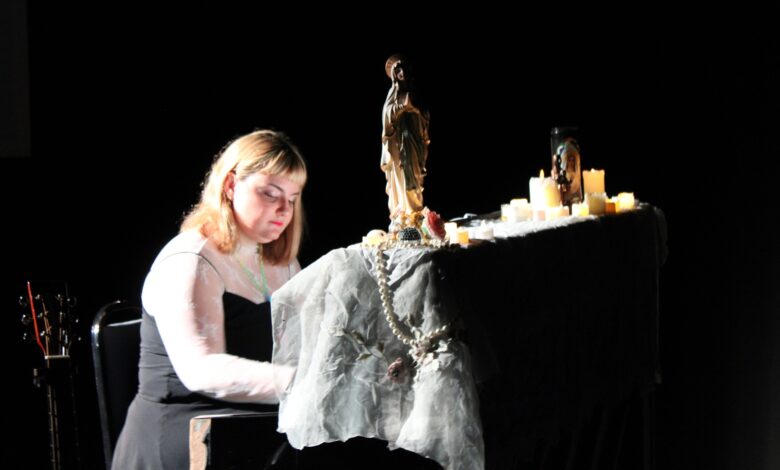
Charli Simone and Giulia Cestaro discuss Makeshift (A Queer Mass)
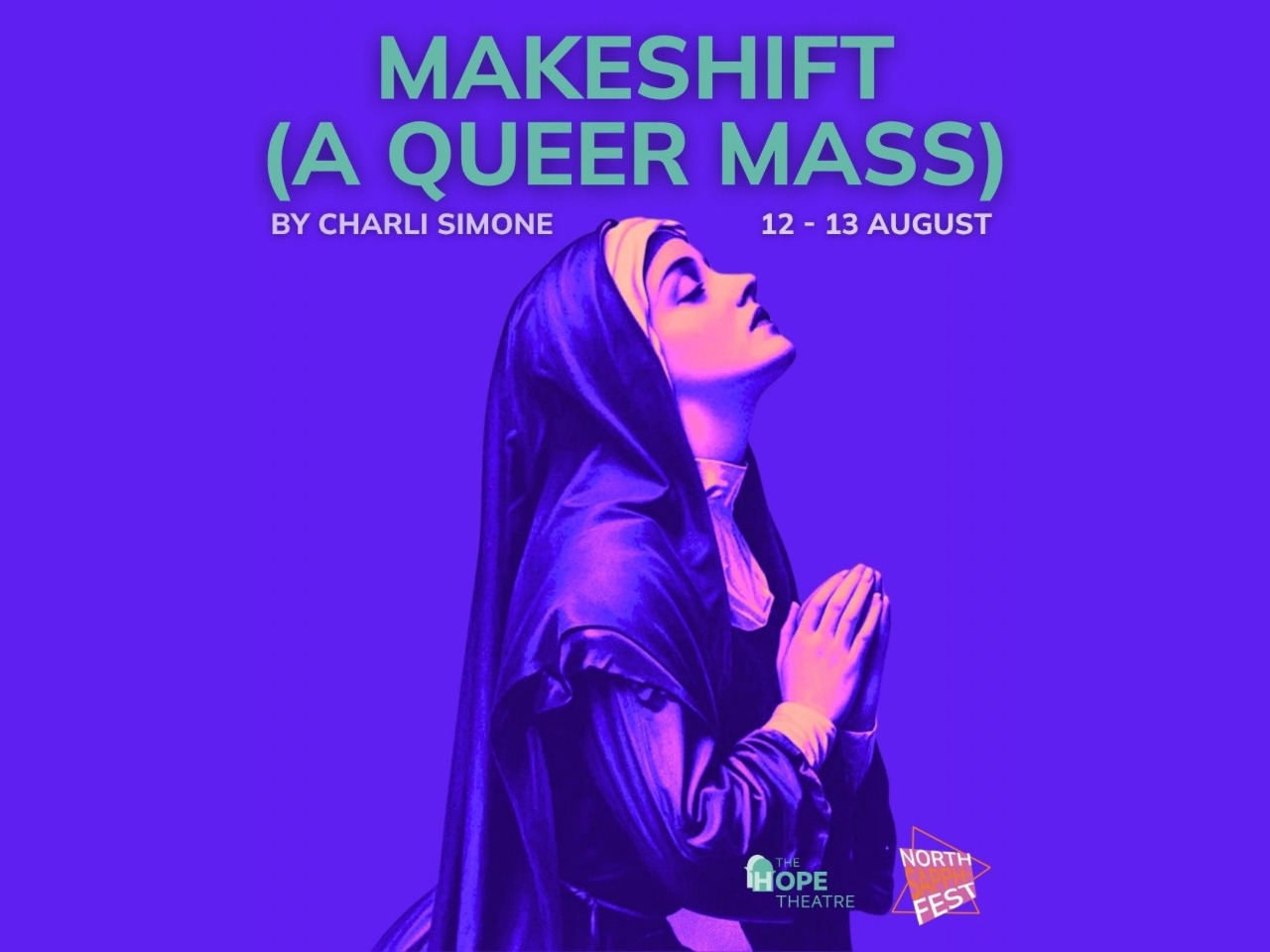
August really is a busy month. While many eyes turn to Edinburgh, back in London much of the attention is on Camden Fringe. But this year The Hope Theatre is doing its own thing; North Sapph-Fest, a bold new festival celebrating queer women & non-binary voices. You can fid out what’s playing here, while here at ET we’re hoping to publish interviews with a few of this year’s participants, , starting with Charli Simone and Giulia Cestaro, whose show Makeshift (A Queer Mass) will be playing for two nights from Wednesday 12 August.
In an era marked by increasing political division and religious weaponization against LGBTQ+ communities, how do queer, non-binary, and femme individuals reclaim sacred space and heal from institutional shame?
Debuting at The Hope Theatre as part of the inaugural North SapphFest 2026, Makeshift (A Queer Mass) offers an answer through participatory ritual, raw vulnerability, and joyful subversion. Created and performed by American playwright-performer Charli Simone (Salt Theatre) alongside Brazilian director Giulia Cestaro, this immersive piece blends a structured religious mass with a deeply personal character journey, featuring none other than a glitter-encrusted “Disco Mary” statue.
We sat down with Charli and Giulia to discuss bringing Makeshift to North SapphFest, the power of collective audience singing, and why reclaiming your story is the ultimate act of liberation.
If you had to describe the vibe of your show in just one sentence, what would it be and how does it manifest on stage?
GIULIA: Your heart is being torn open, but at the exact same time, you’re learning how to stitch it back up with a sparkly needle and thread. On stage, this manifests in the audience following two parallel journeys; that of the audience themselves experiencing and participating in the rituals, and the narrative journey of the main character that the audience is witness to.
Why is 2026 the perfect time for this show to be seen?
CHARLI: Over the past year, we have unfortunately seen a massive increase in the weaponization of religious and political beliefs to harm and ostracize queer people, especially in the US, where I am from, and here in the UK with recent anti-trans legislation. This piece feels necessary right now because we have to confront and fight this oppression more than ever before, get people talking about it, and encourage people to act and defend marginalised groups. Theatre will always be a place to give voice to the voiceless, and my biggest hope is that Makeshift will begin these conversations and take them far and wide beyond the confines of a theatre space.
GIULIA: To add to that, there has been a huge amount of censorship with protesters being arrested simply for speaking out and peacefully making their beliefs known. I think how that relates to right now is that we have to use the voice we do have as theatre makers. Our obligation as theatre makers is to get people talking about these things, and to show people that they do have a community and they don’t need to feel shame or be on their own.
As this is the festival’s first year, what was it that made you want to be part of it?
CHARLI: My identity as a queer woman is at the core of my practice as an artist, so North SapphFest was the ideal opportunity to explore those aspects of my life concurrently; my queerness and my artistry. It’s really special to have a festival dedicated to creative voices like mine, not just mixed in, but centred, prioritised, and celebrated. I hope North SapphFest continues, because the fact that we have an entire festival for queer, non-binary, and women artists is a testament to how necessary these platforms and opportunities are for our community.
What was the ‘eureka moment’ that made you realise this story had to be told right now?
CHARLI: It was seeing the rising tide of political rhetoric and anti-queer legislation. We realised we couldn’t just sit back; we had to use our artistic platform to create a sanctuary where people could gather, process, and stand together.
Is this version how you originally envisioned it or has it changed drastically since you first put pen to paper?
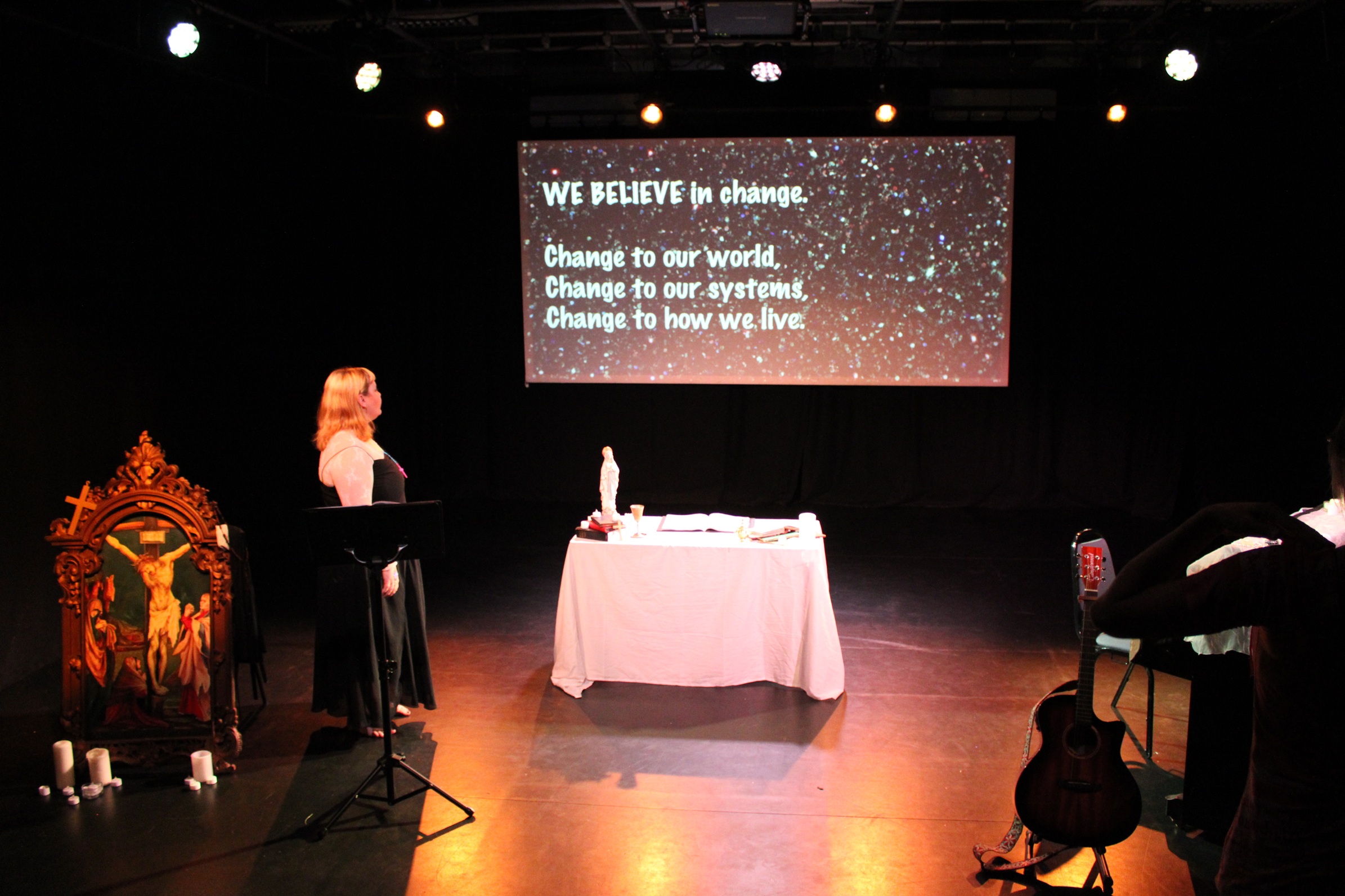
CHARLI: It has definitely changed a lot! Originally, the piece was entirely a mass with me interacting with the audience the whole time, much more like a lecture-performance. Now, it feels partly like that and partly like a real character journey. I did this because I wanted audiences to have someone to relate to, someone to follow as they potentially begin to question their own assumptions or beliefs, or be empowered to act on behalf of someone like this main character who so visibly and viscerally struggles with her identity.
So it’s safe to say audience interaction is important to you?
CHARLI: Very important! The show is very heavily about ritual and shared experience, so audience participation is really key to creating the feeling that we are going through a real ceremony together. That is what’s exciting about ritual, it allows the audience to truly connect with the performer and with each other, to really be engaged in every single moment.
What does “success” look like for you this August, beyond just selling tickets?
CHARLI: Honestly, if everyone sang with me during the show, I would be completely satisfied! On a more professional note, though, if a theatre that doesn’t often produce or feature female playwrights or queer themes in their main season were to approach me to put it up, that would be a massive success considering the goals of the piece. I want to see these stories; queer, femme, non-binary, activist stories, brought to the forefront of the industry because we need them now more than ever.
If you had to describe your show as a colour what would it be?
GIULIA: Silver. Because it has elements of silliness and joy, like a shiny disco ball, but also it talks about a lot of old-fashioned beliefs, and silver is long-lasting, often antique.
What’s the weirdest or most unconventional prop used in your show, and how did it come to be part of the production?
CHARLI: Probably “yassified Mary.” She was originally just a plain garden statue of Mary that I used for the original version of the show (where I sang a yearning lesbian ballad directly to her!). But I decided for this run she needed a makeover, so I took her into my back garden and turned her into a disco ball; “Disco Mary” with some chrome, spray paint, and glitter.
Write a one-sentence “fake” review of the show from someone you know:
“If you’ve ever felt shame in church, this play will free you from that.” — Giulia’s lesbian auntie.
Many thanks to Charli and Giulia for their time. Makeshift (A Queer Mass) will be playing at The Hope Theatre on Wednesday 12 and Thursday 13 August as part of North Sapph Fest.