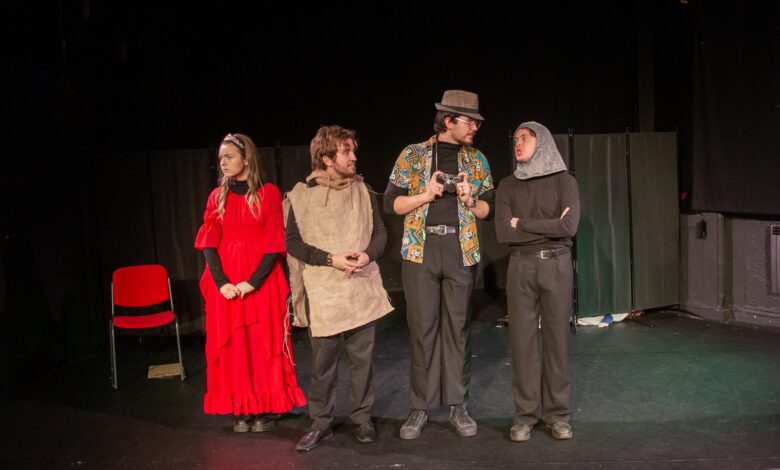
Writers Finn and Sam on The Dance Plague of 1518 at Upstairs at the Gatehouse
After the success of our 2025 Camden Fringe Interviews, we thought it only right to attempt a repeat for 2026. So throughout July we’ll be publishing new interviews each day to give a taste of what to expect from London’s best fringe theatre festival. The festival starts Monday 3 August this year, so we may give ourselves a couple of days off inbetween the end of the interviews and the first shows… then again, we might not.
You can find out more about Camden Fringe, along with details of every show playing this August here. You can also find all of this year’s interviews as they are published here.
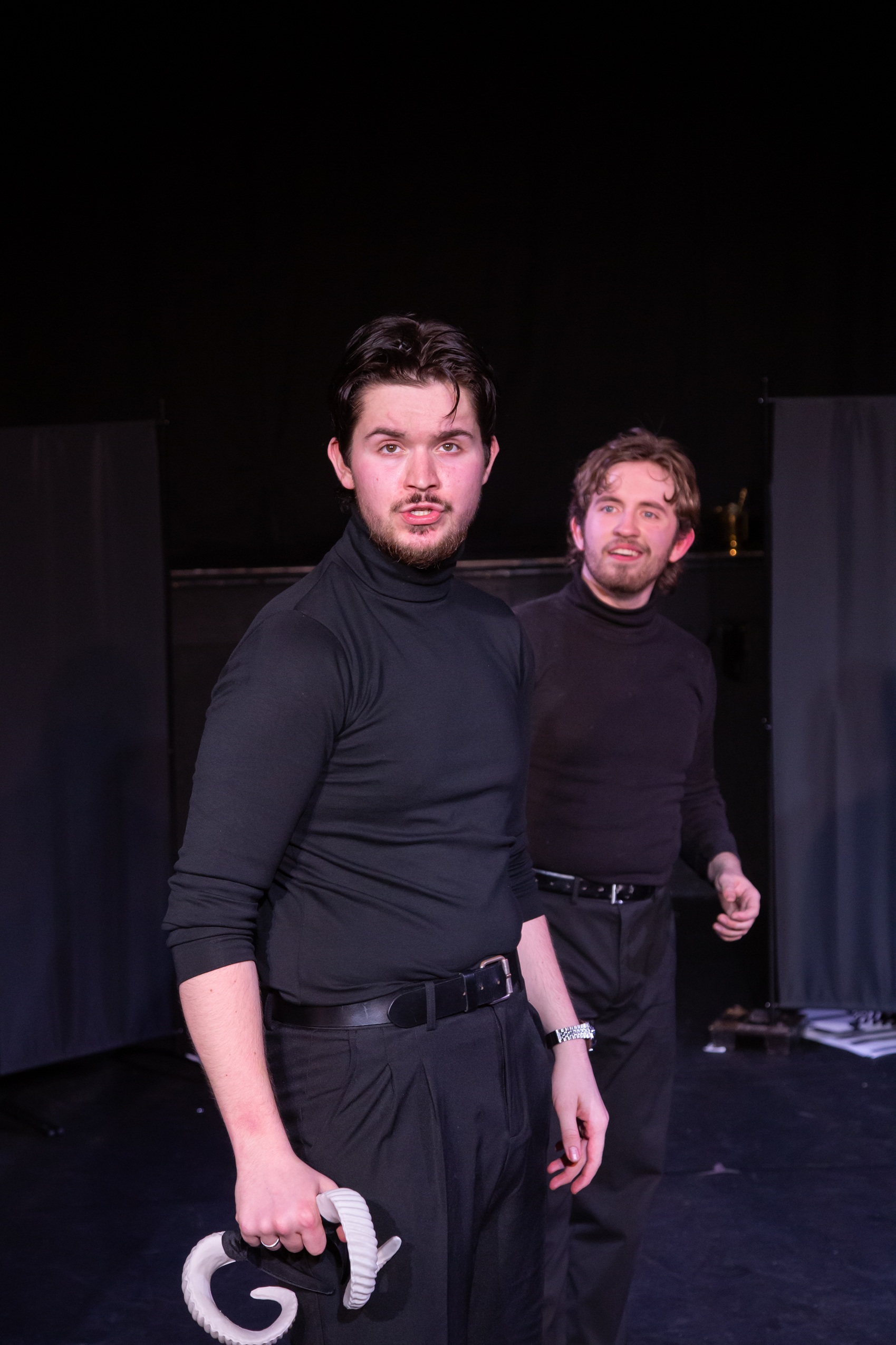
In July 1518, the citizens of Strasbourg stepped into the streets and began to dance; uncontrollably, frantically, and relentlessly, for weeks on end. It is history’s ultimate, unintended musical dance break, yet centuries later, remarkably little is actually known about what caused the “Dance Plague.”
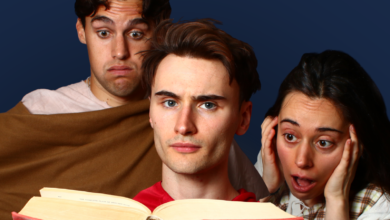
Enter creative duo Finn Tickel and Sam Trotman. Rather than letting a lack of historical documents stop them, they embraced the gaps to create The Dance Plague of 1518, a fast-paced, completely misguided, and utterly hilarious musical comedy. Fresh off a successful workshop run and gearing up for their next performances at Upstairs at the Gatehouse for Camden Fringe 2026, the creators sat down with us to discuss Alan Menken influences, listening to the audience, and why the CIA poisoning a World Cup goalkeeper might just be their next project.
What first drew you to the story of the dance plague of 1518, and what made you decide it could work as a musical?
FINN: Strangely enough, we both discovered the story of the Dance Plague separately. Once we shared our interest in the subject with each other, we toyed with different concepts and ways to deliver the plot in a theatrical retelling. Something about an entire town of people beginning to dance uncontrollably for months just felt like the perfect source material for a musical, as it’s the only historical case of a musical dance break playing out in real life! But when we researched into what actually happened we realised it wouldn’t be that simple.
Musical adaptations of historical events such as ‘Hamilton’, ‘Six’ and ‘Come From Away’ are often based off real life documents and accounts from the time. The Dance Plague, however, has very little of that. So we had to head into the ‘historical fiction’ territory as there was so much hear-say and speculation around what actually happened. Then we had a choice; We could either take the topic completely seriously, or ‘take the mickey’ out of the genre in a fast paced musical comedy. It’s safe to say we picked the latter. What then follows is a completely misguided account about the Dance Plague, but one that will strangely leave the audience with more knowledge about the event than they did before.
The music in The Dance Plague of 1518 is full of catchy melodies and brilliant musical theatre pastiche. Which composers or musicals most influenced the sound and style of the show?
SAM: We knew when writing the show we wanted to ‘send up’ lots of different musical theatre genres; Disney, Sondheim, Operetta, Hip-Hop etc. My personal biggest inspiration when composing for this show was Alan Menken. There are multiple songs in our piece that try to mimic Menken’s idealistic ‘fairytale’ song-writing; most notably our number ‘Bottom of the List’ which is my twisted take on ‘Belle’ from Beauty and the Beast.
The village of Strasbourg (where the dance plague actually occurred) has an uncanny familiarity to one’s we’ve seen in Disney films before, but *something* is off. Our villain’s (The High Priest) song is also a direct reference to two of Menken’s most notorious numbers: ‘Hellfire’ and ‘Dentist’.
One of the show’s recurring ideas is “filling in the gaps” around a historical event where so much remains unknown. Were there any writers, artists, musicians or other works that inspired the way you approached that idea creatively?
SAM: There were a lot of inspirations! I think our generation love ‘retelling’ or ‘regurgitating’ true stories, we’ve seen this hundreds of times in theatre and film this century. There’s a comfort in already knowing the historical outcome of an event (‘Dunkirk’), and people find true stories inspirational (‘Come From Away’). In the theatre landscape, shows like ‘Six’, ‘Hamilton’ and ‘Operation Mincemeat’ have become cultural juggernauts by taking a real story and finding a few historical ‘liberties’ that make the narrative better. We mention a lot of movie examples in the show too: ‘Oppenheimer’, ‘Bohemian Rhapsody’ and ‘Titanic’ were ones that stuck out in my mind (I mean, we all love Jack and Rose, but really?! There were lots of amazing real people on that boat!)
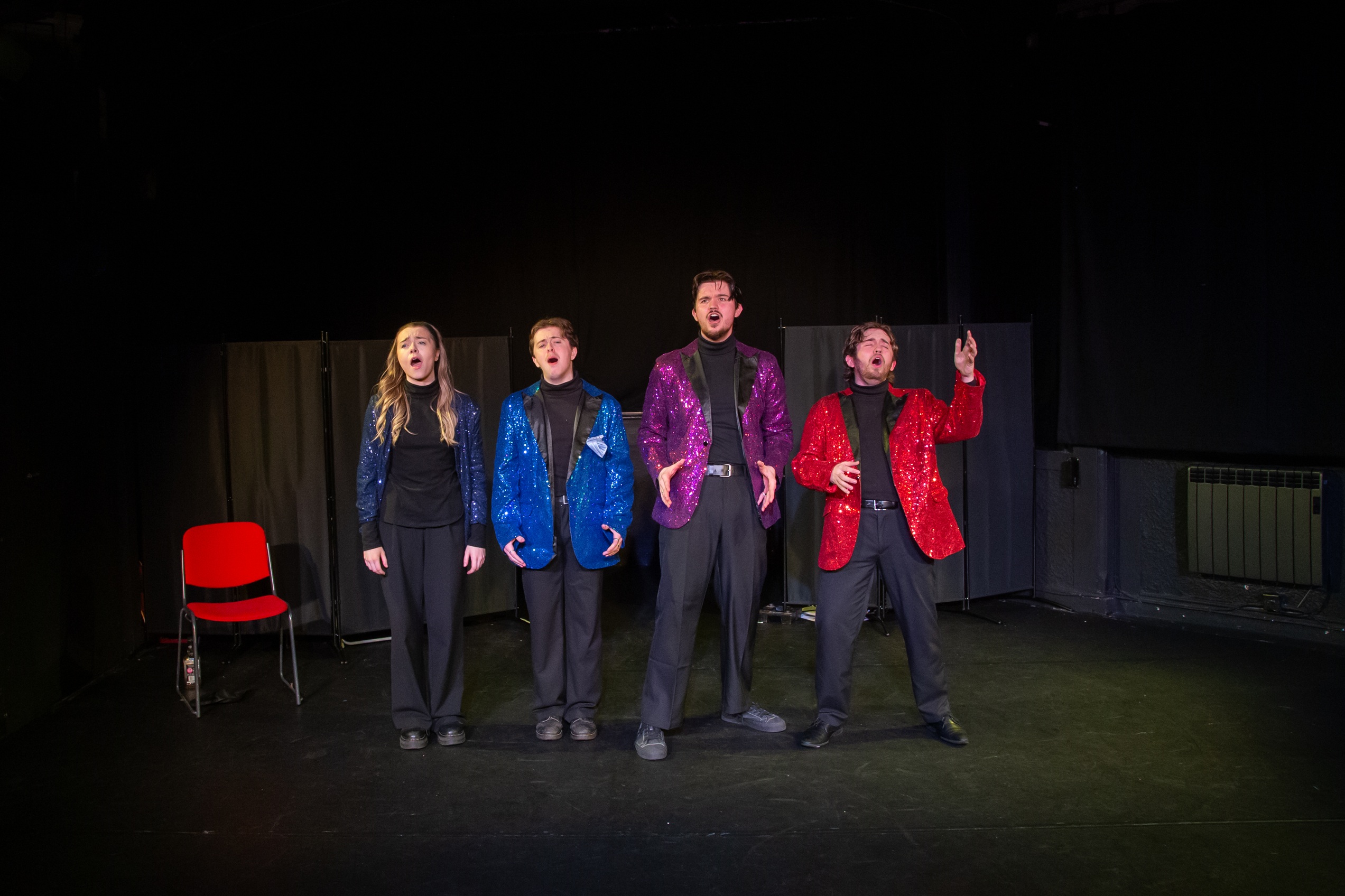
Following the workshop performance at the studio at New Wimbledon, what discoveries have you made about the show, and has anything changed moving forward into this next run?
FINN: Having the workshop performance at the New Wimbledon Studios was such a blessing and has allowed us to revise the piece a great deal. When writing comedy (especially as a duo) It’s easy to fall into the trap of writing things that make each other laugh without taking into account whether an audience will also find it funny. We were very grateful to find that the comedy landed, which was lovely!
But the Workshop also opened our eyes to moments that didn’t work quite as well, though we don’t want to be too ‘militant’ with it and cut moments that could have found more energy with further rehearsal, our main goal with the revised version of the piece is pace and clarity. Though the show is completely bonkers and off the wall, we still want the audience to feel immersed in the piece without feeling too overwhelmed with information and plot. It’s true when they say the audience is the missing scene partner, so we’re also excited to find out what more we can learn about the piece and how it will change in our run at the Camden Fringe!
If you could create a musical about another mysterious or poorly documented historical event, which one would you choose and why?
SAM: I’ve actually been listening to a great new podcast called ‘Foul Play’, which tells of a fascinating conspiracy involving English world-cup winning goalkeeper Gordon Banks, the CIA, and food poisoning. Gordon Banks’ grandson believes that his grandfather was poisoned by the CIA right before the 1970 World Cup quarter final, meaning Brazil could eventually go on to win the tournament. It sounds completely ridiculous (why would the CIA poison an English goalkeeper?), but the more they uncover, the more I started to believe it actually happened. The conspiracy combines two of my favourite things: football and dynamite journalism. I think it would make a brilliantly hilarious musical, following both the CIA and Banks’ perspectives. Get the typewriter out Finn!
Congratulations on the upcoming run at Upstairs at the Gatehouse. If you had to convince someone to see the show in just one sentence, what would you say?
FINN: If I had to convince someone to come to the show in one sentence I would say: If you love history but also enjoy watching grown adults making fools of themselves on stage, this one’s for you.
Many thanks to Sam and Finn for their time. The Dance Plague of 1518 plays at Upstairs at the Gatehouse from Tuesday 11 to Thursday 13 August as part of Camden Fringe.