Aimee Gebhard on ‘This Could’ve Gone Better’ at Canal Café Theatre
After the success of our 2025 Camden Fringe Interviews, we thought it only right to attempt a repeat for 2026. So throughout July we’ll be publishing new interviews each day to give a taste of what to expect from London’s best fringe theatre festival. The festival starts Monday 3 August this year, so we may give ourselves a couple of days off inbetween the end of the interviews and the first shows… then again, we might not.
You can find out more about Camden Fringe, along with details of every show playing this August here. You can also find all of this year’s interviews as they are published here.
What happens when the weight of the world becomes too heavy, and you find yourself trapped outside of time and space in… a supermarket deep-freezer?
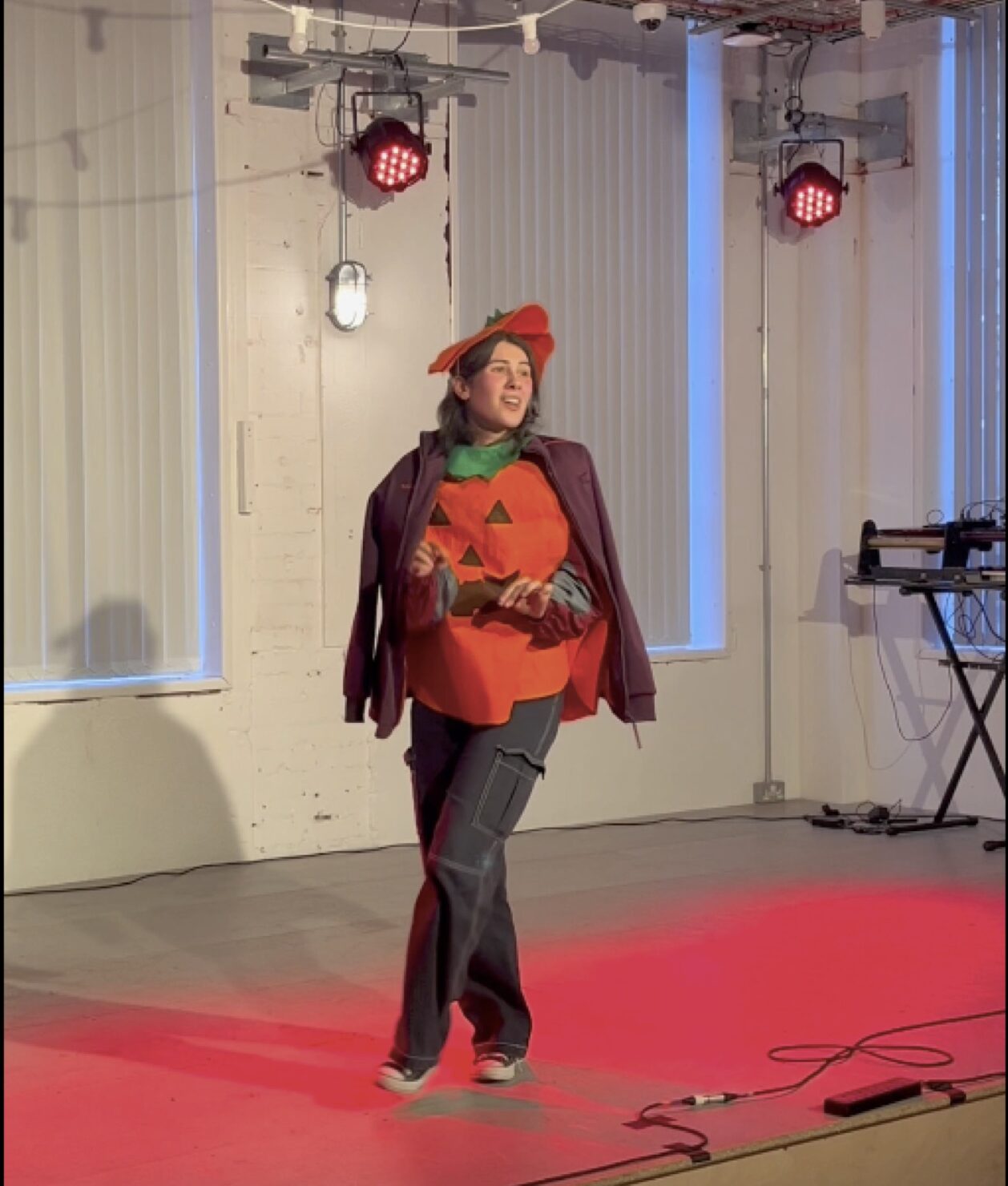
That’s the high-concept, high-energy premise behind This Could’ve Gone Better, a sharp, existential solo show written and performed by Aimee Gebhard. Coming to London’s iconic Canal Café Theatre this August as part of Camden Fringe 2026, the play captures the collective exhaustion, frustration, and absurd humour of navigating 2026.
We sat down with Aimee to discuss bottling climate anxiety into compelling drama, the physical toll of a 60-minute solo workout, and why Simon Cowell keeps getting name-dropped in a supermarket freezer.
If you had to describe the vibe of your show in just one sentence, what would it be and how does it manifest on stage?
Controlled chaos meets an existential crisis. Everything isn’t fine and the protagonist knows this, however she is displaced outside of time and space that her crisis seems like an anomaly. This is all manifested through an energetic, solo performance bombarded with anecdotes, debates, some Shakespearean text, and a complicated relationship with a freezer wall (aka, you, the audience).
Why is 2026 the perfect time for this show to be seen?
Personally, 2026 has felt like the year of the breakdown; everything seems to be going wrong in the world, crisis after crisis, and yet people are still trying to continue with their life. This show collects all that energy, along with the frustration of so many people, and bottles it up in the form of a young woman trying her best. It is the perfect time to create this piece because it allows audience’s to acknowledge their own feelings towards our current society, while encouraging a space for growth and change, which I believe we need to see more of in the world today.
What was the ‘eureka moment’ that made you realise this story had to be told right now?
I had a little bit of a breakdown at the start of the year over climate anxiety and the seemingly ever-decreasing state of the world, and as I was coming out of that state, I started to look around me at how others were feeling and responding. I realised, I wasn’t the only one, people are just doing a great job at hiding it. My ‘eureka’ moment came from having a conversation with a close-friend about these uncertainties of our future; next thing I knew, I was running home to write down everything I felt and worried over. Not long after, the first draft was completed.
Is this version how you originally envisioned it or has it changed drastically since you first put pen to paper?
The version shown at the Camden Fringe is definitely different to the original pitch! Initially, the play was set in a cave and was a lot more pessimistic than the current piece. However, through re-writes and open-mic performances, the version now is a lot more hopeful, relatable, and quirkier.
What is it about your character that you most enjoy?
Her awkwardness and messiness; she isn’t perfect, she isn’t stylish, she is unapologetically herself whilst still trying to figure out who she is. It’s really enjoyable to go on that journey of self-discovery with someone, whilst also having the challenge of portraying someone who is currently in the midst of an ongoing breakdown! It’s given me the freedom to play around, be the fool, and not feel bad about messing up.
How challenging has this role been for you?
The most challenging thing about this role is juggling all the components of the character and the circumstances. A lot is going on; this nameless woman is in crisis, she is also grieving, she is also slightly drunk, she is also discovering herself. All this whilst I have to keep the momentum of the piece going, keep the audience engaged, remember the verbal diarrhea that comes out of her mouth, precisely quote some poetry and Shakespeare…at the end of the show, I feel like I’ve done a full-body work-out. But I wouldn’t have it any other way 🙂
Being fringe and a festival, we all know sets have to be bare minimum, how have you got around this with your set and props?
A lot of the space and external circumstances are left for the audience’s (and performers) imagination; it keeps everyone engaged and active in the creation of this world. Also, by keeping this supposed supermarket deep-freezer barren and fruitless, the circumstances and reality of the woman becomes clearer and harsher with each passing second. The key indicator for the audience will be lighting; if they can keep an eye on the changes occurring through the lights, the reality will be revealed to them there. But, really, the bare minimum of set and props aids the story and journey of the protagonist, and starting this show as a fringe piece was really the best and only way to do it!
How important is audience interaction to you?
It isn’t essential. The audience are acknowledged, their presence is key, but the theatre space is the woman’s reality, and the audience’s interaction will most likely take away from her journey.
Are there any plans for what comes next after the show has finished its run – for you or the show?
Potentially, this show may be developed into a proof-of-concept short film, with the aim of it becoming a mini-series or film one day. But that’s way down the line from now.
What does “success” look like for you this August, beyond just selling tickets?
Getting through three sixty-minute shows in one piece.
If you had to describe your show as a colour what would it be, and why?
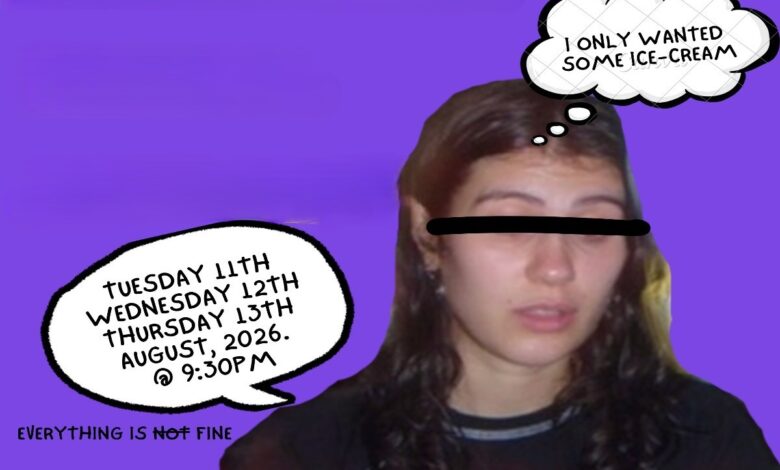
Purple! It’s a very spiritual colour that is full of intention, power, fantasy, uncertainty…it really speaks to the themes and motifs of the piece without needing to speak at all. It’s a captivating colour and that is one of the aims of this play.
If your show had a soundtrack, what songs would definitely be on it, and why?
We had this thought out long ago! If you go onto our instagram (@thiscouldvegonebetter) we already created a playlist there! We do have three songs that have followed the creation of this piece, and they will definitely ALWAYS be on the soundtrack. They are: ‘We Didn’t Start The Fire‘ (Billy Joel), ‘Out of Touch‘ (Hall & Oates), and ‘I Know The End‘ (Phoebe Bridgers). Give those three a listen before you watch the show!
What words of advice/encouragement would you give anyone thinking about doing Camden Fringe next year?
Go for it! Don’t think about it; thinking will get in the way because that’s where a lot of fear grows. Have your idea, have your belief, create a piece of theatre, and enjoy the journey. But definitely ask for some help when you do it. And definitely don’t forget to be yourself and create what you love!
Can we expect any surprise guests in your show? Who are they? Why are they there?
Not a surprise guest, but Simon Cowell is mentioned a lot. Why? You’ll have to watch to find out 🙂
Many thanks to Aimee for the chat. This Could’ve Gone Better plays at Canal Café Theatre between Tuesday 11 and Thursday 13 August as part of Camden Fringe.