

Interview: Steamy Shakespeare brought to life through puppetry
Venus & Adonis, The Pit, Barbican

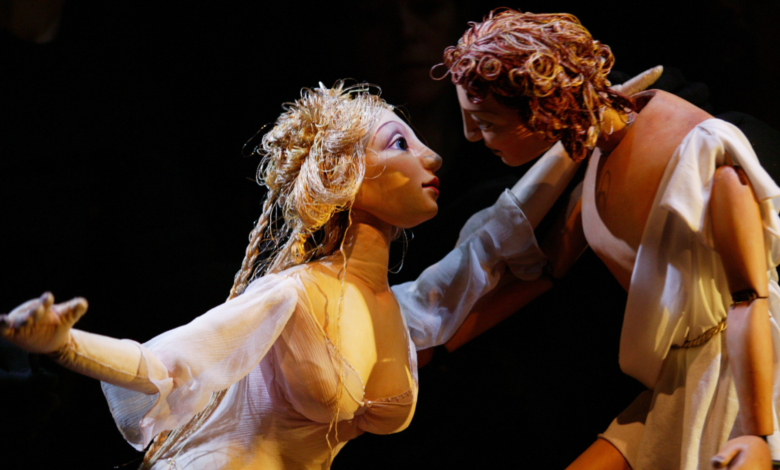
Edie Edmundson (and Greg Doran) on animating the very human love story of Venus & Adonis
Shakespeare’s Venus & Adonis is renowned not only for the beauty of its poetry, but for its content, telling a tale of seduction and eroticism in verse that is witty, insightful yet also tragic. It’s considered a miniature epic, so we were excited to learn that it is coming to The Pit, Barbican in a diminutive form, as a puppet show directed by Greg Doran (former Artistic Director of the RSC) and with a spectacular team of world class puppetry creatives. Oh, and Simon Russell Beale is in it too…
We wanted to talk to someone with literal hands on connections with these puppets, so were delighted when performer Edie Edmundson popped by for a chat.
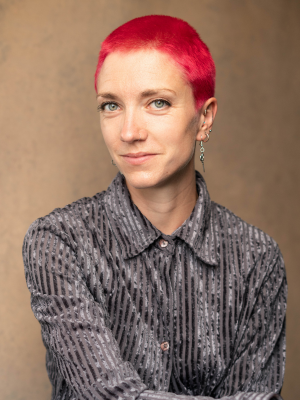
Hi Edie. Thanks for chatting with us about this fabulous production of Venus & Adonis. So, a lot of people see ‘puppets’ and expect a show for children – but Venus & Adonis is definitely not that, is it?
It is not! Shakespeare’s poem covers quite grown-up themes like romantic love, grief, sex, power and consent. I think puppets are particularly good at handling such complex themes because they are vessels into which audiences can pour their own interpretations without preconceptions. Puppets invite us to suspend our disbelief, to access our inner child – and in doing so we can really get to the heart of ideas which seem big and complicated.
Director Greg Doran clearly knows his stuff when it comes to Shakespeare, but how is he managing with transferring this story into small scale, and with puppets instead of actors?
This felt like a question best posed to Greg himself, so I did! I’ll attempt to paraphrase…
The show was first made in 2004, partly inspired by Greg’s visit to Japan and seeing the traditional Bunraku puppet theatre with its fine balance of music, narration and puppetry. Because Shakespeare wrote this as a narrative poem, not a play, it presented unique challenges which puppets (with their ability to physically do things human actors can’t, and to depict mythic scenes on a manageable scale) can solve.
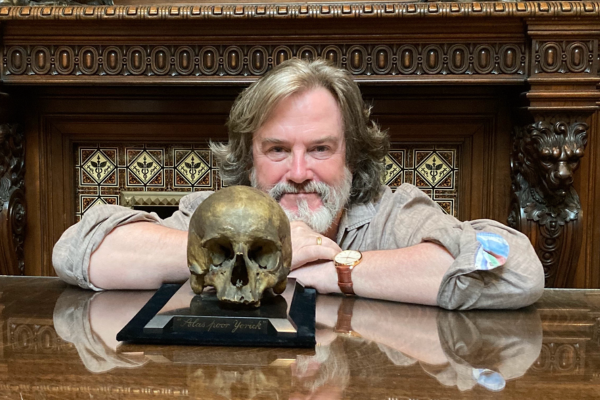
Greg said that he continues to be surprised by the nuance that puppets can achieve and bring to the text, which is bringing exciting new possibilities to this 2026 version of the show. He can direct the puppets almost like actors, and then we all put our heads together and figure out the practicalities! Greg’s deep understanding of Shakespeare’s work and world gives us invaluable context and clarity for the performances we create (my words, not his!)
Have you performed any Shakespeare before yourself?
I am returning to the cast of this show after performing it in 2017, so I am familiar with it. Without puppets, I had lots of fun playing Puck in my 6th form production of A Midsummer Night’s Dream, and then playing Desdemona at university.
Can you tell us about the various types of puppets Lyndie Wright has crafted for the show and the skills you need to operate them?
Firstly, there are long-string marionettes operated from a ‘bridge’. These require a lot of finger dexterity and move in quite a lyrical, gestural way.
The main puppets of Venus and Adonis themselves are what we call table-top puppets. These are the most similar in scale and operation to the traditional Japanese Bunraku puppets, with 2 or 3 puppeteers operating at any one time. One of the most important skills needed for these is the ability to work together as one entity, weaving around each other and being sensitive to signals from the head puppeteer. This takes a lot of practice! Venus is made from soft leather, so moves in quite a fluid way, whereas Adonis is carved from wood so lends himself well to classical gestures and poses. But Lyndie’s genius means the puppets have lots of life and nuance within them before they even start moving!
We also have various animal puppets in the show of different sizes, and some shadow puppets.
All puppetry requires precision, strength, and technical practice, but also an ability to project life, emotion and narrative out of your own body and through the puppet. I like to imagine the focus required like a beam of light going through a prism and out the other side!
There’s a whole team of absolutely world class puppeteers involved, including Sarah Wright who heads up Curious School of Puppetry, overseen by the unique talent of Steve Tiplady as puppetry director. What’s it like working with this incredible company?
Well it’s a treat of course! We all speak the same puppetry language, which means we can respond to each other easily, but we also have a range of ages and experience. This allows for learning and creativity in all directions! We’ve also had puppetry direction this time from the marvellous Avye Leventis, who performed in the show with me in 2017. She has a keen eye for detail and choreography which is extremely helpful. Sometimes it’s hard to see the bigger stage picture from behind a puppet!
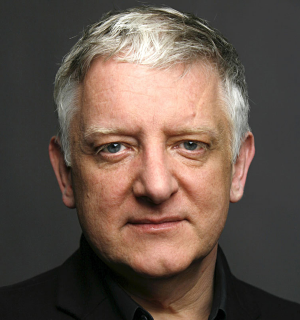
And of course legendary actor Simon Russell Beale is narrating alongside a live score performed by Nick Lee. What are the challenges of coordinating your puppetry with a live soundscape and spoken verse?
In a way, the spoken verse is music too. Simon’s breath, the rhythm and emotion of his delivery are just as much a score as Nick’s beautiful music – to which we perform our dance with the puppets! There are technical challenges of course, for example puppets move at a different pace to humans, so we work together to figure out the correct timings for the storytelling to be clear and the emotion true.
Greg tells us that one of the Japanese Bunraku puppeteers explained to him how the art form only works when the narration, the music and the puppetry are equally balanced. I feel that this show is a real example of that ancient triad in action.
Thanks very much to Edie for telling us about what promises to be a breathtaking event. I will definitely be pulling strings to review this one!
Venus & Adonis is suitable for ages 14+ and runs in The Pit, Barbican from Tuesday 23 to Saturday 27 June as part of a UK tour including:
Arts Theatre Cambridge: Thursday 9 to Friday 10 June
Oxford Playhouse: Wednesday 17 to Saturday 20 June
York Theatre Royal: Saturday 30 June to Monday 1 July

One Comment