Nathan Gaël York gives us an intimate peek into his new play, G-Hole
At Everything Theatre, we love to hear about new plays and to learn more about how they have come about. We were delighted, therefore, to speak with writer and director Nathan Gaël York about his brand new production, G-Hole, which will feature as part of the Hope Theatre’s forthcoming Work in Progress (WIP) week.
Hi Nathan. Thanks so much for stopping by to tell us about your new play, G-Hole. Firstly, can you talk us through what the show is about?

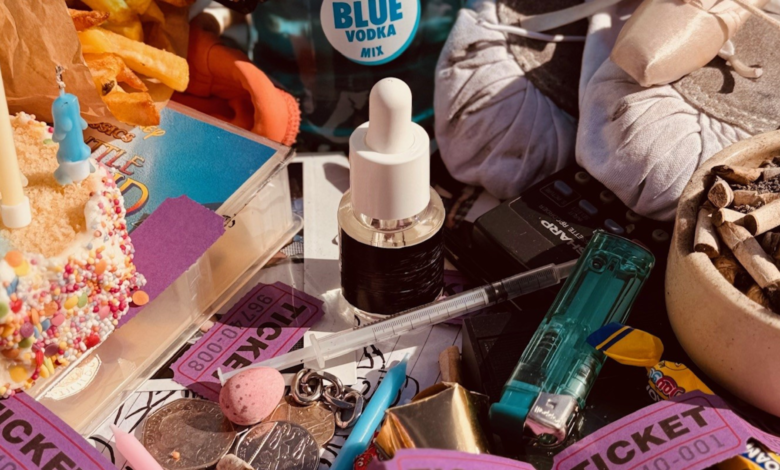
G-Hole is about two long-time friends, Duncan and Eric, who are having a very bad night out. As the night spirals, they start to lose their grip on reality and are thrown back into fragments of their past, revisiting moments of trauma, joy, shame and deep connection.
At its heart, the play asks whether love and friendship can overcome trauma. It’s about two people who know each other incredibly well, but who still carry things they have never fully said out loud. There’s a nostalgic quality to the piece too. It looks at youth, clubbing, chosen family, first intimacies, and those friendships that shape who we become, even when they are messy or painful.
There are many stories of queer relationships out there, so why did you want to write this particular one for the stage?
I wanted to write about queer friendship with the same intensity and complexity that we often give to romantic love. So much queer storytelling focuses on the couple, the coming out story, or the tragic romance, and those stories are important, but I was interested in the friendships that sit somewhere harder to define.
Duncan and Eric are not simply friends, but they are not easily categorised either. Their relationship is intimate, co-dependent, funny, loving, destructive and deeply familiar. I wanted to look at the kind of bond where someone has seen you at your most beautiful and your most damaged, and where the question becomes: can we still save each other, or are we hurting each other by trying?
I also wanted to write about queer masculinity, shame, class, desire and loneliness in a way that felt emotionally messy and honest. There’s also a strong sense of nostalgia running through the play. It looks back at moments in our lives that can seem simpler or freer in hindsight, even when they weren’t necessarily easy at the time. Memory has a way of reshaping things, so the play is interested in how the past flickers, repeats, distorts and collides with the present.
Is this your first play? What were some of the challenges in getting the words onto the page?
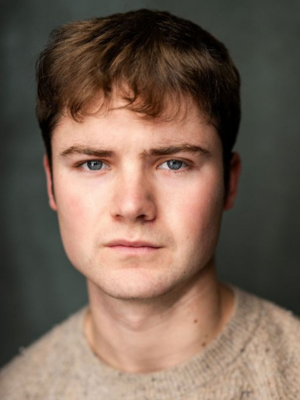
This is actually the third full-length play I’ve been developing, but the process for this one has been quite different from the previous two. It actually began as a shorter piece that was shared at a new writing night with En Route Theatre at The Golden Goose. Seeing it in front of an audience gave me the confidence to keep exploring the world of the play and to ask what it might become in a fuller form. At the moment, it’s growing gradually from a short piece into something more mid-length, and I’m hoping it will eventually develop into a full-length work.
The biggest challenge has been trusting the emotional truth of it. The play moves through memory, intoxication, nightlife and trauma, so it doesn’t always follow a neat linear structure. I had to allow the writing to be fragmented and instinctive while still making sure the audience can follow the emotional journey.
Another challenge was writing about trauma without letting the play become swallowed by darkness. There is a lot of pain in the piece, but there is also humour, nostalgia, tenderness and love. Finding that balance has been really important.
Which of the key themes do you think are particularly resonant at this time?
I think the themes of loneliness and connection feel very resonant. We live in a time where people are constantly connected on the surface, but many of us are still struggling to be truly honest with each other and themselves. I’m also interested in how we carry trauma through our relationships, and whether the people closest to us can help us heal from it or become entangled in it themselves.
I also think there is something urgent about looking at masculinity and shame, particularly within queer spaces. There can be a lot of performance around freedom, sex, confidence and not caring, but underneath that people are often carrying grief, insecurity and fear. G-Hole is interested in what happens when that mask slips.
The play is also about whether friendship can be a form of survival. Not a perfect or sanitised version of friendship, but the complicated kind where love is real, even when people do not always know how to take care of each other.
Can you tell us about the characters in the play and how you have cast them?

The play centres on Duncan and Eric. Duncan is charismatic, impulsive, funny and chaotic. He has a kind of free-loving, hedonistic energy, but underneath that there is a lot of vulnerability and pain. Eric is more guarded. He is someone who carries guilt and shame very deeply, and who has built a lot of his identity around trying to stay in control.
They are both young queer men trying to understand what has happened to them, what they mean to each other, and whether their friendship can survive the things they have never properly faced.
For this Work in Progress, Duncan is played by Conor Mainwaring and Eric is played by Louis Cavalier. I feel very lucky to have them both in the room. They bring a real sensitivity to the material, but also a sense of play, danger and humour, which is essential. The piece needs actors who can move quickly between laughter, intimacy, memory and rupture, and both Conor and Louis have been incredibly generous with that.
You’re also directing the production. How has that been?
It’s exciting, exposing and occasionally terrifying. Directing your own writing means you cannot hide from the text. You are constantly having to ask whether something is actually working theatrically, or whether you are just attached to it because you wrote it.
At the same time, it has been a really rich process. I know the emotional landscape of the play very deeply, but working with actors means the piece starts to breathe in ways I could not have imagined alone. Conor and Louis are already finding details, tensions and moments of humour that make the relationship feel alive.
As a director, I’m very interested in rhythm, bodies in space and how memory can appear on stage without becoming over-explained. Because the play moves between the present and the past, the rehearsal room has been about finding clarity without flattening the more surreal or dreamlike parts of the piece.
G-Hole plays at the Hope in July as a WIP, but what are your plans for the future of the show?
The Hope Theatre WIP is a chance to put the play in front of an audience and listen to what it is becoming. I’m treating it as an important part of the development process, not as a finished production. I want to see how the audience responds to the relationship, the structure, the humour and the more emotionally intense moments.
After that, the aim is to continue developing G-Hole into a fuller production. I’d love for it to have a longer life, whether through further development, festival opportunities, or a full run. We’re also looking at possibilities to get this version in front of more people soon, hopefully, so this WIP feels like the beginning of a wider journey for the piece rather than a one-off event. NGY Productions is still young, but my hope is for the company to keep making bold, intimate work that centres voices and experiences that are not always given space. For now, I’m really grateful to The Hope Theatre for giving the play this platform, and excited to share this version of G-Hole with an audience on Friday 10 July.
Thanks very much to Nathan for taking time out of a busy rehearsal schedule to tell us about this new piece of writing. G-Hole plays on Friday 10 July as part of The Hope Theatre’s WIP Week 2026.