

Interview: Championing a new generation of Hofesh Shechter Company performers
IN THE BRAIN, Southbank Centre

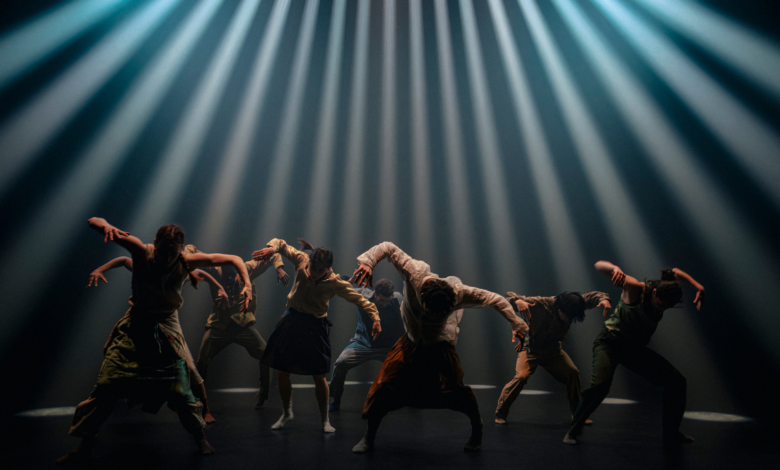
Lucy Monkman gives us a peek at Shechter II and IN THE BRAIN
The Hofesh Shechter Company is more than just established: its work is canon. It’s then particularly exciting to see the spotlight put on their young company, Shechter II, each member of which has been selected as part of a professional development programme. This summer they will own the stage at Queen Elizabeth Hall, Southbank Centre with their major new work IN THE BRAIN. We were excited to know more about the show, so checked in with Lucy Monkman, Senior Producer at Hofesh Shechter Company, to see what she might reveal.
Hi Lucy. Thank you so much for chatting with us today. Firstly, what is the Shechter II Company and how did it come about?
Shechter II was launched in 2018 and is Hofesh Shechter Company’s apprentice company – our ‘younger’ company – made up of eight dancers aged between 18 and 25. It’s a programme that’s as much about creating and touring new work with Hofesh as it is about preparing these exceptional young dancers for sustainable, long-term careers in the industry.
Every two years, we select a new cohort through a three-stage audition process. The first two stages take place online, beginning with an open call for a one-minute self-tape, followed by a live Zoom audition with the company. Keeping much of the process digital has made it as accessible as possible, and the response has been incredible. For the 2026 programme, we received more than 1,200 applications from dancers across 49 countries.
The final eight dancers then join us for an intensive period of creation with Hofesh, senior members of the Hofesh Shechter Company artistic team, and world-renowned collaborators in lighting and costume. They then go on to perform and tour extensively across the UK and internationally, gaining invaluable professional experience from the very start of their careers.
Alongside performing, the dancers also take part in a dedicated professional development programme, Jerwood x SII, which is supported by The Jerwood Foundation. For the 2026 programme, this includes a rolling programme with experts in Dance Science in partnership with The Place, an individual bursary to support each dancer’s own area of artistic or professional research, opportunities to develop their teaching practice alongside senior company dancers, a week of research and development with an invited ‘guest’ choreographer, and tailored support as they make the transition into professional careers at the programme’s conclusion.
Shechter II, in part, grew out of Hofesh’s own experience of being part of a youth company and his belief in the transformative role these can play in a young artist’s development. Having benefited from that environment himself, he wanted to create a space where emerging dancers could bridge the gap between training and a professional career. As a team, we do everything we can to ensure Shechter II achieves this and it’s an absolute pleasure to see what our Shechter II dancers go on to do. Many of them continue to work with us, others have gone on to make their own work and founded their own companies, some are working with other dance companies and in the commercial sector, while others have gone onto have hugely successful teaching careers.
Why is it important to champion young dancers and creatives in such a holistic and fully supported manner?
Because they are the future! They are the future makers, performers, programmers, teachers – they’re our next generation. They have to understand what it feels like and what it means to be looked after and respected as an artist so that they can build that into their practice and future careers, be that with HSC, or wherever they next land. We believe artists are at their happiest when they are looked after – not just in terms of physical wellbeing (though of course, that is a huge part for a dancer) but when their emotional and holistic needs are fully supported. It makes for a safer, happier, and ultimately, more creatively rich environment.
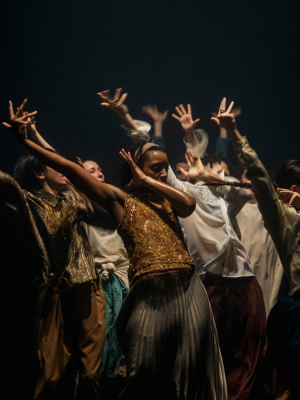
They are performing IN THE BRAIN. What can you tell us about the origins of the show?
IN THE BRAIN grew out of an earlier work, CAVE, which Hofesh originally created for the Martha Graham Company with Studio Simkin in 2022. CAVE explored the energy of nightlife and the human experience of coming together through music and movement; the spark, connection and unity found in dancing together. I think it’s worth mentioning the context in which CAVE was created, which was one where restrictions were beginning to ease but we were still very much emerging from the social distancing and isolation brought about by the Covid-19 pandemic. Creating a work centred on connection, collective energy and shared physical experience at a time when those very things had been restricted, and for such a long time, gave CAVE a particular resonance. That context continues to feel just as relevant in IN THE BRAIN. While the work has evolved into something much larger – in terms of its duration, but also the exploration of the ideas central to CAVE – it retains that fascination with our instinct to gather, move together and find connection through rhythm.
The production is described as part rave/part ritual. How does this style augment Hofesh Shechter Company’s already boundary breaking work?
I think describing IN THE BRAIN as part rave, part ritual captures something that has always been at the heart of Hofesh’s work. He’s interested in creating performances that are felt as much as they are watched. It’s about building an atmosphere and a world that audiences can immerse themselves in, emotionally as well as physically – creating space for people to connect not only with the performers, but perhaps with a part of themselves and with one another.
A rave and a ritual might seem like different ideas, but they’re both rooted in the same human instinct – the desire to come together through music, rhythm and movement. They both create a sense of collective experience, where individual identities momentarily give way to something shared.
From a production perspective that means every creative element is working towards the same goal. Hofesh’s choreography and original score, together with Tom Visser’s lighting design, combine to create an experience rather than simply a performance. The audience isn’t being asked to sit back and observe from a distance; they’re invited into the same world as the dancers, sharing in the energy that’s being created in the room. I think that’s one of the things that makes Hofesh’s work so distinctive – it invites audiences to feel something collectively, not just witness it.
How have audiences responded so far, and are you seeing different attendees wanting to engage with this younger company?
We’ve been blown away by what has been an overwhelmingly positive response to the work so far. I think the piece strikes a wonderful balance of simultaneously taking you to the club – the music and the fierce energy of the dancers gets inside you – but there are tender moments that allow you to reflect on the power and importance of community found in dance spaces, and the responses at curtain call reflect that. We’ve heard of people saying ‘They’re ready to go OUT’ and that they want to go dancing, and other responses that are more contemplative.
One of the things that excites me the most about Shechter II is its flexibility – we can play in similar sized spaces and auditoriums as our main company but are also able to cater to a smaller, mid-scale offer, as well as in less traditional spaces and presentation contexts. This allows us to engage with audiences and venue teams who might not have had the opportunity to see or present our work before. IN THE BRAIN was recently presented outdoors – which isn’t always possible with the work of our main company – at an amazing amphitheatre, Domaine d’O in Montpellier (and will also be presented in a range of late night, outdoor festival performances later this summer). We’ve also been able to present Shechter II pieces at music festivals – at Lowlands (in the Netherlands) and at Latitude. It’s been really exciting for our work to reach a festival-going, primarily music-based audience – witnessing a music festival crowd lose their mind to our work has got to be up there with one of my most memorable experiences working for the company. I think what these experiences point to is how our younger company can be not just a gateway to the broader work of the company, but of contemporary dance in general. There would be no Shechter II without the work of our main company, but I like that for some people, their first experience of contemporary dance, is through Shechter II.
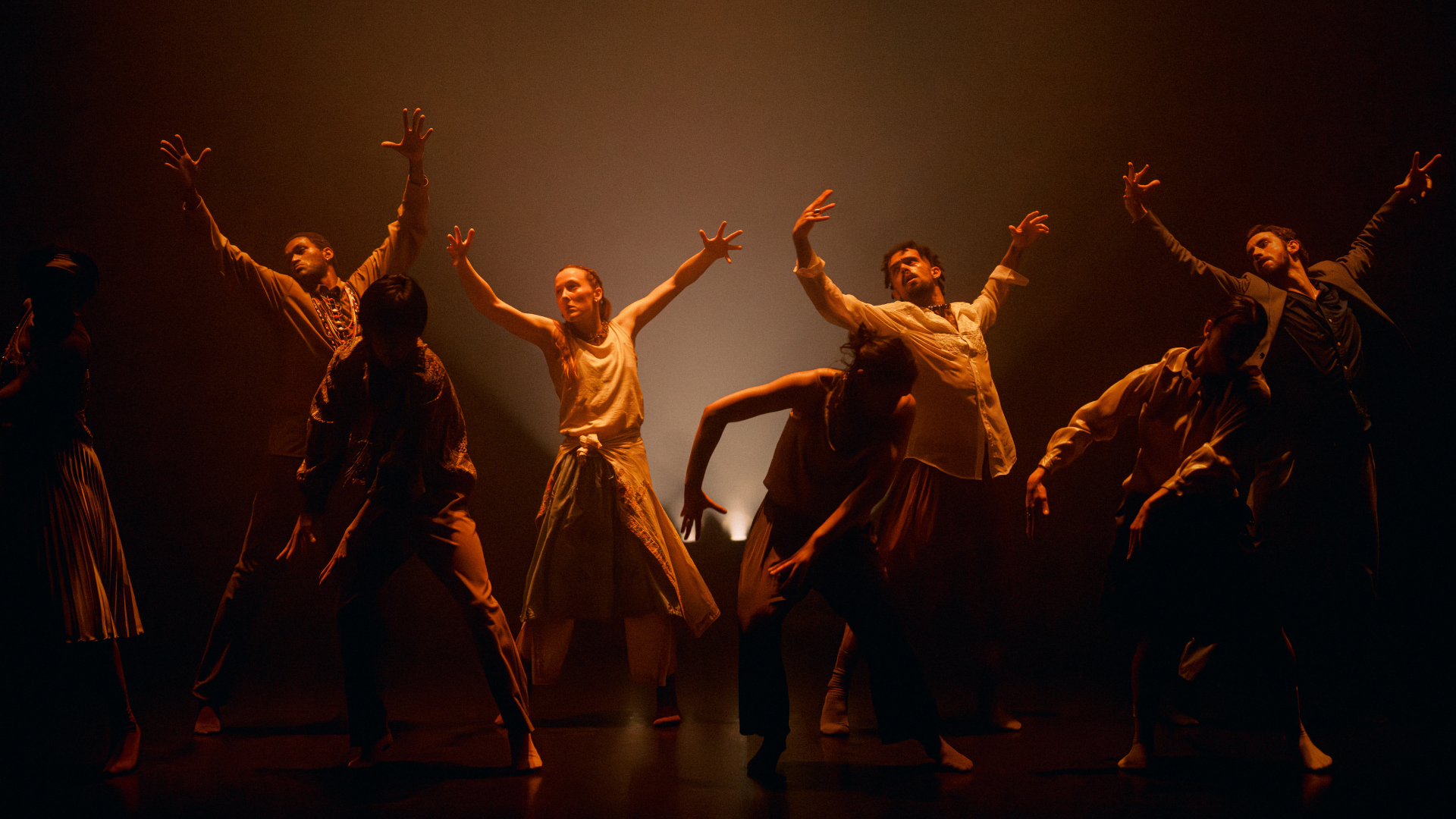
IN THE BRAIN premiered in Switzerland before its UK tour, but do you have plans to take it elsewhere in the near future?
Yes! We’ve been fortunate enough to already present IN THE BRAIN in cities throughout the UK, including Manchester, Leeds and York, as well as throughout Europe, including a sell-out run of shows in Paris and in Montpellier. Later this month we’ll be in Naples for another outdoor performance of IN THE BRAIN, and looking towards autumn, we have a packed schedule with dates in Belgium, Italy, Germany, The Netherlands, France, and further UK tour dates at artsdepot in September, DanceEast in October and Exeter Northcott Theatre in November. For the first time in the history of Shechter II, we’ll be extending the IN THE BRAIN tour into 2027 in partnership with L’Agora, Cité Internationale de la Danse à Montpellier.
Thanks very much to Lucy for talking with us about what promises to be a fabulously exciting experience. Hofesh Schechter: IN THE BRAIN plays at Queen Elizabeth Hall, Southbank Centre from Wednesday 22 to Saturday 25 July.


One Comment