Diego Beares on ‘Los años maravillosos: Archive, Image and collapse’ at the Etcetera Theatre
After the success of our 2025 Camden Fringe Interviews, we thought it only right to attempt a repeat for 2026. So throughout July we’ll be publishing new interviews each day to give a taste of what to expect from London’s best fringe theatre festival. The festival starts Monday 3 August this year, so we may give ourselves a couple of days off inbetween the end of the interviews and the first shows… then again, we might not.
You can find out more about Camden Fringe, along with details of every show playing this August here. You can also find all of this year’s interviews as they are published here.
How do we reconcile the grand, sparkling futures we imagined in our youth with the realities of who we actually became? What happens to our memories when the people who anchored them—our parents, our grandparents—are gone, leaving behind only archives of physical photographs, newspaper clippings, and lingering questions?
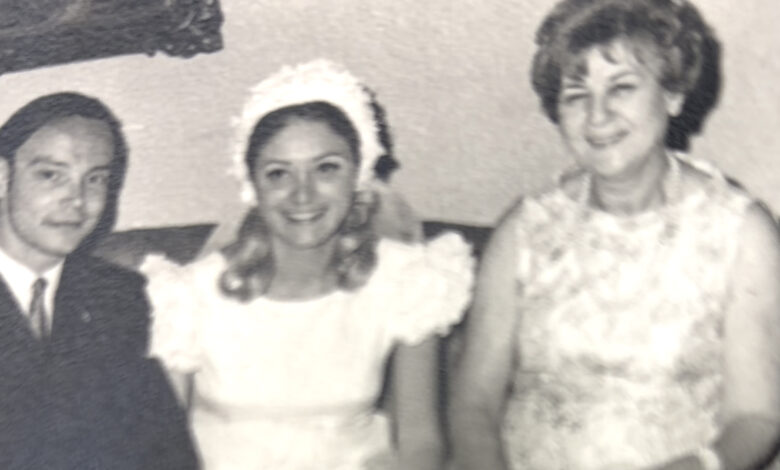
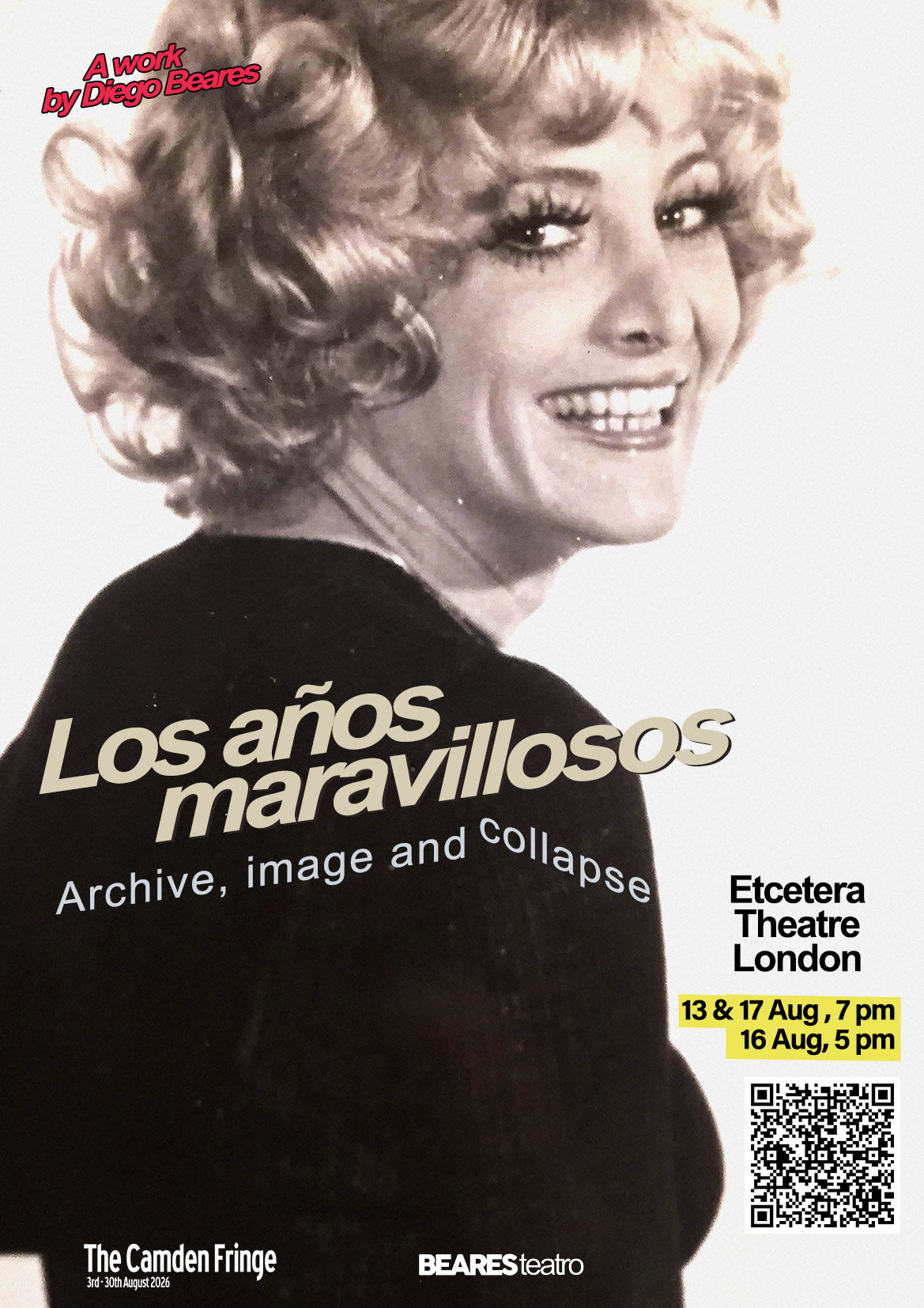
This August, Uruguayan theatre company BEARESTEATRO presents its UK debut, Los años maravillosos: Archive, Image and collapse, at Camden’s historic Etcetera Theatre. A poetic, multimedia monologue, the show is built around a real 1971 interview with a young model: playwright Diego Beares‘ mother, Lilian Beares.
Reframing family loss, Latin American identity, and an unexpected spiritual parallel with Princess Diana, the production moves through the illusion of storytelling to explore what survives the collapse of the narratives we live by. We sat down with Diego to discuss the universal weight of the past, the challenge of writing in English for the first time, and how the show has already achieved its most beautiful victory.
If you had to describe the vibe of Los años maravillosos in just one sentence, what would it be?
It is about the futures we imagined and what remains of them within us.
Why is 2026 the perfect time for this show to be seen?
Because the world we knew just a few years ago no longer exists, yet, mysteriously, it bears a striking resemblance to 1971.
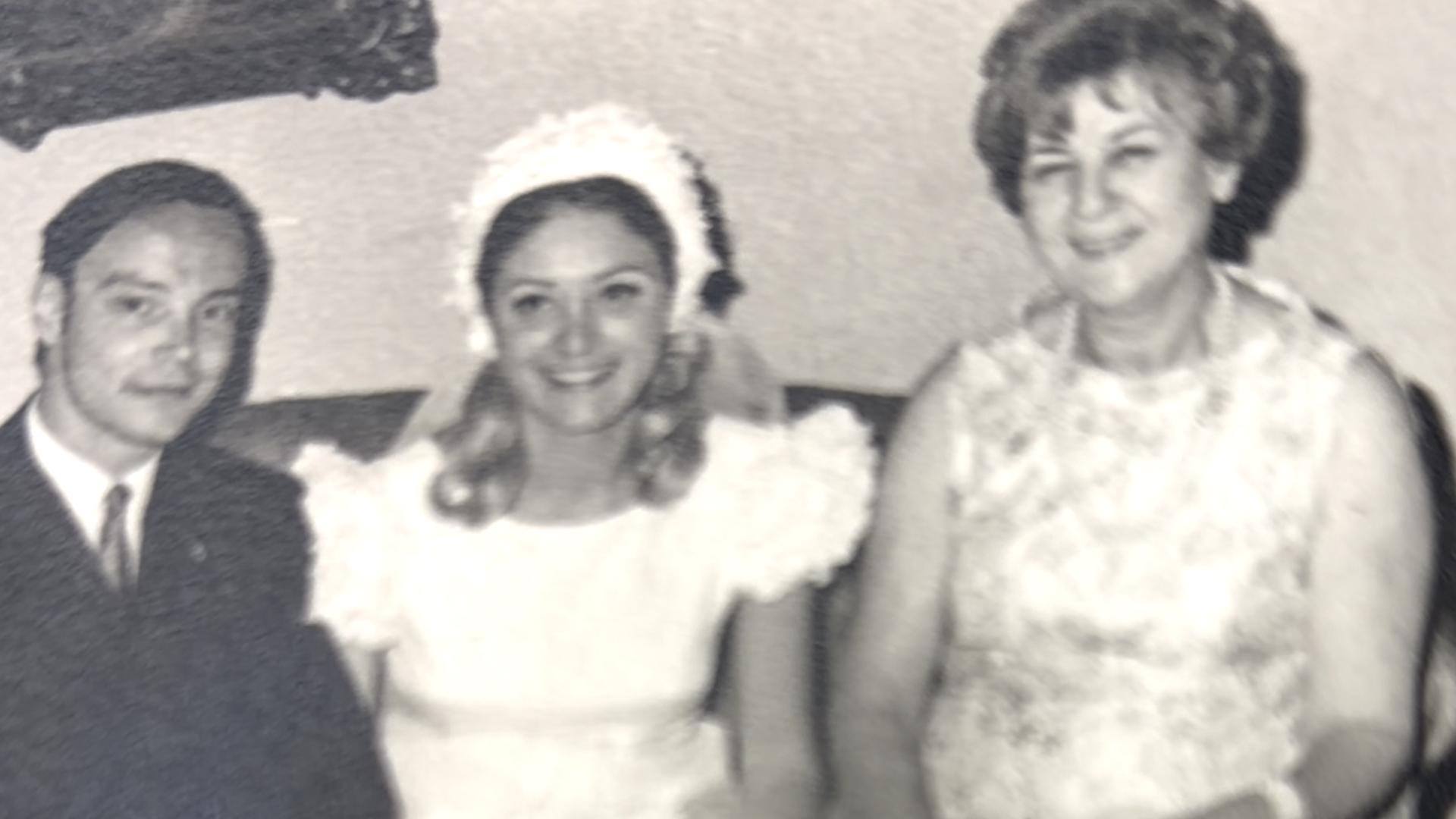
Los años maravillosos begins with an interview given by a young model, my mother, that year. Returning to those words decades later, I was surprised to discover how many of the questions remain the same: how we imagine the future, what we expect from life, and what happens when the things we believe in begin to disappear.
Perhaps that is why the show resonates so strongly today. It speaks about another era, but also about this exact moment. It captures the feeling that while the world remains in constant upheaval, certain hopes, fears, and questions remain completely unchanged.
What was the “eureka moment” that made you realize this story had to be told right now?
That archive of my mother’s modelling career had always been there. But the recent death of my father opened the path to this show.
His absence marked the end of something that could no longer be rewritten. My father, my mother, and my grandmother, the people who had held my family world together, were gone. Opening that archive became a way of returning to the past, of finding them again.
The show connects those three people, but it also connects with the child I once was and with a woman I never truly knew: my mother before she was my mother. The young model who existed only in photographs, newspaper clippings, and memories. As I wrote, I realised the show wasn’t only about them, or my mother, or Diana, or even me. It was about something more universal: our desire to imagine the future, and the distance between who we thought we would become and who we eventually became.
Did the play change drastically from your original vision as you developed it?
It changed. It changed a lot. At first, I thought I was writing a show about my mother. Even today, many people refer to it as “your mother’s show,” and I always give the same answer: it’s far more universal than that. What began as a family story gradually expanded into a reflection on all of us.
It is also my first play written in English and, in a way, I feel it could not exist in any other language. London is its setting. Diana is one of its references. And my mother, who never imagined that her face would one day be on the streets of London, is its protagonist. But, in reality, the protagonist is time. Erosion. Collapse. Ultimately, that is what the show is about.
What is something the performer brought to the character that completely surprised you?
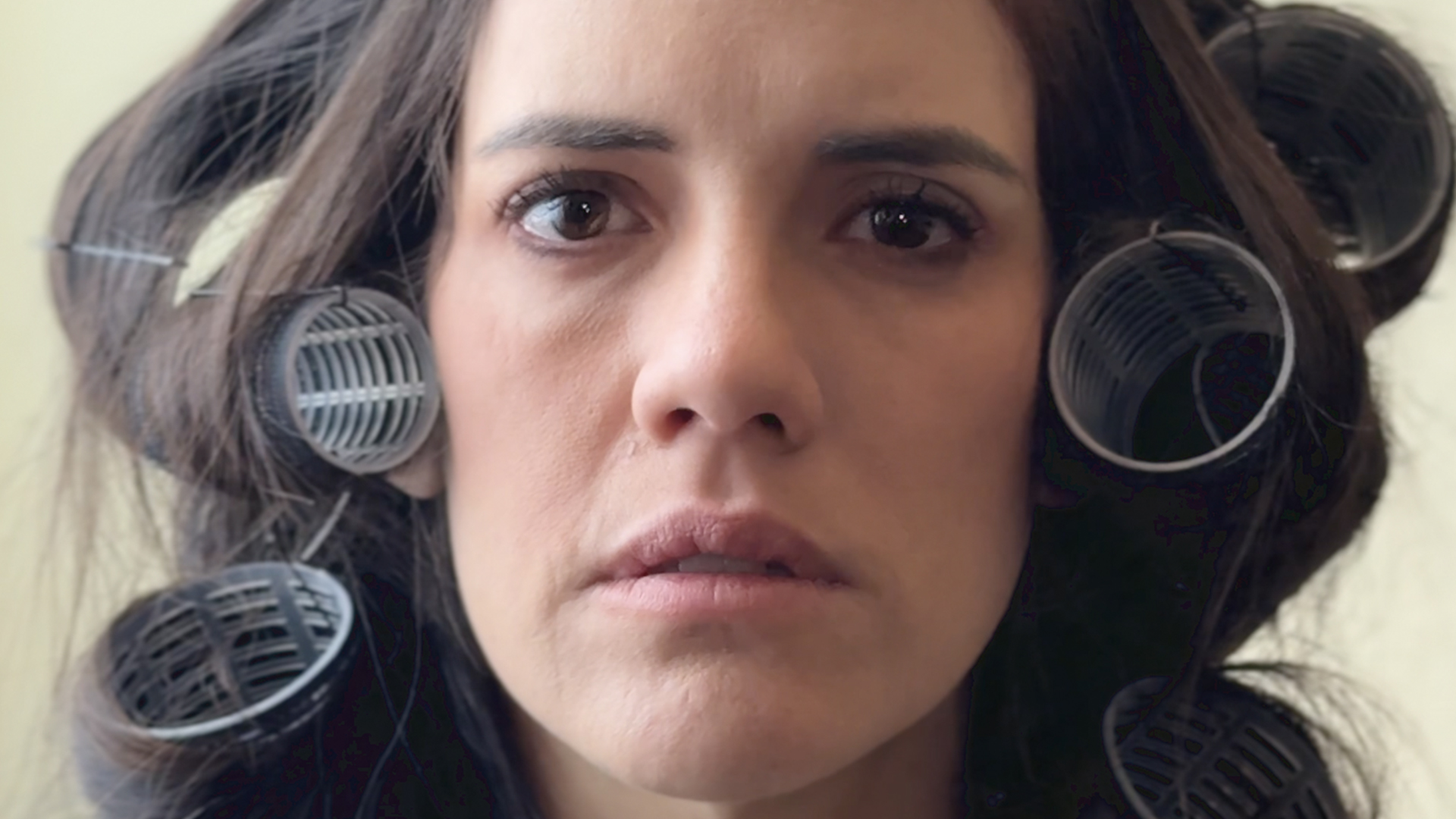
What surprised me most was how quickly the actress moved away from my mother. Very early on, she stopped trying to represent her. She stopped being “my mother” and became the woman the actress chose to build from that raw material.
I think something very special happened at that point. The show stopped belonging entirely to me. That woman was no longer my mother; she had become a new character. And precisely because of that, she became more universal, more complex, and more human. It was an important lesson. Sometimes, the further you move away from the real person, the closer you get to the truth.
What was it about the role that attracted you as creatives?
What attracted us most was the way the play explores the person we wanted to be but never became. It is a very human piece, full of emotions that are easy to recognize and relate to.
The character has many layers and goes through very different stages in her life, which we connected with from the very first reading. She navigates change, loss, and personal discovery while reflecting on her life journey. I believe many audience members will find something of themselves in her story. Portraying her honest evolution physicalizes a significant, demanding challenge, but it is an incredibly rewarding one.
Fringe sets are notoriously minimalist. How have you staged this piece?
The reality is that the show was conceived from the very beginning for international touring, so we knew we couldn’t rely on large-scale sets. Besides, the heart of the piece was never there. It lies in the archive, the projections, the interviewer’s voice-over, and, above all, the story itself.
In the end, the show rests on three things: a story, an actress putting her heart on stage, and an audience willing to imagine. Ultimately, that’s what theatre is all about.
How important is audience interaction to you, especially making your UK debut?
Beyond the stage, this is the first time we are presenting a show in the United Kingdom, so our relationship with the audience takes on a special significance. It is also the London premiere of Los años maravillosos, which means we will be sharing this story with a completely new audience for the very first time.
We have had very positive experiences presenting other productions in Spain and Latin America, although when I talk about success, I am not referring simply to audience numbers, but to the connection we are able to create with the people who come to see us.
Our greatest challenge here is whether a British audience can connect with the story of a woman who grew up and lived thousands of miles away, in a different culture and a different context. At the same time, it is an opportunity to show that the emotions, dreams, losses, and questions that shape her life are so universal that anyone can recognize a part of themselves in them.
If your show was a color, what would it be and why?
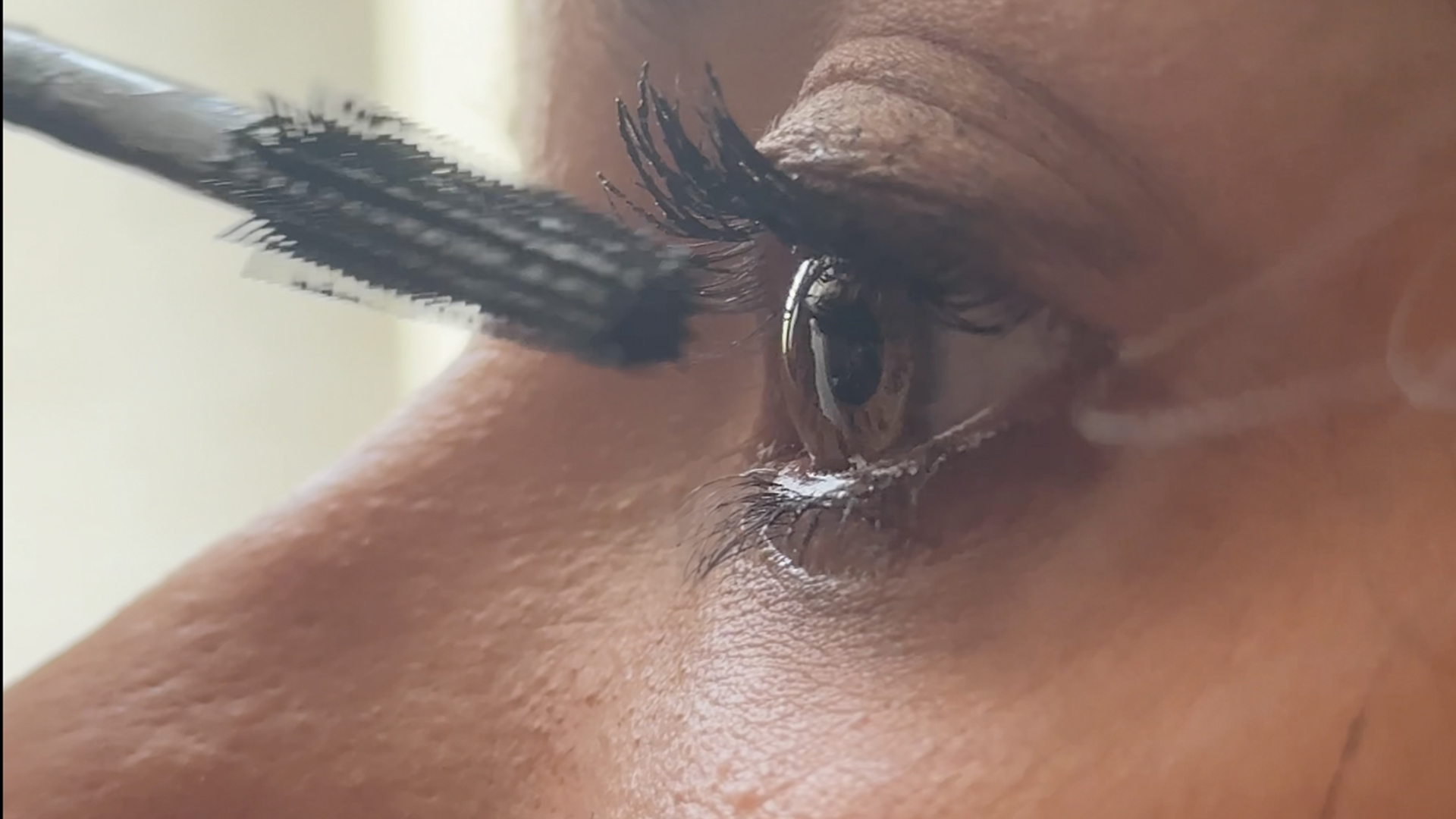
A violet flame. Because it is beautiful, hypnotic, and fragile at the same time. It illuminates, transforms, and leaves a mark, but it can also disappear at any moment. Los años maravillosos is about what remains after the fire.
If your show was a drink at the venue bar, what would be the ingredients?
Whisky, English tea, and candombe.
Whisky because my father was a great whisky enthusiast. English tea because my mother drank tea, not mate, as many people might expect. And candombe because it is impossible to talk about Uruguay without hearing its rhythm somewhere in the background. I have no idea what it would taste like, but it would probably taste a lot like Los años maravillosos.
What’s the most unconventional prop used in the show?
A souvenir mug from the wedding of Diana and the Prince of Wales. We “borrowed” it from an Airbnb we stayed in while travelling in Spain, a few months before the show even existed in my mind. At the time, it was simply a curious object.
A few months later, when I began writing Los años maravillosos and Diana started to emerge more and more clearly within the material, the mug reappeared. It eventually became a key part of the production. It still surprises me to think that it was already there before the show existed.
What does “success” look like for you this August, beyond just selling tickets?
Success is my mother’s face being on the streets of London, just as it is in the show. And that has already happened. My mother never imagined something like that could happen. Neither did I. So, in a way, success has already been achieved. Everything that comes after this is a gift.
And I am sure that, from somewhere, all the dead who inhabit this show will do their part.
To wrap things up: A gay, migrant, Latin American man arrives in London with a play about his mother. Who does he think he is?
I don’t know. I suppose he is someone who decided to fight a battle he could lose. But as the advice goes: the only battles you are guaranteed to lose are the ones you never fight.
Many thanks to Diego for taking time out to chat with us. Los años maravillosos: Archive, Image and collapse plays at Etcetera Theatre on Thursday 13, Sunday 16 and Monday 17 August.