

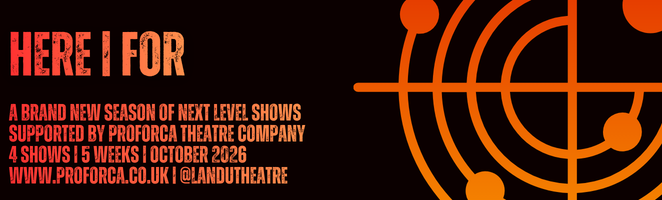
Artistic Director David Brady on the Lion & Unicorn’s HERE | FOR Season
Getting a successful fringe production off the ground is a monumental achievement, yet all too often independent companies find themselves back at square one once the curtain comes down. Enter HERE | FOR, a new season co-launched by Proforça Theatre Company and Kentish Town’s Lion & Unicorn Theatre designed to give promising work a vital second step. Offering cash contributions, rehearsal space, marketing support, and potential transfer options, the season aims to share the financial risk usually shouldered entirely by artists.
Ahead of the five-week run featuring visiting productions (God Save Us!, Uncle Monty’s Antique Shop, and The Other Room) alongside Proforça’s own headline show Big Love, we sat down with Artistic Director David Brady to discuss the inspiration behind the season, what makes a show “next-level work,” and why fringe theatre must feel like a genuine event.
What inspired Proforça Theatre Company and the Lion & Unicorn Theatre to launch the HERE | FOR season this year?
HERE | FOR came from looking at what happens to good fringe work after that first production. There’s a huge amount of brilliant work being made in London, but quite often a company gets a show on, gets some good reviews, maybe sells well, and then immediately has to start again from zero. There isn’t always an obvious next step.
Because we run the Lion & Unicorn and make work ourselves through Proforça, we see both sides of that. We know how difficult it is to make the finances work, how much artists are being asked to carry themselves, and how valuable a bit of proper backing can be at exactly the right moment.
So HERE | FOR was our attempt to create that next step. Not simply giving companies a slot in the programme, but saying: we like what you’re doing, we think there’s something here, and we’re prepared to put some money, time, space and practical support behind it.
We wanted to create the kind of opportunity we’d have wanted ourselves at various points over the years.
You received over 50 applications for this mini-season. How did you pare those down to select the final line-up of visiting companies? What was it specifically about these chosen productions that made you say, “This is next-level work that needs to be staged right now”?
It was incredibly difficult, because the standard was genuinely high. We weren’t necessarily looking for the most polished application or the company with the longest list of credits. We were looking for a combination of a really clear theatrical idea, an understanding of who the audience might be, and a company that felt ready to do something significant with the opportunity.
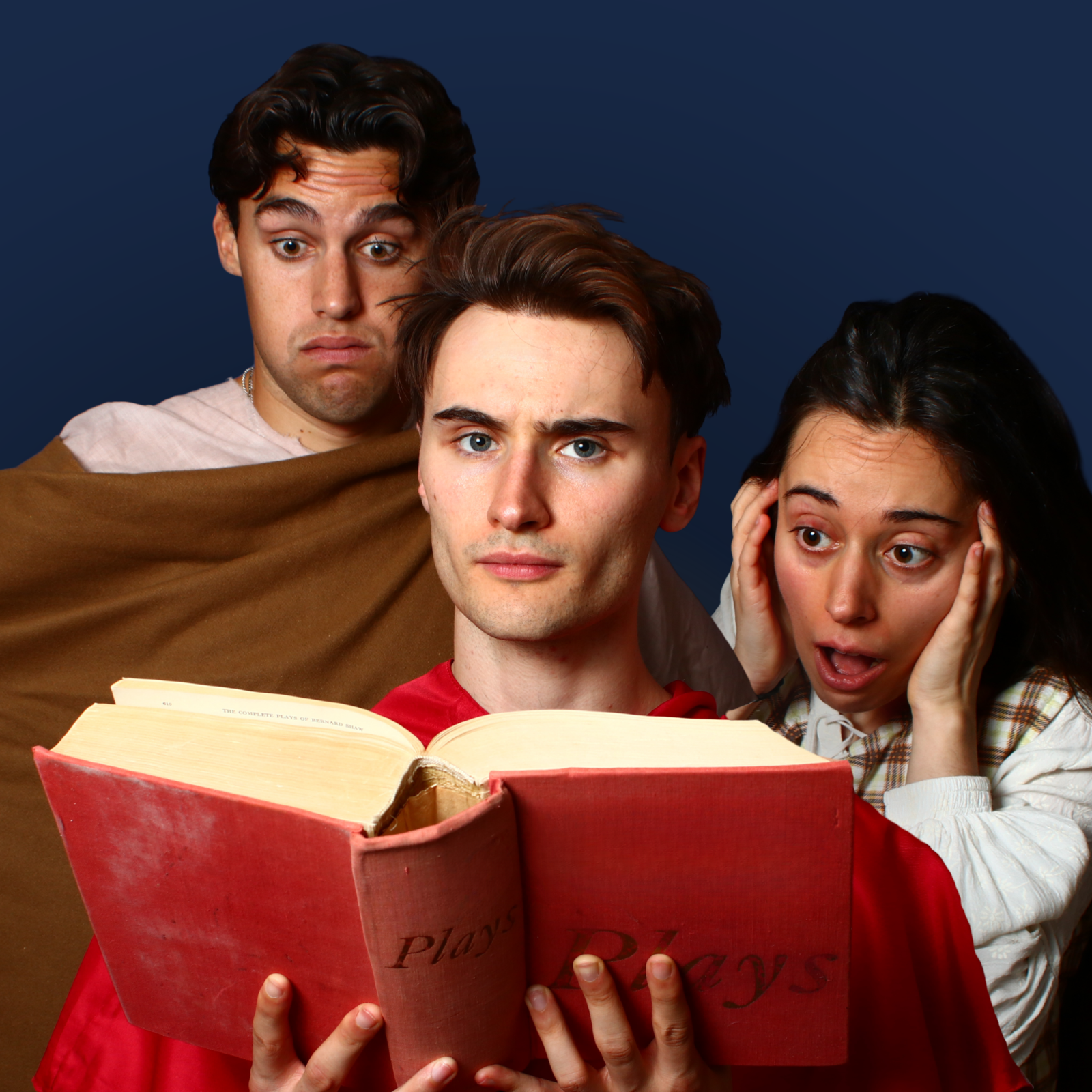
The work we chose was also very different, which mattered to us. God Save Us! is funny, political and formally playful, using the structure of a medieval morality play to look at money, institutions and who gets to be in the room when decisions are made. Uncle Monty’s Antique Shop is a much darker, atmospheric piece of ensemble storytelling, four psychological stories connected through this strange little antique shop.
And The Other Room is different again. It’s an intimate, funny and very human piece about caring, grief, connection and what happens when death takes over a house but life stubbornly carries on.
The common denominator wasn’t genre. It was that we could see the show. There was a strong theatrical proposition behind each one, rather than simply a good script waiting to be staged. And crucially, we felt each company could use HERE | FOR to make a meaningful leap forward with the work.
Across those visiting shows, alongside Proforça’s headline production Big Love, what central themes or aesthetic styles tie this season together?
I’m not sure there’s one aesthetic tying everything together, and actually I’m pleased about that. I wouldn’t want HERE | FOR to become a season where you can predict what every show will look or sound like because we’ve imposed a particular house style on it.
What connects them for me is that they all understand theatre as an event. There’s a reason to experience these stories in a room with other people.
They’re also all interested, in very different ways, in what happens when the structures we build around ourselves stop working. Faith, money, memory, relationships, grief, love. People have created ways of understanding their world, and then something arrives that disrupts them.
Even Big Love, underneath all the confetti cannons, power ballads and ridiculousness, is really about somebody who has constructed an enormous romantic philosophy of life because looking at what’s actually in front of him is considerably harder. The show is explicitly about belief, desire and avoidance, wrapped up as something that is part party, part confession and part love letter.

They’re theatrical shows with something underneath the theatricality. That’s probably the closest thing to a HERE | FOR house style.
HERE | FOR offers companies practical support, including cash contributions, rehearsal space, and transfers to other venues. Why was it important to offer a package like this rather than a standard fringe venue hire?
Because there are already plenty of opportunities to hire a room and put a show on. We run one!
What’s much harder to find is someone saying: we believe this has potential, so what would actually make a difference to you?
Money matters. Rehearsal space matters. Marketing and press matter. Having people around who can talk through the production, the audience, the next venue or what happens after the final performance matters. And opportunities for the work to have a life somewhere else matter too.
None of those things individually solves the economics of fringe theatre, but put them together and you can give a company considerably more room to concentrate on making the show better rather than spending every waking hour worrying about how they’re going to pay for it.
The principle behind the whole thing was very simple: if we’re asking artists to be ambitious, the venue should be prepared to invest some ambition in them too.
Independent theatre faces a lot of financial and logistical pressure today. How does this model aim to reshape how fringe venues support emerging work?
I don’t think one season in one 60-seat theatre is going to reshape fringe theatre, and I’d be suspicious of anybody claiming it could!
But we can decide how we behave within our bit of it.
There’s a model in fringe theatre where almost all the financial risk sits with the artist. They pay for the venue, rehearsal room, marketing, PR, cast and creatives, then everyone crosses their fingers and hopes enough people buy tickets. Sometimes that model is completely appropriate, but it can’t be the only one.
HERE | FOR is us experimenting with what happens when the venue takes some of that risk too. We’re curating the work, investing financially in it, giving it rehearsal space, supporting its marketing and press, and then working with the companies on what might happen next.
We’re not pretending we’ve solved anything. We’re asking whether a small fringe venue can use the resources it does have a little differently, and whether that creates better conditions for artists to make good work.
What do you hope audiences in Kentish Town and beyond will take away after experiencing a show during this 5-week run?
First and foremost, I hope they have a brilliant night at the theatre.
There can sometimes be a slightly worthy conversation around new writing and fringe theatre, where audiences are almost being asked to support it because it’s good for them. I’m much more interested in making the Lion & Unicorn somewhere audiences come because they think they’re going to discover something.
You might see something funny, strange, moving, unsettling or completely unlike the thing you saw the previous week. But hopefully you leave wanting to talk about it.
The phrase we’ve used at the Lion & Unicorn is “theatre worth leaving the house for”, and I think that matters more than ever. We’re competing with an enormous amount for people’s time and money. The answer has to be making the experience of seeing something live, in a small room, with 60 other people feel genuinely worth it.
What are your main hopes for the visiting creative teams as they go through this process? What does success look like for them by the end of the season?
Success will look different for every company, and I think that’s important.
Of course we want audiences, great reviews and full houses. We’re a theatre, those things matter. But I’d hate for the only measurement of whether HERE | FOR worked to be a spreadsheet of ticket sales and star ratings.
I want each company to finish in a stronger position than they started. I want the show to be better. I want them to understand it better. I want them to know who its audience is. I’d like them to have made useful relationships with journalists, programmers and other artists. And ideally I want there to be a credible answer when somebody asks, “What happens next?”
For one company that might mean another London run, for another it might be touring, developing a relationship with another venue or simply taking everything they’ve learned into their next piece.

The point is momentum. The final night at the Lion & Unicorn shouldn’t necessarily feel like the end of the story.
Proforça is headlining the final weeks with Big Love, a solo show packed with power ballads, confetti, and big emotion. How does Big Love set the tone for the kind of ambitious, audience-aware work you want to champion?
Big Love is probably us putting our money where our mouth is.
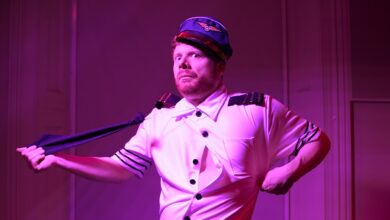
It’s a new solo show, but we didn’t want “solo show” to mean one person, one chair and a light. There’s absolutely nothing wrong with that kind of theatre, but this particular character demands excess. So we’ve got confetti, strobes, a red phone, enormous songs, ridiculous romantic gestures and a performer attempting to contain all of that in a tiny theatre in Kentish Town.
But all of that stuff has to earn its place. The spectacle is part of the dramaturgy. He believes life and love should be cinematic, transcendent and extraordinary, and slowly we start asking what happens when reality doesn’t live up to that.
That’s the kind of ambition I’m interested in. Not necessarily bigger sets or bigger budgets, but artists really thinking about what an audience is going to experience for 70 minutes. Why is this theatre? Why does it need these people in this room tonight?
You can do an enormous amount in a fringe theatre. Sometimes the limitations are exactly what make people inventive.
Is HERE | FOR designed to be a one-off experiment, or are there already plans to bring the season back next year for 2027?
We absolutely want it to come back.
This first year is deliberately an experiment because we want to learn from the companies rather than immediately deciding we’ve invented the perfect model. We’ll look at what genuinely helped, what didn’t, what the companies needed more of, how audiences responded and what happened to the work afterwards.
Then we can build the next version around what we’ve learned.
The ambition is for HERE | FOR to become a regular part of what the Lion & Unicorn does: a curated season where we can identify companies making really promising work and put meaningful support behind them.
If, in a few years, people see HERE | FOR on a poster and think, “I probably don’t know this company yet, but somebody I trust thinks I should,” then I think we’ll have built something worthwhile.
HERE | FOR opens on Tuesday 6 October with God Save Us! Uncle Monty’s Antique Shop plays from Tuesday 13 October, The Other Room from Tuesday 20 October, before the season closes with Big Love from Tuesday 27 October through to Saturday 7 November.



One Comment