Kimberley Nixon on Postpartum Psychosis and Dark Comedy Baby Brain
After the success of our 2025 Camden Fringe Interviews, we thought it only right to attempt a repeat for 2026. So throughout July we’ll be publishing new interviews each day to give a taste of what to expect from London’s best fringe theatre festival. The festival starts Monday 3 August this year, so we may give ourselves a couple of days off inbetween the end of the interviews and the first shows… then again, we might not.
You can find out more about Camden Fringe, along with details of every show playing this August here. You can also find all of this year’s interviews as they are published here.
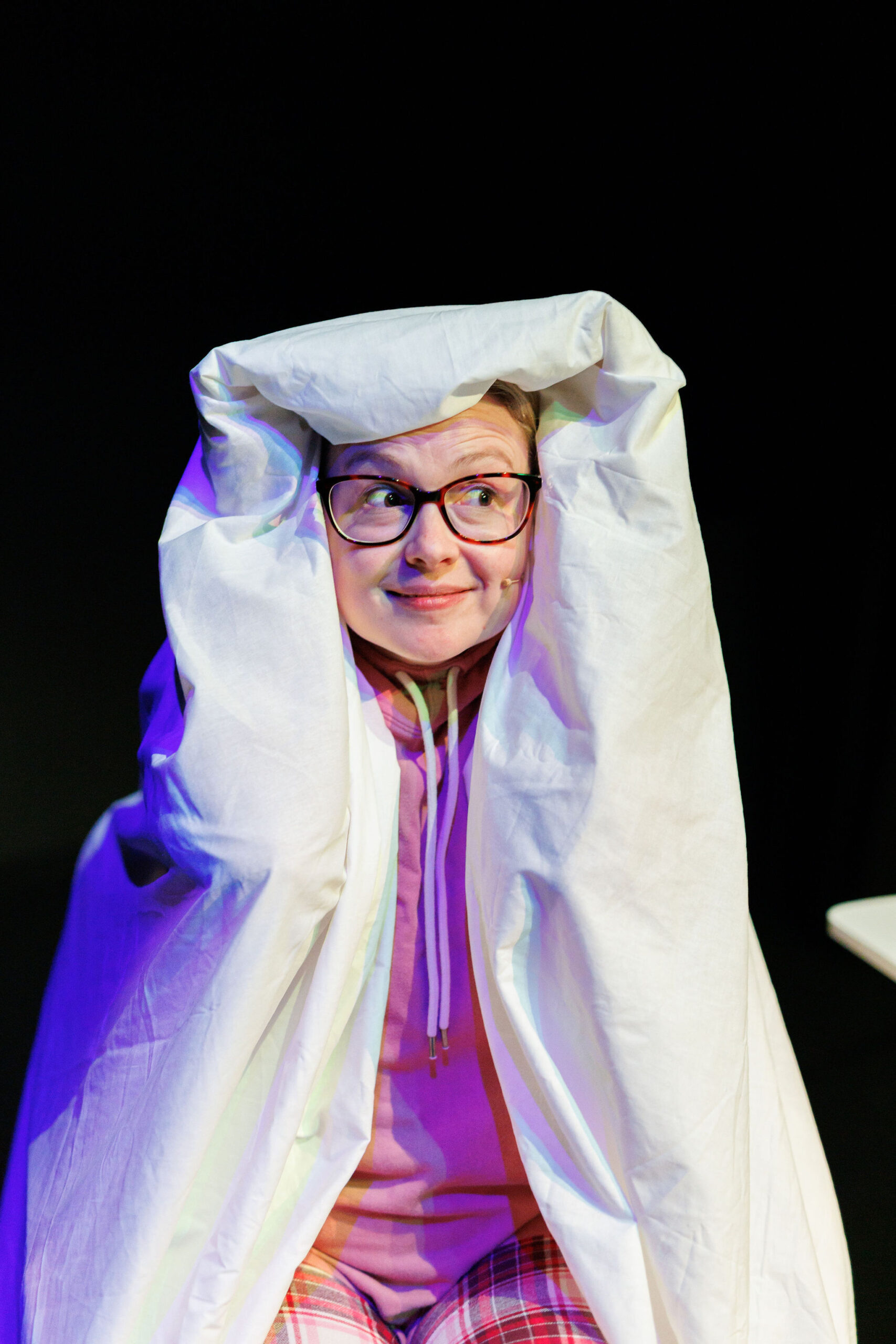
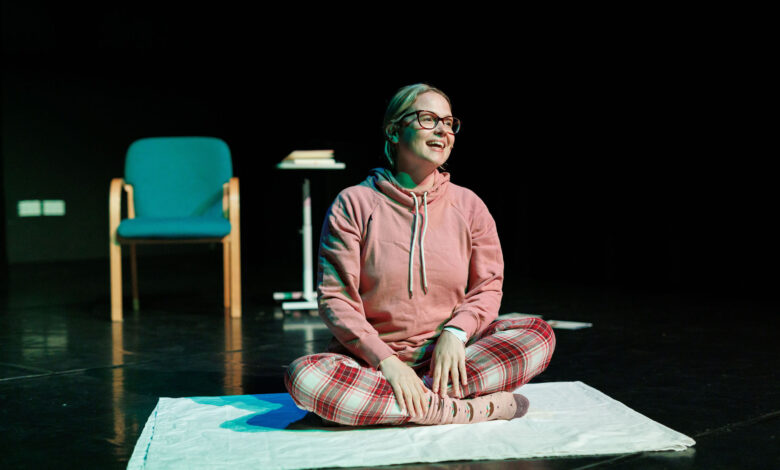
“New mums have been quietly losing it since the dawn of mums, and nobody’s ever made it a great night out. I thought, well, somebody should.” So says celebrated Welsh actor Kimberley Nixon (Fresh Meat, Hebburn) on her blistering new one-woman show, Baby Brain. Landing at the historic Bridewell Theatre this August for Camden Fringe 2026, this Nelson Nutmeg Pictures production frames the terrifying reality of postpartum psychosis through an unexpected lens: a raw, unfiltered stand-up comedy gig.
What started as a four-hour draft of pure misery has been honed by Nixon and co-writers/directors Danny Stack and Tim Clague into a sharp, 55-minute tightrope walk where the jokes aren’t decoration for the trauma, they are the trauma. We sat down with Kimberley and Danny to talk about reclaiming control of your own breakdown, the terror of having no scene partners to hide behind, and why the most powerful prop on stage is a microphone that isn’t even plugged in.
If you had to describe the vibe of your show in just one sentence, what would it be and how does it manifest on stage?
KIMBERLEY: It’s a one-woman dark comedy about a new mum struggling with postpartum psychosis, but the vibe is “stand-up gig that’s been sectioned”; on stage that means it’s just me and a microphone, trying to make sense of her material, as well as her sanity.
What was the ‘eureka moment’ that made you realize this story needed a theatrical stage right now?
KIMBERLEY: Two middle-aged men [co-writers/directors Danny and Tim] in the wings deciding my own breakdown would make excellent theatre, that was the eureka moment, and frankly, it was theirs more than mine! I just kept saying “are you sure?” and they kept saying “yes, it’s very funny,” and after about the hundredth time, I started to believe them. I’d been carrying it around for years, and eventually, it was either put it on a stage or keep boring people with it at parties. The stage seemed kinder to everyone.
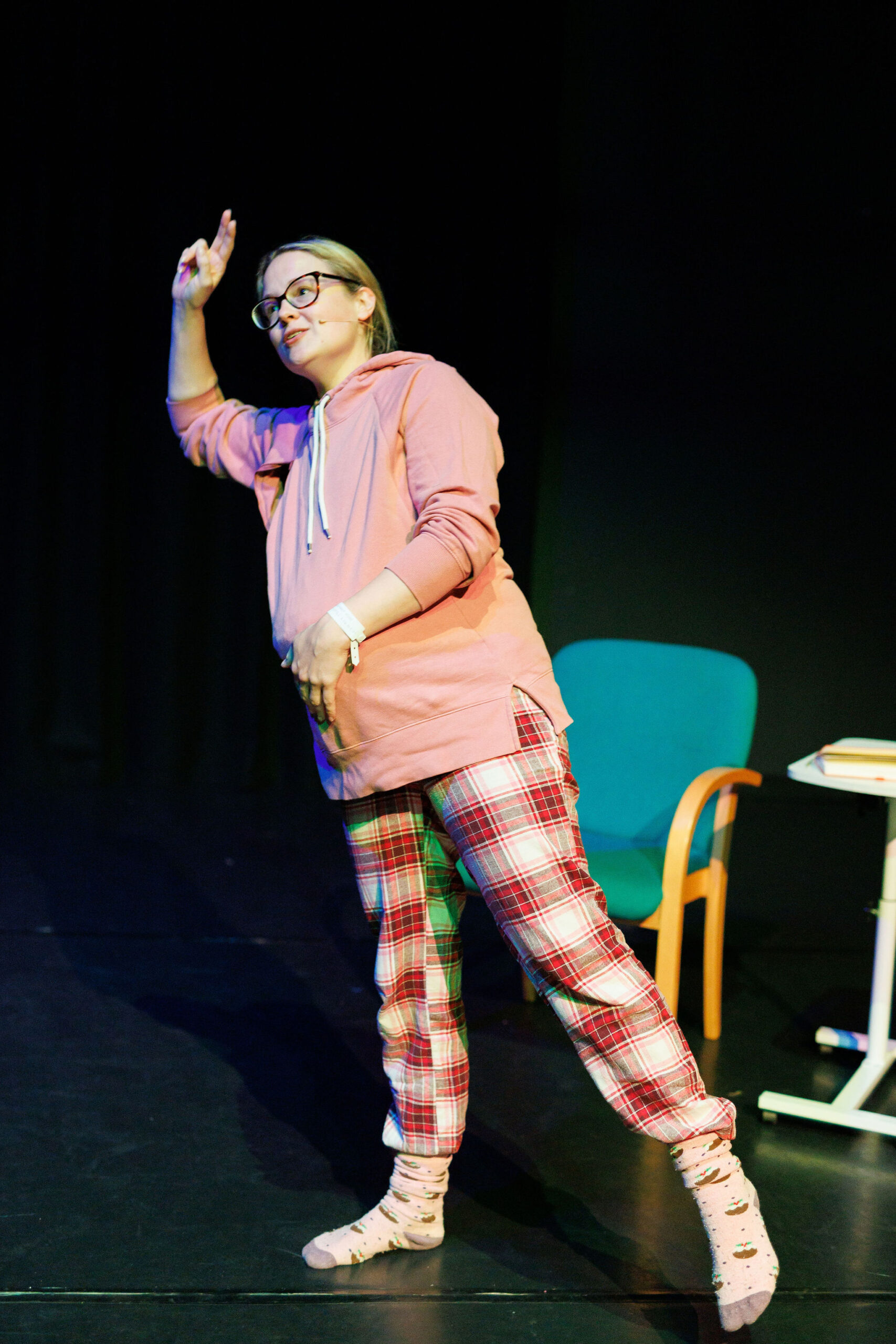
Is this final version close to how you originally envisioned it?
KIMBERLEY: God, no. The first version was about four hours long and roughly nine times more miserable. In early drafts, we were basically standing there going “and then it got worse,” which is true but isn’t, technically, comedy. What changed is we worked out the jokes weren’t decoration on the dark stuff, they were the dark stuff. Once we stopped being precious about it, the whole thing got shorter, sharper, and oddly braver.
Danny, as a director and co-writer, what did Kimberley bring to the character of Cass that completely took you by surprise?
DANNY: What surprised me and Tim most is what we couldn’t bring to it, and she could. We could shape the story, but there’s a truth in the performance that’s Kim’s alone; lived, not researched. Watching her do things in the room that we had no authority to ask for, that we wouldn’t have known to ask for, that was the surprise. The job became protecting that, not steering it.
Kimberley, how challenging has it been to step out entirely on your own for this performance?
KIMBERLEY: Everyone assumes the hard part is the emotional stuff, and it isn’t, because I’ve lived it. The feelings I can do in my sleep, sadly. The genuinely terrifying bit is that it’s just me up there for 55 minutes with no interval and nobody to blame. No scene partner to cover for you, no costume change to hide in. If it goes wrong, it’s very specifically my fault.
But there’s joy in it too. Cass isn’t exactly me, but she’s a version of me and a load of other mums who’ve shared their stories. What I enjoy is the freedom in that, I can really go out there and literally “go mad,” feel all of it at full volume, and still know there’s a safety net because it’s a story. I get to play it rather than live it.
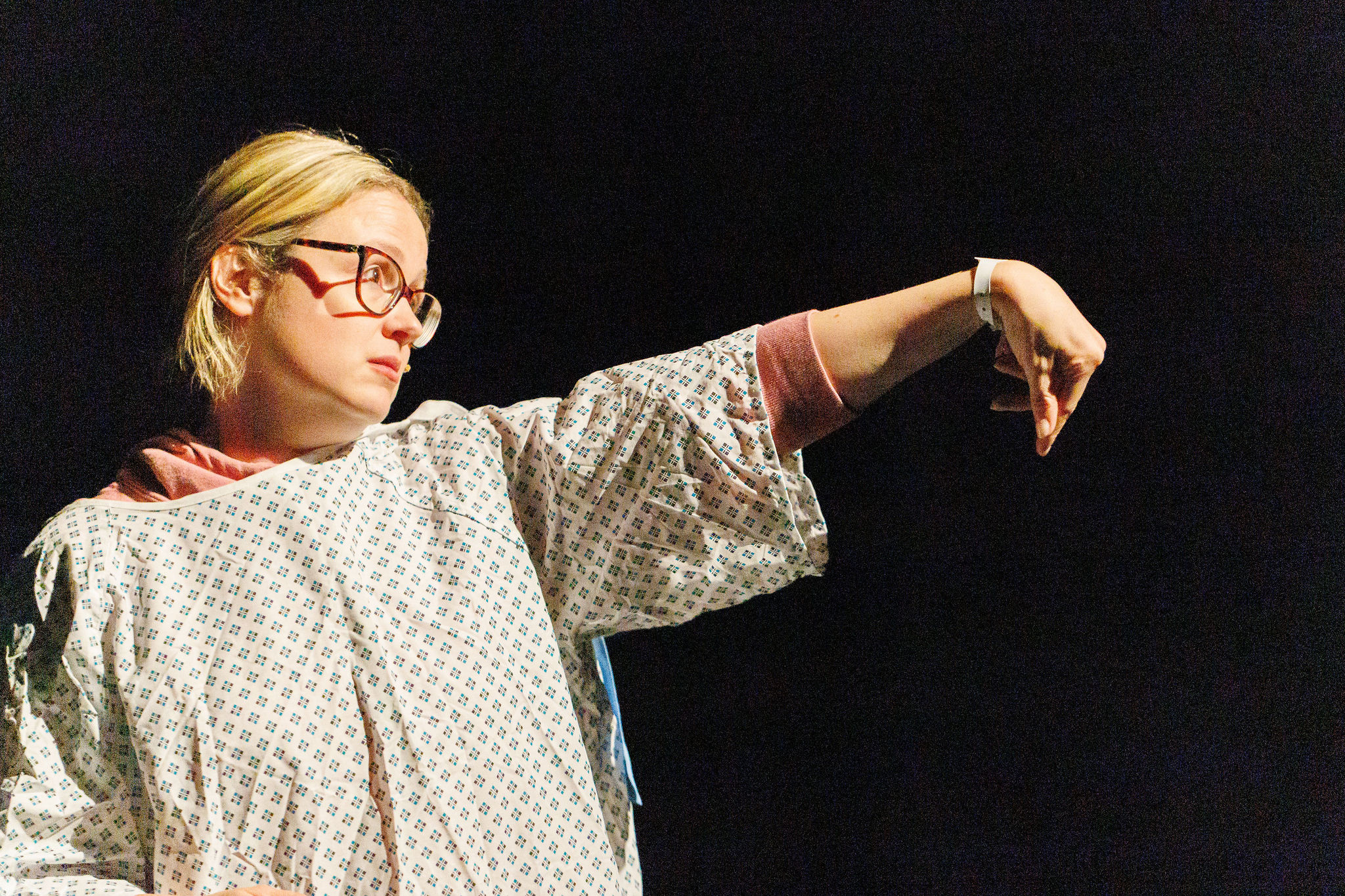
Fringe setups are famously minimalist. How does your physical space reflect the story?
KIMBERLEY: It’s a hospital chair, a table, an NHS leaflet, and a gag book. That’s it. A Mother & Baby Unit that’s doubling for a stand-up stage.
Speaking of props, there’s a distinct choice made with your microphone, isn’t there?
KIMBERLEY: The stand-up microphone we use in the show isn’t plugged in. People think we forgot, but it’s because Cass’s voice has been taken away from her. There’s a deep thematic reason for it.
How important is audience interaction when the environment is that intimate?
KIMBERLEY: I’m talking to the audience for the entire hour, so they’re actively involved in the story, whether they like it or not. The whole conceit is that you’ve wandered into a Mother & Baby Unit, and everyone watching is part of it. I’m reading the room the way you’d read a room you’re not sure is on your side.
If you had to describe your show as a colour, what would it be?
KIMBERLEY: Cerise. A fancy word for pink.
Many thanks to Kimberly and Danny for their time. Baby Brain will play at Bridewell Theatre from Monday 10 to Wednesday 12 August as part of Camden Fringe. There will also be matinee shows (2pm) on both 11 and 12 August.