

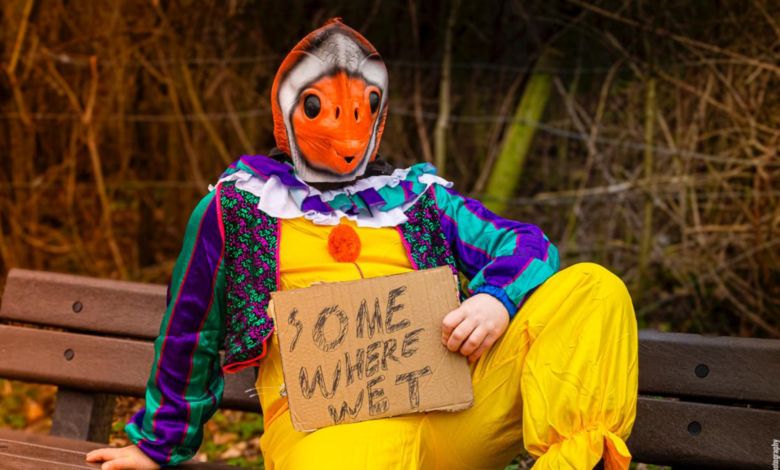
Comedian Stephen Catling is a Clown Fish Out of Water
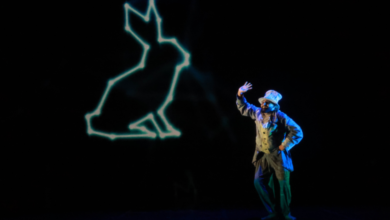
It’s pretty rare that as a reviewer you can say you’ve never seen anything quite like this before, but that was exactly the response when Stephen Catling slithered onto the stage at Edinburgh Free Fringe last year wearing a slug mask on his head, in Moving On…Really, Really Slowly. What followed was an extraordinary and very funny evening from a comedian whose autism shapes his inimitable delivery.
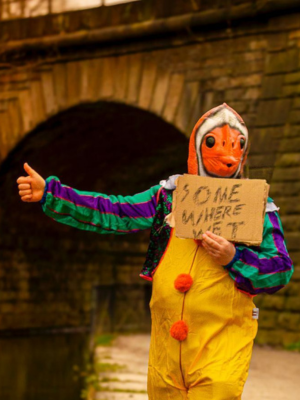
Sadly, in 2025 Stephen’s slug mask went missing and this year he is instead a Clown Fish Out of Water. We were of course intrigued to find out what this entails, so dipped our toe into the water and asked him for a chat about the show and its preview tour.
Hi Stephen. Thanks very much for taking the time to talk to us about your new show. Firstly, what happened to your glorious slug mask?
Basically, I was running to go watch Edy Hurst (who is a lovely man and warlock) and en route the mask fell out. Where it has ultimately ended up I am afraid is a mystery: it was almost returned to me but was then stolen. (So lost initially then nicked).
What can you tell us about Clown Fish Out of Water?
It’s really about feeling out of place in the world, I feel like a fish out of water in society and to an extent parts of the entertainment industry, as changes in it seeming to be going for predictable formats and prioritising what is safe means I don’t think I have a place anymore as an avant garde act.
Your act has been described as reminiscent of both Harry Hill and The Mighty Boosh. Do you see any comparisons yourself?
With The Mighty Boosh, I can see it in that we are both in the surrealist realms, but it is a tenuous connection. But more than happy to claim it.
Harry Hill was a really surprising comparison, but in hindsight some of the quickfire absurdity and sound effects I am fond of using would not be out of place on TV Burp.
I think these comparisons stem from the fact that because what I do is particularly unique people will grab any association with something to compare me to. That list has included Stewart Lee, Nick Helm, Rhod Gilbert, Tom Green/Freddie Got Fingered (the person who stated that made it clear they meant it as a compliment). Another from my photographer and university friend James Nolan said “It’s sort of like the absurdity and the narrative of Izzard intertwined with the coarseness of Billy Connolly” – and I could go on and on.
How do you feel that being autistic impacts on making your work so unique?
Like many with the condition, we just have a difference in our cognition that make it easier to connect ideas in unexpected ways, which is where the humour derives from; the unexpected.
I would say this difference means that we in society come as foreigners, even if we are from the country we are talking about. We have the outsider perspective naturally built in because a lot of neurotypical behaviour comes from seeing things as illogical or absurd from our perspective. This means it is ripe for comedy/parody/satirisation, often leading us to go down the reductio ad absurdum angle, which I am one who really likes to take to the extreme.
In addition, I think when you have niche interests or get obsessively hyper-fixated it allows for other ripe picking up of comedic ideas, as the deeper we go into our research with the combination of our idiosyncratic minds we end up finding something nobody else might have found (this is not to say neurotypicals are incapable of doing this either).
Your show in Edinburgh last year attracted a number of familiar and dedicated fans. Would it be fair to say you are acquiring cult status?
I find it deeply flattering when people have said that and I suppose amongst comedians and fans of comedy I definitely do because it is quite common interaction that if a comic says to me “Have we met you before?” several comics will say “If you have seen Stephen you would not be asking that question”. To be so memorable to so many is a delight.
Similarly, my director Phil Green also talks about when my name comes up in conversation amongst our peers there is usually a couple of smiles as someone remembers me doing something wild. Other close friends in comedy such as Sam Dutton have told me similar stories. And then there are times I get new acts telling me they have heard a lot about me before I have even met them.
Other publications like The Star have also noted my cult status and so I am beginning to think that maybe if I am being asked these questions, or they are being stated, that I am a cult act. I might be a cult act.
It has also become a bit of a hobby to collect monikers because I have been given a lot of names based on various sets (what a person knows me as may also tell me when they met me). They include (though the list is not exhaustive): mooseface, swan guy, church of dog, slug/snail, the bee, The Dark Lord, Mr Owls for Hands and, as a recent addition to the list, Clownfish.
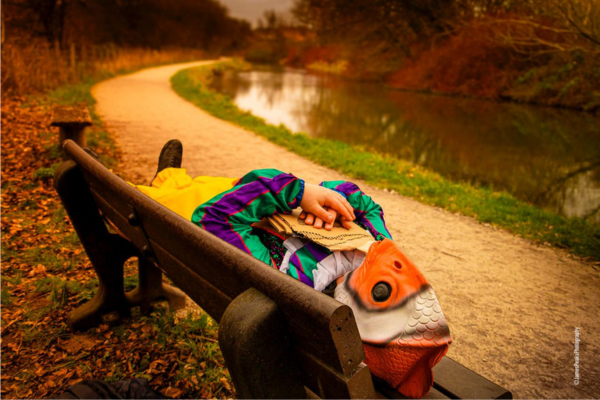
Clown Fish Out of Water will be having previews across England in advance of going to the Edinburgh Fringe this summer. Do you find audiences differ by geographical location?
To an extent, yes. For example if you contrast Kent vs Brighton; I have found both areas have a particular taste for alternative comedy, but where they differ is that Kent likes it a little bit darker –and rawer. The same set in Kent that storms may make Brighton clench its arse (and that is OK – I love them both for their different flavours and Brighton made me better as a comedian as well as a person).
That being said, I am cautious of simplifications on geography alone as there are many other factors that might influence the flavour of the audience.
And finally, do you have any advice to other neurodivergent performers wanting to take a show to the Fringe?
Nothing specifically for neurodivergents, but I do for all.
1) Go up and just watch so you can get ideas of the scale as well as inspiration, and try and network.
2) Research each company and venues and figure who you want to work with and who would offer the best means for achieving your goals to help maximise the best outcome.
3) Do as many previews between September and August as you can.
4) Get a director for your show and choose someone who is a different style to you but understands what you are trying to accomplish.
Thanks very much to Stephen for telling us all about his new stand-up show, Clown Fish Out of Water. ET will be at its preview at the Etcetera Theatre on Sunday 14 June ahead of the show’s Edinburgh Fringe dates.



One Comment