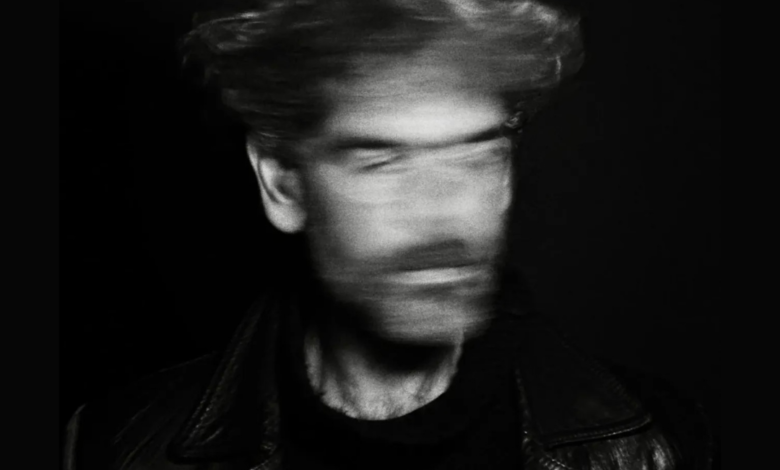
Mehmet Ali Nuroğlu and Ziyi Cao on Will Eno’s Dünyada
After the success of our 2025 Camden Fringe Interview series, we thought it only right to attempt a repeat for 2026. So throughout July we’ll be publishing new interviews each day to give a taste of what to expect from London’s best fringe theatre festival. The festival starts Monday 3 August this year, so we may give ourselves a couple of days off inbetween the end of the interviews and the first shows… then again, we might not.
You can find out more about Camden Fringe, along with details of every show playing this August here. You can also find all of this year’s interviews as they are published here.
What happens when a Chinese producer working in the British film industry walks into an underground theatre in Istanbul and watches a Turkish television star perform a 90-minute solo show in a language she doesn’t speak? You get Dünyada (“On Earth”), a stunning, deeply moving adaptation of Pulitzer Prize finalist Will Eno’s Title and Deed.
Heading to The Cockpit for Camden Fringe 2026, this production turns alienation, displacement, and the fragmented nature of modern life into a collective, boundary-breaking experience. We sat down with director and performer Mehmet Ali Nuroğlu alongside producer Ziyi Cao from Vertov Film Theatre to discuss bringing Eno’s rare lyricism to London, creating a freer space for the audience’s subconscious, and navigating a world that feels frighteningly close to breaking point.
If you had to describe the vibe of your show in just one sentence, what would it be and how does it manifest on stage?
It’s like blowing a storm of emotions out through a straw; breaking the fourth wall in ways you wouldn’t expect so you find yourself not merely watching, but part of the story.
Why is 2026 the perfect time for this show to be seen?
Whether you wanted to admit it or not, 2026 feels a bit unreal. Every other week seems to bring some new crisis, some new technological leap, some fresh reminder that history is not politely happening around us, it is happening to us, through us, on top of us!
Where do you and I stand amidst all this? How do we try to remain visible to one another through all the noise? 2026 is a year that often feels numb, accelerated, almost without physical reality. This show asks us to sit down and look again at ourselves, at the people who have passed through our lives, and at those who are still here, or still yet to come. It’s a show about being human on this earth.
What was the ‘eureka moment’ that made you realise this story had to be told right now?
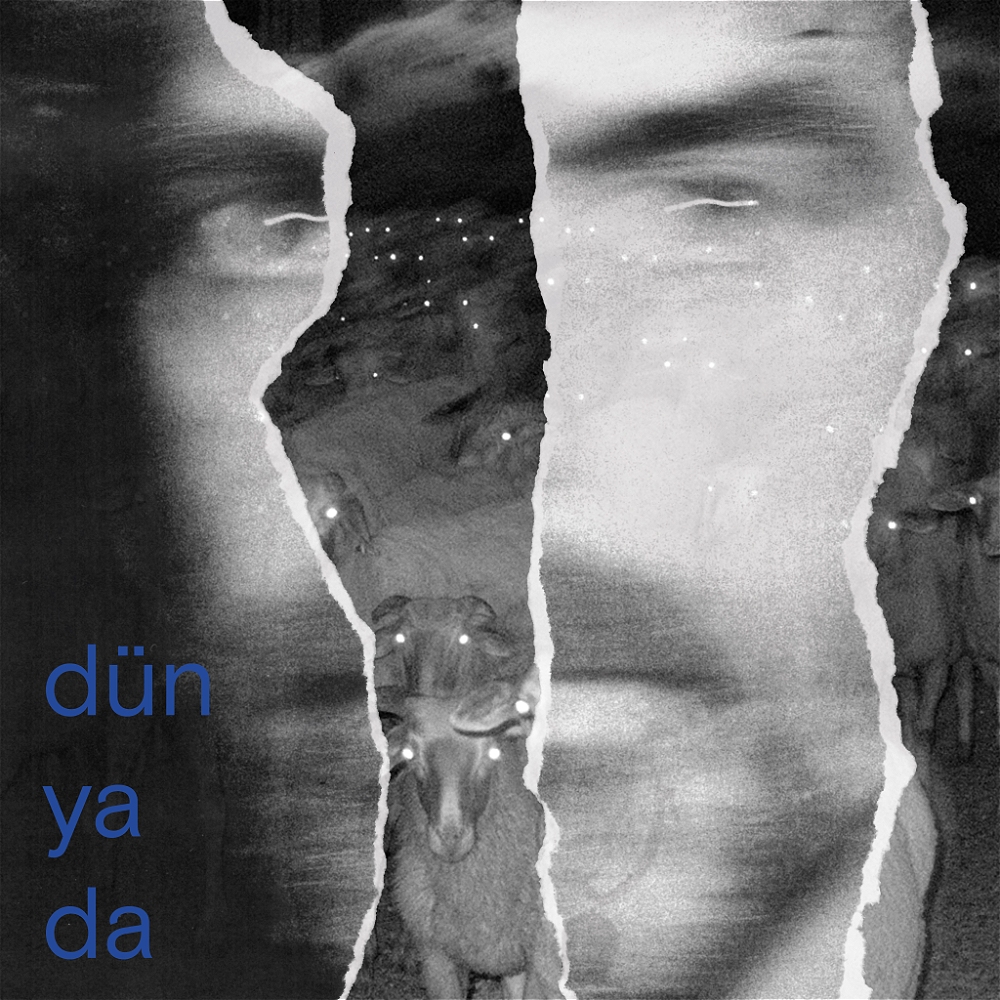
MEHMET: Will Eno is not a very well-known playwright in Turkey. Although Thom Pain has been performed under various names, there’s still no published Turkish translation of it. Yet, these are texts that are filled with subtle references to contemporary literature, theatre tradition, and philosophy; writings that carry a vast realm of associations beneath a seemingly simple surface.
Our play Dünyada, originally titled Title and Deed, was the first of Eno’s works I ever read. It was right after the pandemic, a time when I found myself back in Ankara and back in theatre after years away. When I read it, I realised the text was troubled by the same questions that troubled me; that it gave voice to issues I couldn’t articulate myself. The central theme of the play is alienation; not only linguistic, cultural, and spatial, but also alienation from oneself, from one’s past, from the world. It’s a kind of rootless homelessness built from a longing for home, a solitude founded on the hope of connection.
How does the formatting of the script influence your version on stage?
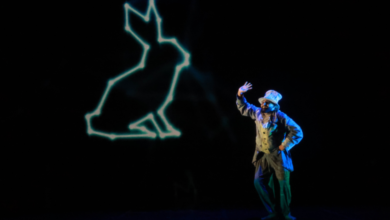
MEHMET: The man in the play tells various stories, fragmented pieces of narrative whose truthfulness we can’t be sure of. He tells them in a sporadic way, entering mid-sentence, rarely offering clear beginnings or endings. We support this peculiar narration with visual imagery, a choreography of light and sound, and sudden appearances of music. Rather than manipulating the audience toward a single meaning, we seek to create a freer, more personal space for associative experience. As many audiences as there are, that many different performances come into being.
What is the “secret sauce” that makes your group dynamic work?
ZIYI: We’re all a little strange, and probably a little mad! Can you imagine how this project began? A Chinese producer working in the British film industry walks into an underground theatre in Istanbul and sees a Turkish TV actor performing a 90-minute solo show. She doesn’t speak the language, hasn’t read the script, and yet somehow understands the entire emotional architecture of it. Then, she decides: this needs to come to London!
After that, a small London team came together: Chinese, Turkish, Pakistani… and somehow the project only became more itself by becoming even more cross-cultural. Our cultural differences matter because this is a show for people who have lived between places, between languages, between versions of themselves. And in London, there are so many of us.
What’s the weirdest or most unconventional prop used in your show?
A kind of “1970s substitute for a Labubu.” Which probably raises more questions than it answers… but don’t worry, when it appears rather ghost-like in the show, you won’t miss it.
Are there any plans for what comes next after the show has finished its run?
ZIYI: Dünyada means “in the world” or, more poetically, “on earth” in Turkish. The work was born out of a small artist-led space in Istanbul called Kadıköy Chamber Theatre (Kino Vertov); a shelter for intimate and experimental work. That venue has now had to close; it became too difficult to sustain. So Dünyada in a sense has become what it was always talking about: a work without a fixed home, a stranger carrying its own house in a suitcase. After Camden, the hope is to keep going; Edinburgh, Dublin, Thessaloniki, and hopefully further still, to let Dünyada truly walk on earth.
Many thanks toMehmet and Ziyi for sharing their thoughts with us.
Dünyada plays at The Cockpit on Monday 3, Tuesday 4 and Sunday 9 August, as part of this year’s Camden Fringe.
You can find out more about this play on their website here.