Far Between Theatre discuss Reel Life
Silence, please! We’re diving into the world of Reel Life, a brilliant new show from Far Between Theatre that’s coming to the Etcetera Theatre later this month. Reel Life channels the golden age of cinema, with a wicked twist. Featuring ego clashes, intense physical comedy, and a healthy dose of theatrical mystery, it’s a 1920s variety show unlike any you’ve seen before. We caught up with Ian Chapman Black and Levenka Andrea to chat about the inspiration behind Algernon and Bruno, and the darker themes hiding behind the slapstick.
What drew you to the 1920s silent film era as a setting for this story? How do you capture that specific vintage cinematic vibe on a live theater stage?
Levenka: Growing up I disliked black and white movies, I struggled with the slower pacing and lack of fast cuts in between scenes. But my parents thankfully didn’t let me off that easy and continued to show me vintage movies and it clicked for me when they showed me Chaplin’s “The Tramp”. I was unable to look away, none of the usual boredom that I’ve felt before present. I didn’t want the movie to end. His physicality, usage of practical effects and building elaborate stories without being able to speak deeply fascinated me. Safe to say, I’m a fan of vintage movies now, thank you Mama & Papa for the patience. It’s been fun to try to capture this feeling on stage, for me most of it lay in getting into the physicality of the time.
Ian: Ironically, it stems from my background in poetry. I love reading and writing poetry, specifically for the way it emphasizes the economy of storytelling. Novels have chapters to tell you what’s going on, poems have a stanza. It’s the same with silent film. The restriction of the time meant that movies had to convey the maximum amount of information visually, resorting to on screen intertitles to convey narration and dialogue when absolutely necessary. It’s so enchanting to watch creatives work with restrictions like this, and to see what they come up with in response. As to the vintage vibe, most of it is in the music and the aforementioned intertitles. Some raggy piano, a clarinet, and some jittery cinema projections, and the audience will feel like Charlie Chaplain is right there with them.
In silent films, storytelling relies heavily on physical comedy, exaggeration, and facial expressions. How have you prepared for such a highly physical performance style?
Ian: Lots and lots and lots of repetition. And a lot of hydration. Heightened styles like comedia, farce, miming, and clownery all require a kind of full body commitment that is very tiring. Making big expressions isn’t inherently difficult to do, but making it specific and dynamic and repeatable certainly requires stamina and commitment. We’re both very physical people with training in different areas of physical performance, and we just have to really tap into that for these characters.
Levenka: Electrolytes have been my best friends in this process. As Ian said, fully committing to a big expression isn’t that difficult to do per se, but to stay in that world of doing everything larger than life in a physicality that is fitting for the character and commit to precision over the duration of the show is not to be underestimated. When you don’t have words, each facial expression and gesture become the lines and cues we usually would have to learn by heart before stepping on stage. To be honest it is exhausting. But it’s a good kind of exhaustion, to feel your body so fully and get to use all of it to express it. This feeling has been a home-coming for me, I grew up with dance and long before I felt comfortable using my voice on stage, my body has already been there with me, every step of the way. It’s nice to tap back into that (no pun intended, i can’t tap dance)
Both characters are described as increasingly willing to ‘cross any line’ to get the audience’s attention. Without giving too much away, what is the most extreme or surprising line either is driven to cross?
Ian: Violence. The moment someone isn’t getting what they want, and moreover, if someone is actively standing in the way of their goal, they have to make a choice. Do they accept defeat and walk away, or dial it up a notch and try harder? When you push and push, sometimes the only way people see for them to ‘try harder’ is to resort to violence. I guess Bruno or Algernon could have run up against a wall and, rather than resort to altercation, been the bigger man and backed down, but that wouldn’t be as fun for us to watch, would it?
Levenka: For Algernon it’s disregarding anyone’s feelings when it comes to his own gain and prospect of success. It’s easy to think that way, to say “it’s just showbusiness”, in the safety of your own thoughts, but when it becomes reality it’s nasty to realise that you’d choose on the base of what is going to be most profitable for yourself.
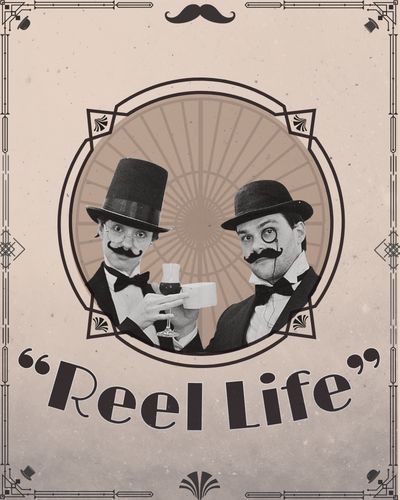
There’s a hint that ‘something else’ craves the roar of applause even more than Algernon and Bruno. How does the show transition from a lighthearted 1920s variety act into something much darker and more mysterious?
Ian: It’s about building the tension over and over through the course of the show. The 1920’s is a delightful starting place, but it isn’t inherently where we’re going to spend all of our time in the show. We start there, but then we throw problem after problem, conflict after conflict, at Algernon and Bruno, until the tension gets so high that even the conventions of the world start to crack, and the show slips into a decidedly more anachronistic place.
Levenka: Exactly. What also helps to be honest is our own exhaustion that starts to build throughout the show. We’re doing a highly physical show and working against yourself tiring out, makes tapping into the darker and more difficult themes of the show easier. Because conflict is draining for everyone, our characters included, so why not use a bit of our own natural exhaustion?
With trigger warnings for things like simulated violence and death, the show clearly goes to some intense places. What do you hope the audience feels when the tone starts to shift?
Levenka: I want the audience to experience a rollercoaster of emotions during the show, and get out of the show thinking “This got dark real quick. I wasn’t expecting that”, but in a good way. I love doing dramedy and making the audience sit through fun moments to then hit them with something darker.
Ian: I do suppose it’s a bit sadistic of us to set out to traumatize the audience a little. Not going to stop us though. We want people to be unable to take their eyes away. We want them to be presented with a reality that they can’t get out of their head. It would be normal for them to be uncomfortable and ill at ease when we get darker, but we also hope they sit up in anticipation, ready for more.
“At its core, Reel Life seems to be about an unhealthy hunger for validation and applause. Do you see this 1920s story as a metaphor for our modern obsession with attention and fame (like social media)?
Ian: 1000%. You’ve got right at the core of it there. I don’t think people’s desire for attention and validation has shifted over the past 100 years, but it’s now much, much more accessible. Back in Algernon and Bruno’s day, someone would have had to work quite hard to get any sort of audience to satiate that little hunger inside them. Today? Any young teenager with an Instagram account can have an audience of thousands. We are all bombarded with the ever present attention of the audience, the attention of the algorithm, all day every day. Every time we post to any site, or engage with any digital media, we open ourselves up to being seen, either by another real person, or by the all-powerful programs that tie our devices together.
Levenka: Exactly. I would say it doesn’t end at social media but goes into other aspects of entertainment as well. One example is Reality TV. A lot of us (myself included) enjoy a little Reality TV here and there so I don’t want to get on a high horse here, in fact I can’t wait for the next season of “DCC American Sweethearts”. But it’s easy to forget they are real people. Having a season of “Love is Blind” for example without any toxic behaviours, failed engagements, truly awful communication and humiliation would be considered boring, when in fact what is making these shows “gripping” and “interesting” and an escape from our own reality, is seeing people fail and suffer.
When regarding social media and the algorithm it feels like the lifespan of success or a trend get shorter and shorter, people are constantly adapting using the newest trending thing to stay relevant and prevent the audience to move on. It’s pure algorithm science to build a name for yourself, and when there’s new names that are taking the trends further and further to set themselves apart, it’s easy to get lost in it and find yourself questioning what that level of attention is worth to you and what you’re willing to do for it.
How does the close-up, intimacy of Etcetera Theatre affect the energy of a show that is all about feeding off the audience’s reaction?
Levenka: Both as an actor and audience member I love an intimate venue. The Etcetera was one of the first pub theatre’s I’ve ever went to when I moved here and I immediately fell in love with it. Specifically for this show having a space like the Etcetera is ideal. We don’t want any space to hide for both us and also the audience. In a show about fame and validation the audience has a key role to play (nothing to worry about, we welcome interaction but do not force anyone!). Ultimately we want the audience to feel complicit in what happens on stage, so the closer we are to each other, the better.
Ian: I think it really helps us a lot. The show is much more intimate and personal that way, almost like we are being held up to the audience’s face. Dare I say like a mobile device? The audience can’t hide from what we’re showing them. And we have to be careful to not choreograph ourselves into a wall, as humorous as that might be to see.
If you could sum up the experience of watching Reel Life in just three words, what would they be?
Both: Lighthearted, then not.
Our thanks to Ian and Levenka for their time. You can catch Reel Time at Etcetera Theatre from Monday 22 to Wednesday 24 June.