Llewella Gideon on CARE at the Young Vic
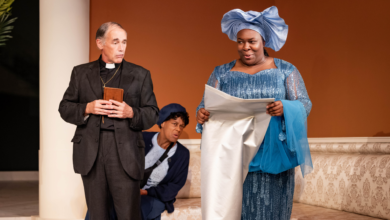
Age comes to us all, and what happens in our later, possibly infirm years can often be in the hands of others. CARE, written and directed by the acclaimed Alexander Zeldin and coming to the Young Vic this month, is based in a care home and examines the realities of ageing, the changes that come with it and how it impacts on several generations of a single family. It’s a hugely current topic, so we were delighted to have the chance to chat about the production with Llewella Gideon, who plays the head nurse in this particular home.
Llewella, thanks so much for finding time to talk to us about CARE. Can you firstly tell us a bit about what happens in the show?
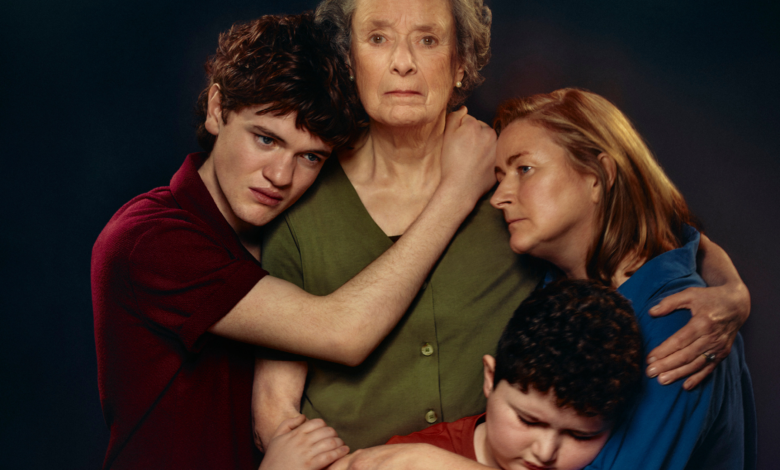
CARE is a journey for a family who have to put a parent and grandparent in a care home and experience the difficult emotions that arise. The mother and daughter relationship between Joan (played by Linda Bassett) and Lynn (played by Rosie Cavaliero) is already complex, but we also see how Joan adjusts to life in a care home. Ultimately, it’s about what it means to be cared for by your family, by others and by professionals – a journey into how that care can translate into love, or a lack of love.
You’re playing the head nurse in the care home. What are her roles and her relationships in the play?
I play Hazel who is the head nurse and carer and the bridge between residents and families, and between residents’ illnesses and themselves. She is a comforter, protector and familiar face who tries to bring the love and carer normality to patients who are not in their right minds.
She has difficult conversations with Lynn who is finding it very challenging and really doesn’t want to face what is happening. My character pushes for Lynn to be honest with her Mum that this is not a temporary stay – an element that becomes more urgent as Joan deteriorates.
Alexander Zeldin is known for his often hyper-realistic style of writing and direction. What are the challenges of this for you as a performer?
While very beautiful, because it’s hyper-realistic, the main challenge with Alex’s work is learning the lines. For example, most of us in general conversation don’t finish a sentence before someone else jumps in with an answer or repeats what we said. The script is full of people having half-thoughts, with unfinished sentences and overlapping each other, which is of course what we do naturally. In real life, conversations flows – we can discuss two different subjects at the same time – but you know where you are. Trying to learn something like this that is incredibly difficult, because there’s no point of reference.
Alex is very musical in his dialogue – there is a musicality to the language – but it’s a challenge to get the right rhythm, which is based on the rhythm of natural speech. For example, there are things that are very repetitive – you can get lost, for example, when learning the ‘yeah’s, ‘no’s and ‘but’s.
Can you talk about the rehearsal process and how it helped form the final production?
It’s a very organic process. Because Alex has written and is also directing it, he has the sentiments of each character in his bones, but is also very collaborative. We have a lot of deep discussion about what that particular character is doing and feeling in that scene – Alex is really interested in what we bring to the table. While it’s very prescriptive, he’s also flexible in seeing how we interpret his work. He then guides us to what he wants the audience to feel in each moment.
It’s very intricate work. When you watch it looks quite simple, because it’s natural, but actually very detailed. There are so many little things happening on the stage all at once. When factoring dementia, too, for example, people can change subjects at the drop of a hat, and there are many idiosyncrasies of all these different residents who, in this shared space, have become like a family, in a way. It’s very delicate.
Tell us about the team of creatives you’re working with.
Alex likes to work holistically so there are a number of creatives involved in supporting us, alongside the creative team. For example, we have a movement director who is helping us ensure we are relaxed and move in our bodies in a way that’s symbolic and freeing for our energy but also right for the character.
We have pastoral care who checks in with us and helps us relate to each other as cast members – it is a delicate subject and everyone knows of a parent or grandparent who have been in care or who have passed on – and this holds us together and keeps us strong as a cast.
We have a voice coach to ensure we’re relaxed in our voices, given we do a lot of talking, and we’ve had other sessions, too, including meditation and a chat by an end-of-life specialist about what people in a care home are experiencing.
I’ve spoken to a dementia nurse, to understand her role and the setting, and others have visited care homes to get a sense of the routine and meet and entertain the residents themselves.
Alongside Alex, we’ve all done a lot of personal research in order to get procedure and tone right.
You’ve been in BAFTA-winning shows so it’s fabulous to also see you on stage in this amazing cast. How do you think performing this story live gives it different impact?
You can watch something on TV and it can be moving, but the way Alex works, in this immersive way, the audience are right in the care home with us. They experience it at a personal level. For example, the auditorium isn’t in complete darkness, so the audience is really pulled into the story. It’s much richer.
There’s a huge range of talent on the list there, across all ages. What does this intergenerationality add?
This is an important piece of work, I don’t think anything like this has been seen before. Elderly stories don’t get told. Once you reach a certain age as an actor, you are either typecast or you don’t work. To see so many actors in their 70s and 80s actively onstage is really interesting and really powerful. It’s a story about every generation – we have actors from children to an actor in their 90s – and I think everybody in the audience will relate. I’m betting there won’t be a dry eye in the house, but it’s full of warmth and laughter, too.
Thanks very much to Llewella for talking with us about this fascinating production.
CARE runs at the Young Vic from Monday 11 May to Saturday 11 July.