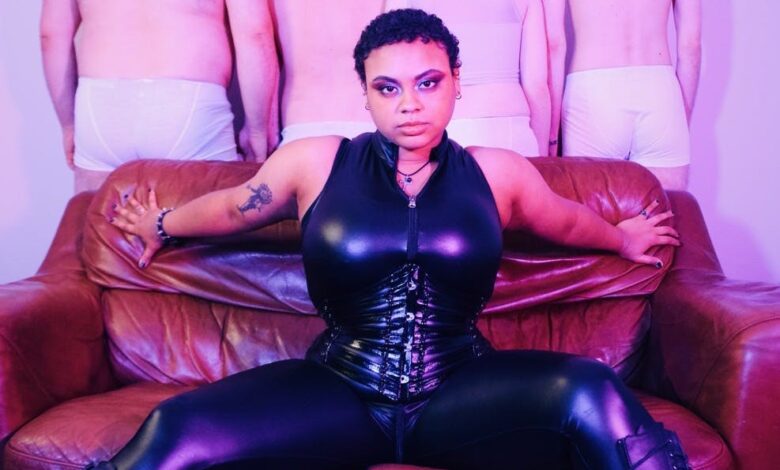
Cat Gannon takes us into the world of DOMINUS
What happens when unexamined trauma meets the ultimate arena of control?
Running at the Lion & Unicorn Theatre, DOMINUS is a fierce, boundary-pushing production that dives headfirst into the high-stakes world of D, a Black dominatrix six months into her profession. Fusing the raw intimacy of expressionism with the high-energy spectacle of cabaret, the play serves as a provocative lens into power, vulnerability, and how our deepest wounds fester in the dark.
Behind this striking piece of theatre is the powerhouse collaborative duo of Cat Gannon and Moi Ko.
We sat down with Cat to discuss the intersectionality of kink, the intense physical and emotional reality of bringing this story to life on an intimate stage, and why looking into the darkness is sometimes the only way to heal.
What inspired you to use this specific blend of theatrical styles to tell this particular story, and what did that rehearsal process look like?
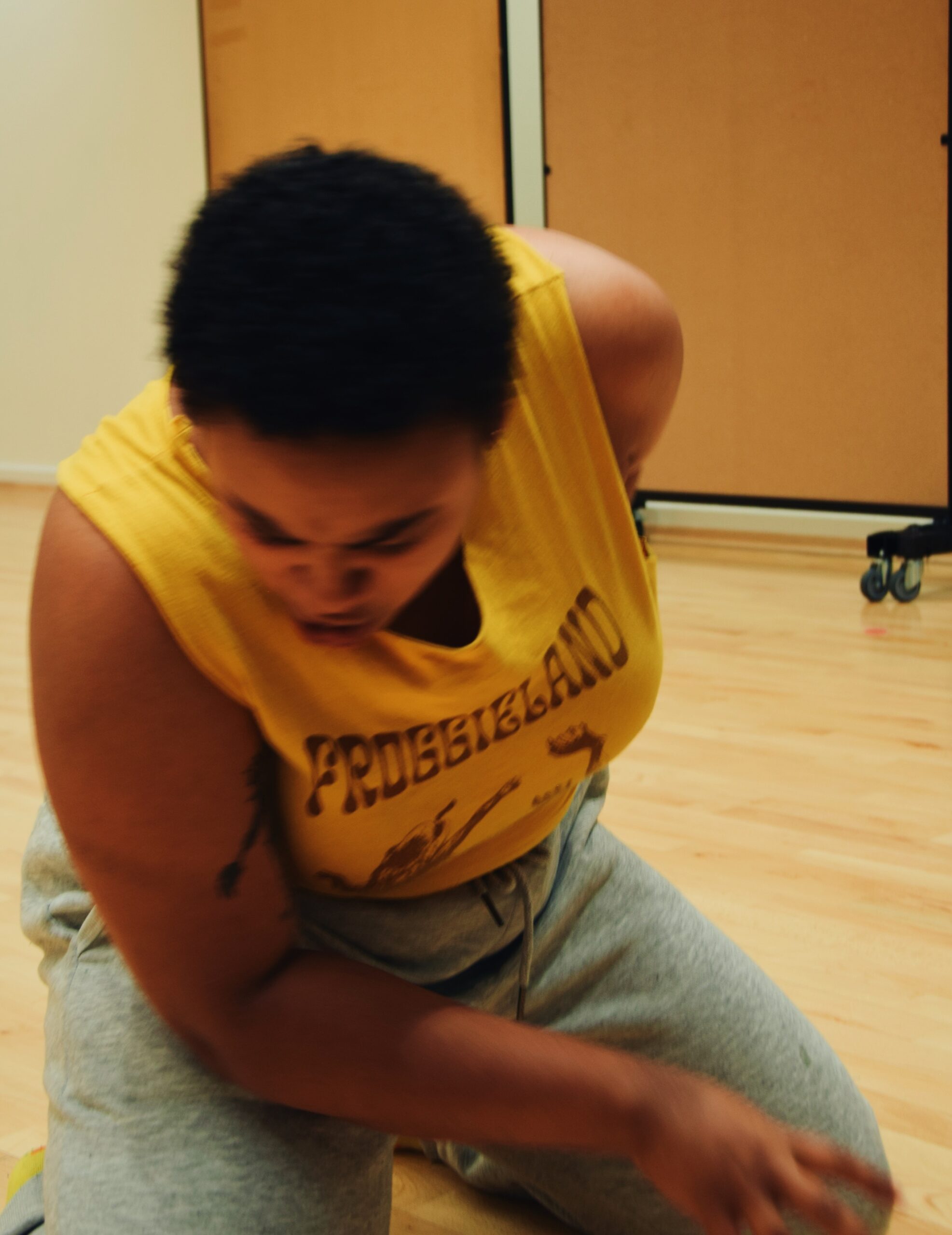
Honestly I think that cabaret and expressionism share a lot of the same traits. You have to take up space, project your emotions outward and embody raw truth. Small isn’t really an option there, and D wants to be big. She wants to feel commanding, awe-inspiring and dictate where the oxygen in the room goes and when. That character doesn’t feel like she likes to sit prettily in the world of naturalism for very long. The rehearsal room is really high-energy because of this, so we always start with an extensive physical and vocal warm up, and the creative team is great about checking in with me. Sometimes I find myself complaining about how high-octane this show is and wondering who’s making me do all this exhausting work, and then I remember!
How did you approach balancing the heavier, dark psychological elements of trauma with the lighter, high-energy spectacle of cabaret?
I don’t think cabaret and psychological horror are mutually exclusive to one another. Minstrel shows, for example, are deeply disturbing and effective in how they contrast the joy of mime and cabaret with the repulsive, racist imagery of the performer. Art The Clown from the Terrifier franchise is also an example of this, as clowns in their wide eyes and big gestures can very easily be warped into the unsettling uncanny if they do something that juxtaposes that cheery imagery.
It helps to find the crossovers and work from there, as well as being very clear where one can morph into the other. We’ve all swung from one feeling to seemingly the complete opposite extreme at least one point in our lives. The question to ask isn’t how we got there, but what triggered each moment in that transformation. In the show those triggers don’t have to make sense to anyone except me and my directors, but when they’re activated in the space they provide the momentum I need to carry myself from joy to sorrow while remembering how close they can actually be to one another.
What research or real-world inspiration went into crafting her character, and what conversations did you want to spark regarding intersectionality and power within the BDSM/kink community?
Honestly, the BDSM/kink community doesn’t need my play to tell them anything. They already know! My experience does not reflect that of the average sex worker or dominatrix in this country: I was not trafficked here, I speak fluent English, I have no children to support, I am relatively able-bodied and I had the privilege of entering and leaving that work as I pleased. By some standards, I was not a proper dominatrix at all!
The reason why I stepped into the shallow end of that world was that, due to my experiences being pursued by predominantly white men, I was so desperate to feel powerful. In my social circles I was fetishised and felt like I had no value separate from white male desire, which felt so insidious to me. I didn’t understand how when “the chase” was over, you were boring for letting it end. I didn’t understand how I was so desirable to do some things with, but too much of a shameful secret for others.
To put it bluntly, being intimate with white men as a young black woman made me feel worthless and silly. I wanted intimacy with rules, sex with red and yellow cards, concrete agreements so that even in my most wounded state I could feel in control of something. With all those safety nets and my horrific experiences prior, I felt like vanilla sex was now the truly dangerous thing to do. The experience was freeing, empowering, full of life and endlessly interesting to the people around me, and yet this resentment crept in at working with the same kinds of men that had made me feel so small. I still felt silly and used by them, only in a sexy pleather catsuit this time. That repressed trauma and contempt started to manifest in some pretty dark thoughts, and I was lucky to catch myself before I did any serious harm to anyone.
This play is an exploration of what would have happened if I didn’t, and the contradiction for many black people in sex work and regular interracial relationships. How do I consolidate the power dynamic here? How can I trust you when you look just like the people who have harmed me? Would you even know you’ve caused pain? Who would stop you if you did? What could you do to me?
Can you share how your collaborative writing and directing process worked? Did the script evolve significantly once you began physically staging the show?
DOMINUS was first written three years ago as a furiously self-critical venting session. At that time, it was pretty much just a stylised feelings-purge that made me laugh a little when I read it back. After several rewrites, generous proofreaders, patient friends and a stunningly rare gap in Moi Ko Theatre’s incredible schedule, my weird brain-baby is now a collaboration with some of my best friends in the world.
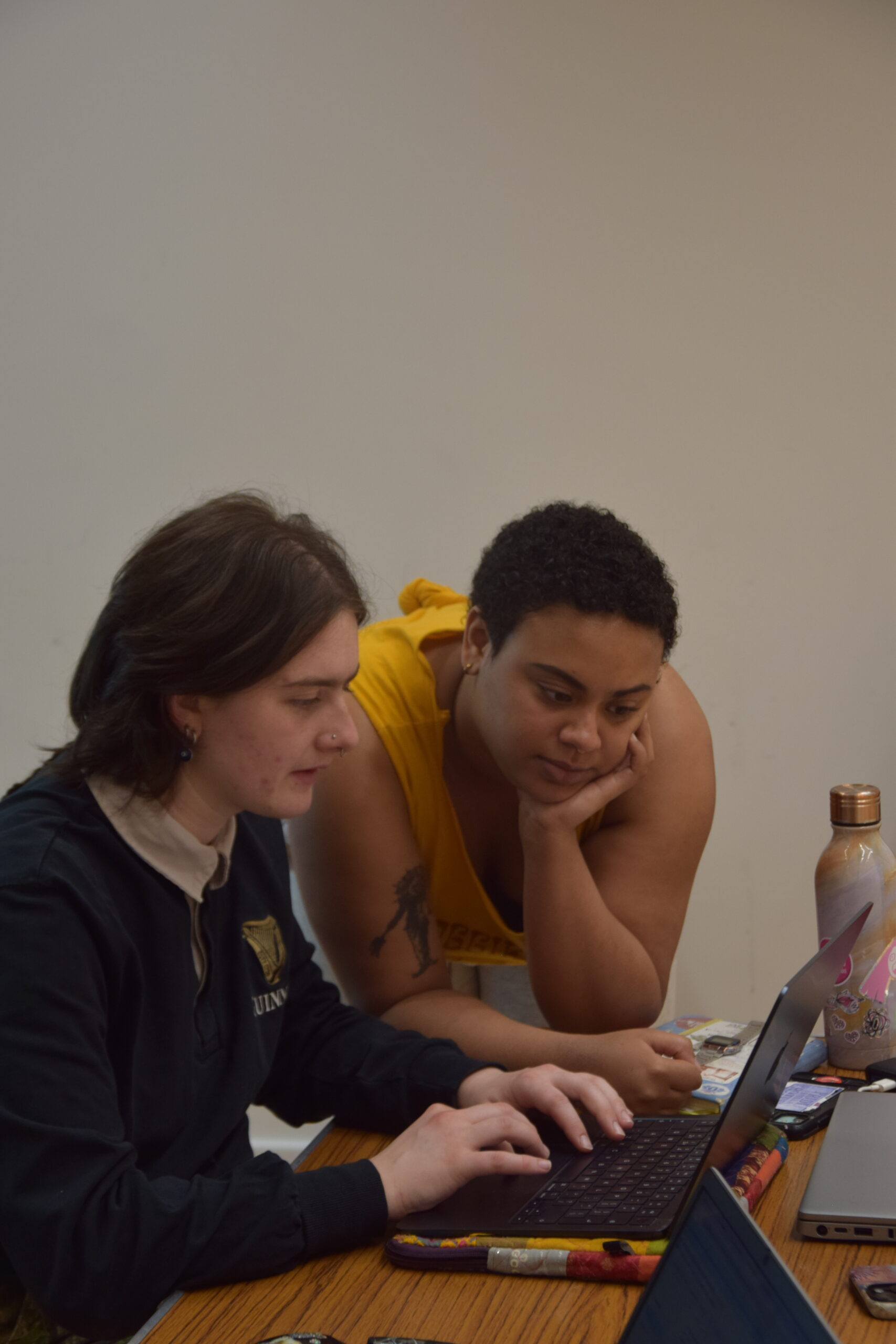
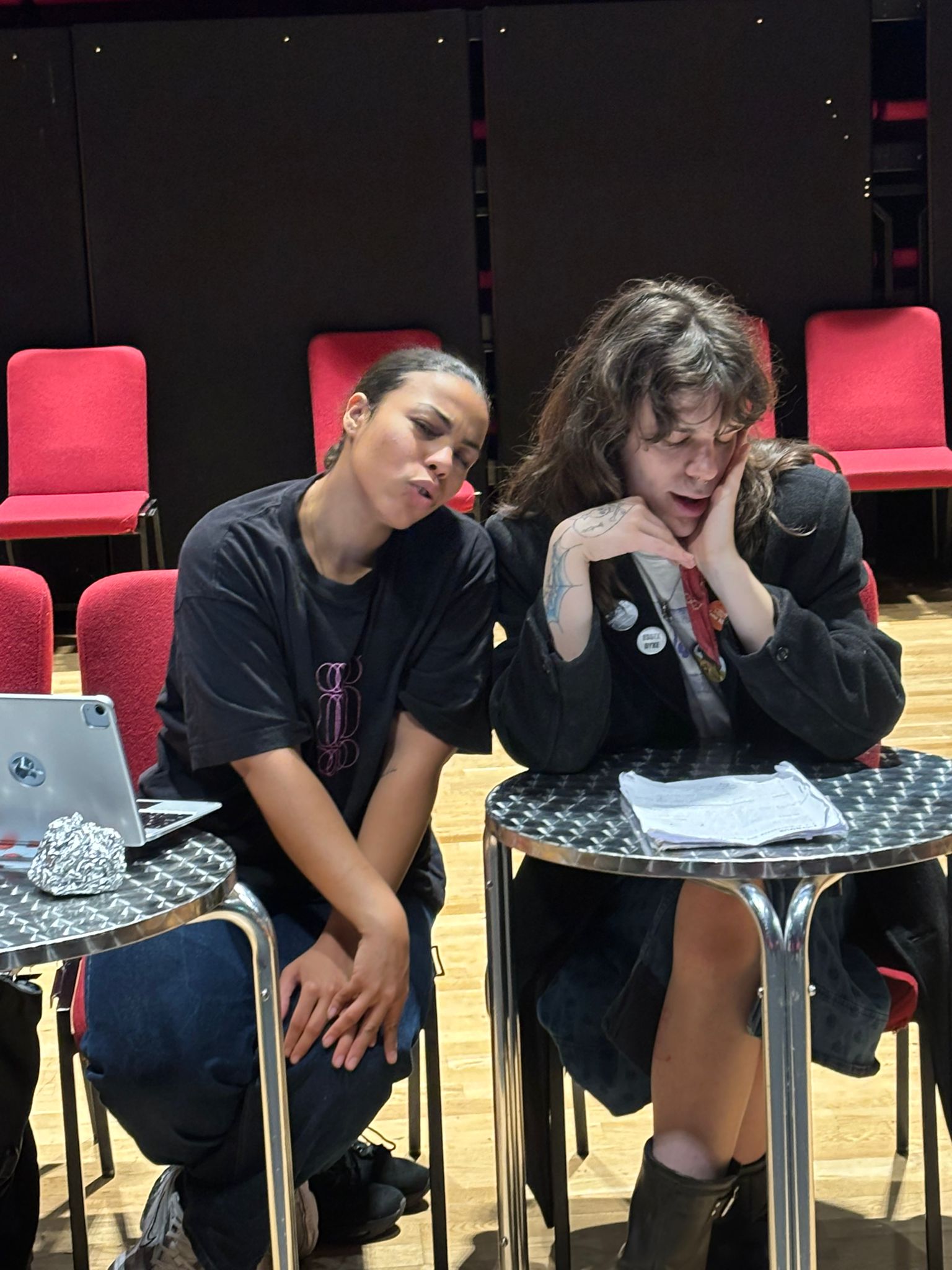
The atmosphere in the rehearsal room is symbiotic – we all finish each other’s sentences and inspire each other. Whenever I’ve been stuck creatively or nervous about our production schedule, someone else has already had a brilliant idea and seven tasks are completed seemingly overnight. We bounce ideas off of each other in the room so often that any evolutions in the script have felt natural, almost obvious, like what it was always supposed to be.
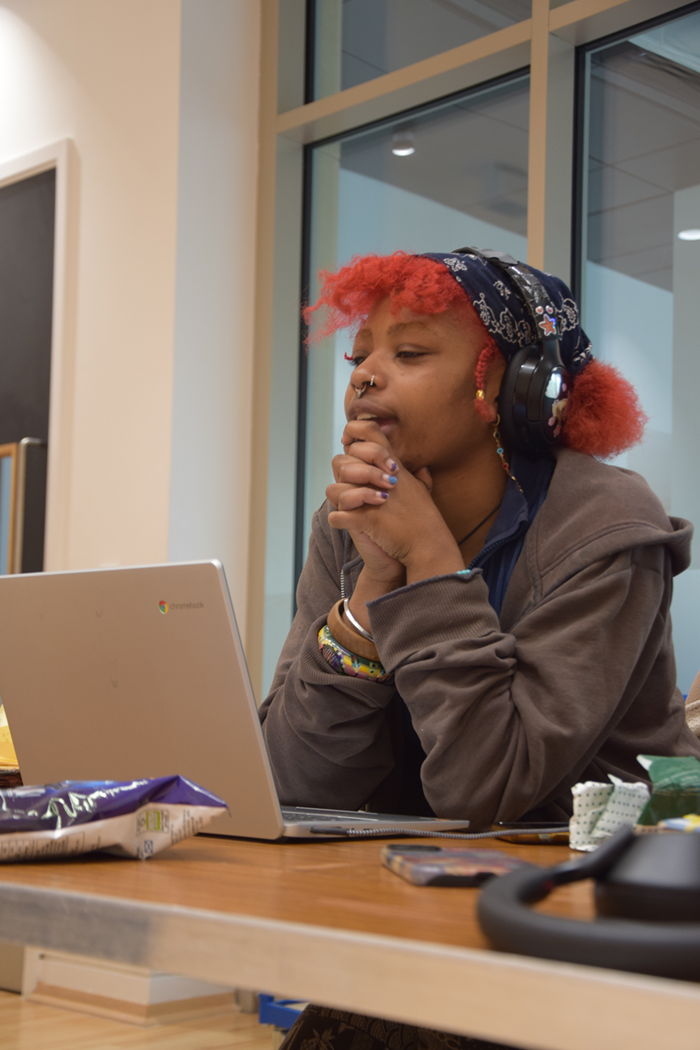
Even though I know it’s changed, it still feels like the same weird brain-baby I started with! Avery McNeilly, Savannah Beckford, Vivienne Melody Coupe, Kimi Thompson, Balint Blasko, Bence Blasko, and Maki Omori are all consummate professionals, incredible artists and true friends and I am lucky that they saw something in DOMINUS worth working this hard for.
As both the writer and the performer, how does it feel to step on stage and physically embody words that are so deeply personal and intense night after night?
I was asked a while ago if this show was meant to be therapy for me. I’ve thought about the answer a lot and settled on in writing, yes, in staging, no. I’m so far removed from the person I was, or felt like I was, at the time in my life when I was doing these things. D isn’t me! She’s a hyper-stylised, adrenaline-filled, low-empathy combination of the person I thought I was, dramatic extensions of real situations I was in and the stories and feelings of beloved kink and sex workers who were kind enough to let me interview them in the devising process for this show.
Distance is very important to me when writing or watching anything autobiographical. I don’t think it’s healthy to touch on open wounds for the sake of authenticity, no matter how true and raw the results will be. There’s a difference between remembering and re-living trauma, and I think the former gives you so much more freedom and empowerment to tell a story. With that separation, I’m able to do what I would do for any other play – approach my character with empathy and curiosity and make sure I have the stamina to carry a show!
How does that physical proximity within the venue change the energy of the performance, and what kind of relationship or tension are you hoping to build with the audience sitting just inches away?
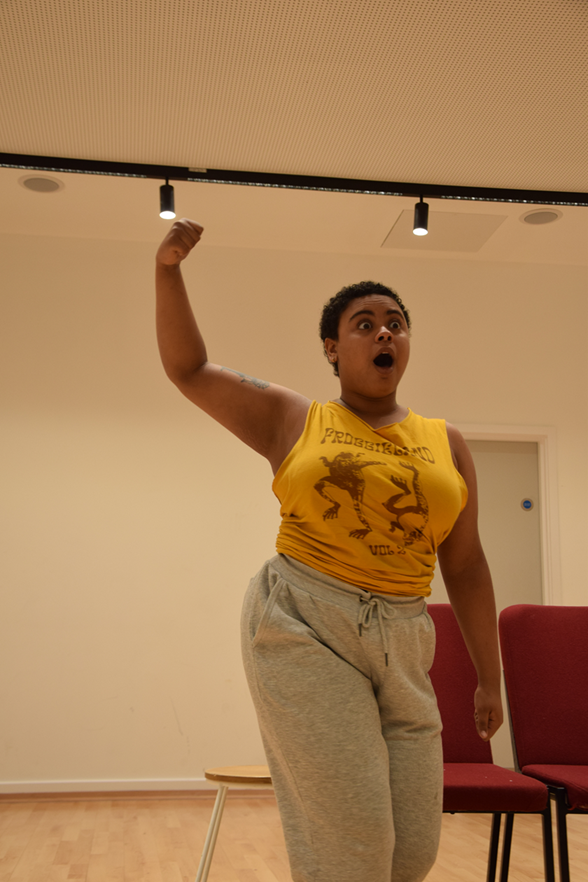
One-person shows are golden opportunities for eye contact. I’m a real starer! I feel like when people go to the theatre, even when being warned about the fourth wall being broken in the show, they have their own personal fourth walls in front of them. They think, yeah, the characters are going to acknowledge me, but I have no input as to how this show will go, so I can just watch. With DOMINUS, I’m hoping to create an experience that feels, at times, more like a stand-up show. I want that tension in the air of knowing that if you were to shout something out or catch the eye of the performer, they could see you and your interaction with them could change the entire course of the show. I’m hoping that will make D feel more intense and electric in the space. Maybe it will even encourage elements of submission from the audience. We’ll see!
You have mentioned that there will be some audience participation. Should we be worried about what you might ask us to do?
Without saying yes or no, within a BDSM scene, there are a lot of safety checks and agreements made beforehand to ensure the safety of all involved. Simultaneously, when a scene begins, the dominant’s actions will still create the feeling of anticipation and exhilaration that can *seem* dangerous. You’re safe, you both know you’re safe, and yet that feeling is there. I hope the audience participation in this show will feel the same.
We’re more used to seeing you welcoming people to the Lion and Unicorn at the theatre door, how does it feel to be stepping onto the stage instead in a venue you know so well?
It’s a true privilege. Working in a theatre has been the perfect job for me – I love seeing new writing on our stage and greeting familiar faces as they come up the stairs. It feels so surreal to be joining them! The space is so intimate and buzzing with opportunity, and David (Brady, Lion and Unicorn Artistic Director) has been an incredible encouragement in getting DOMINUS up on its feet. This is a first look at the first play I have ever written, so the opportunity to have even a little familiarity in staging it at the Lion and Unicorn is something I am very thankful for. The team is wonderful and supportive, and I hope they enjoy the show!
Our thanks to Cat for taking us through such a detailed trip into the world of Dominus. You can catch the show when it plays at Lion and Unicorn Theatre from Tuesday 26 to Saturday 30 May.