

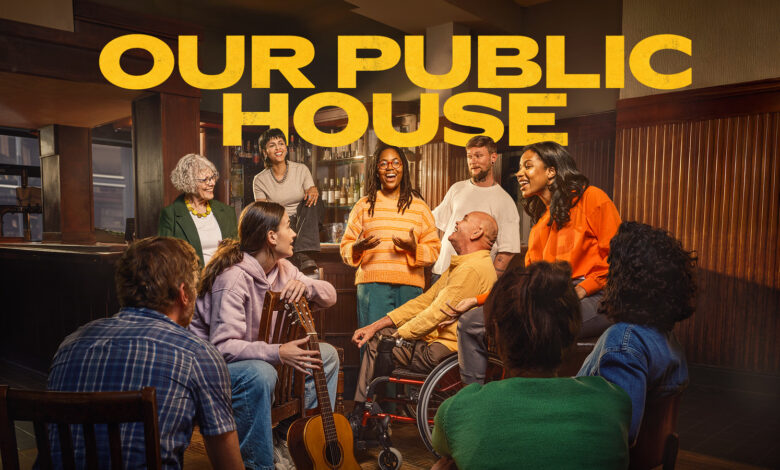
Josephine Burton takes us inside Our Public House
Currently celebrating their twentieth year of creating impactful work, Dash Arts are known for pieces that digs deep into social connections, exploring how human interaction can be a force for change and for bridging division. This year they are touring Our Public House, a play with music that celebrates the role of the pub in bringing people together for mutual support and wellbeing. Sounds like a good night out? We thought so and called up director Josephine Burton to ask more about the show.
Hi Josephine. Thanks very much for talking to us about Our Public House. What was the origin of the show initially?
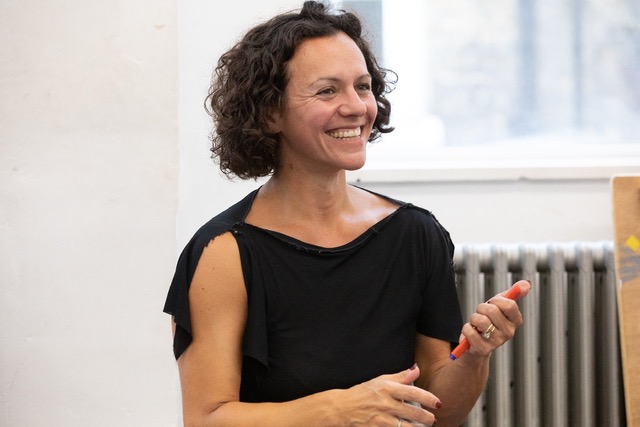
It goes back to Latitude Festival in 2019, where we created something called The Forum, an installation that was part town square, part debating chamber, part performance space. We staged speeches, handed out scripts, invited people to join in. A political scientist called Professor Alan Finlayson wandered in off the field and helped us bring the speeches to life. That chance encounter became a long conversation, then a research partnership, then three years of speech-making workshops helping people across England make and deliver speeches about what they felt we could do today that would make the country better. The show grew out of all of that, organically, in the way the best things do.
It’s also part of our Albion season, which we launched in 2022 – Dash’s exploration of Englishness, who we are and who we could be. Our Public House is where that whole journey has been heading.
It’s been in production for several years now and is written by the amazing Barney Norris. Can you talk about the devising process and who else was involved in it?
Finding Barney was a turning point. I knew I wanted a writer who could hold the political material without it becoming a lecture, who could find the human story inside the argument. I think Barney does that better than almost anyone working today.
As part of that process, we did two R&D weeks, at the National Theatre Studio in London and another at HOME in Manchester with actors. We brought in 150 speeches (now we’ve generated over 700!), put them in the room with the actors, and started to improvise, integrating these ideas into the skeleton of a story that Barney and I had dreamt up. What emerged from those weeks was a world with characters who felt fully inhabited, a dramatic situation that had real tension and real warmth. We also brought participants into the room during development. Having someone who’d actually written and delivered one of those speeches sitting alongside a professional actor exploring the same material – that’s when the work really came alive.
Jonathan Walton joined early as our composer Alongside these key creatives, we also have Scott Hurran as associate director who is leading our community work across the country, plus the wonderful James Perkins & Victoria Smart from Good Teeth Design Studio, our movement director Josie Daxter, BSL consultant Charly Arrowsmith, sound designer Bella Kear and lighting designer Ryan Stafford who are all integral. It has genuinely been a collective endeavour.
Tell us about the casting for the show across the different venues it’ll be visiting.
We were really clear from the start that The Albion, our fictional pub, needed to feel like your local. The kind of place where you might walk in and recognise the regulars immediately. But it also needed to feel like the whole country, because the issues we’ve been hearing about in our workshops such as a lack of social housing, NHS waiting times, mental health crises, the cost of living, aren’t specific to one region. They’re everywhere.
So working with casting director Helena Palmer, we cast six professional actors from across the country, and have deliberately kept their own accents in the play. They represent something of the diversity of the people we’ve actually met over three years, in terms of background, heritage, age, experience. And then at every venue, a further eight local performers join them on stage – people from that city, that community, who’ve been part of our workshops and are delivering their own speeches as part of the drama. So in Leeds it’ll feel like Leeds. In Coventry it’ll feel like Coventry. The professional cast hold the story; the local ensemble roots it somewhere real.
As in real life, the community in this pub are quite a diverse range of people, with multiple ways of communicating needing different platforms. What does that involve on stage?
One of our characters, Mary, is a deaf politician, played by the brilliant Gabriella Leon, who moves between spoken English, BSL and SSE. Working with Charly Arrowsmith as our BSL consultant, and learning from Gabby herself, has genuinely been one of the most eye-opening parts of making this show. As a cast and creative team we’ve developed a much deeper awareness of the challenges deaf people navigate daily and a real hunger for greater understanding more broadly.
But what I keep coming back to is how much more connects us than divides us and the play reflects that too. Laughter crosses every boundary in that pub. So does movement. So does the shared experience of sitting in a room together and actually listening to someone say something true. The script, the physicality, the songs, all of these become a shared language that belongs to everyone in the room, onstage and off. That’s what a pub can be at its best, and it’s what we’re reaching for every night.
How’s it been working with songwriter Jonathan Walton?
Jon and I go back a very long way. We actually set up a band together when we were at college, and he worked on Dash’s very first theatre production back in 2005. So there’s a shorthand and a trust between us that I find enormously valuable. But this was a completely new kind of challenge for both of us.
The brief was intricate and genuinely unusual: write songs that are lyrically beautiful and dramatically live, but built from existing speech material – real words spoken by real people in community halls and prisons and workshops across England. And each character needed an entirely distinct musical language, because their speeches and their ideas are so particular to them. I assigned each character a real speech that I felt resonated with who they were, and Jonathan worked from there finding the music inside the argument, the melody inside the rhetoric. What he’s produced is some of the most inventive, funny, moving work I’ve heard in years. He’s a hugely talented artist, and I think audiences are going to be genuinely surprised by the songs.
What do you hope audiences are going to take away from the show?
Joy, first of all. I want people to walk out singing. I want them to have laughed properly, to have felt something, to have fallen a little in love with the characters, and even with each other, frankly. A great night in the pub.
But underneath that, I hope they leave feeling closer to the people around them. A little less convinced by the story we’re constantly told about a country at war with itself. The people we’ve met in our workshops over three years have been so full of ideas, so full of life, so full of genuine care for their communities. That’s in the play. I want audiences to feel it and to carry it with them. And maybe, if we’ve done it right, to think: actually, I’ve got something to say too.
Thanks very much to Josephine for telling us about this fabulous new production.
Our Public House tours across multiple venues in England from Friday 15 May to Saturday 4 July.


One Comment