Rudra Bharadwaj and Aadhya Kacher on Jack in the Box
After the success of our 2025 Camden Fringe Interviews, we thought it only right to attempt a repeat for 2026. So throughout July we’ll be publishing new interviews each day to give a taste of what to expect from London’s best fringe theatre festival. The festival starts Monday 3 August this year, so we may give ourselves a couple of days off inbetween the end of the interviews and the first shows… then again, we might not.
You can find out more about Camden Fringe, along with details of every show playing this August here. You can also find all of this year’s interviews as they are published here.
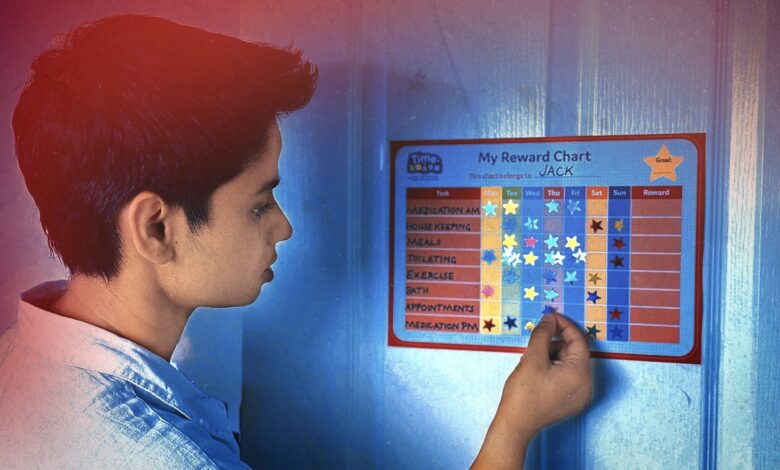
We frequently romanticise unpaid caregivers, wrapping their labor in comfortable labels like “heroic,” “selfless,” or “resilient.” But behind closed doors, the boundaries between love, duty, exhaustion, and deep-seated resentment can become impossibly blurred. Arriving at the Lion and Unicorn Theatre for Camden Fringe 2026, Jack in the Box confronts this silence head-on. Written and performed by Rudra Bharadwaj and with Aadhya Kacher as Creative Producer for Athespian Theatre Company, this striking solo production uses physical theatre and repetition to watch an ordinary bedroom warp into an imaginary theme park.
We sat down with Rudra and Aadhya to discuss writing abuse that doesn’t look like abuse, the internal battle of acting out your own script, and why success means leaving the audience arguing in the lobby.
If you had to describe the vibe of your show in just one sentence, what would it be and how does it manifest on stage?
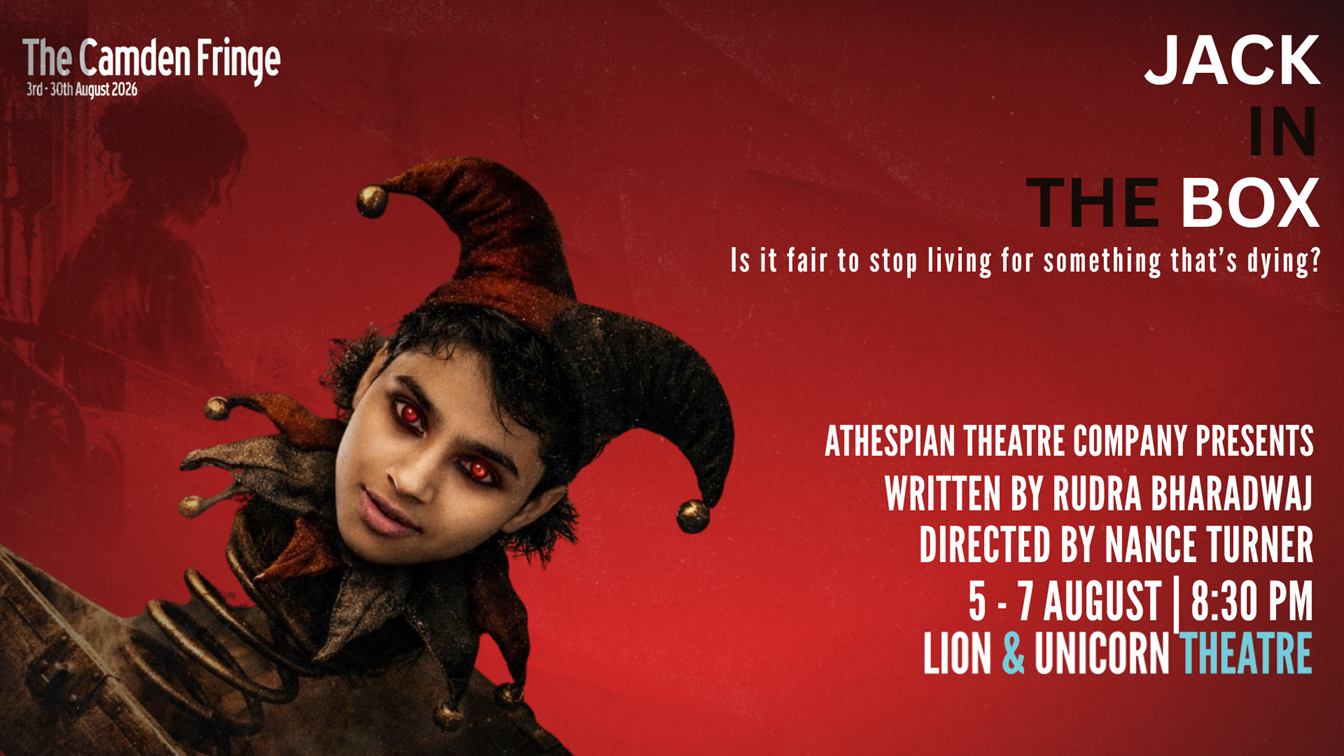
The show feels like being trapped inside a mind that can’t tell duty from imprisonment, where an ordinary bedroom slowly transforms into an imaginary theme park through physical theatre, sound, and repetition, revealing the psychological cost of caregiving.
Why is 2026 the perfect time for this show to be seen?
2026 is the right time because millions of unpaid carers continue to hold together a system that depends on them while rarely asking what that responsibility costs them. Jack in the Box isn’t about raising awareness. It confronts what happens behind closed doors when love, duty, resentment, and exhaustion become impossible to separate. It asks audiences to sit with a truth that is rarely spoken: survival can demand thoughts and actions we struggle to forgive.
What was the ‘eureka moment’ that made you realise this story had to be told?
I wanted to write about abuse that doesn’t look like abuse. About what exhaustion does to love. And whether one can hold both things at once.
Is this version how you originally envisioned it or has it changed drastically since you first put pen to paper?
The theme park began as a metaphor and gradually became the architecture of the entire play. It shaped the language, the logic, the structure, and the rhythm. The biggest change, though, was Jack themself. In the early drafts, I was protecting them. I eventually realised I had to stop doing that. Only then did the play become honest.
As both the writer and performer of this piece, how has it been to live inside Jack’s world?
I’m both the writer and the performer, which means I built the world and then had to live inside it. As a writer, I became obsessed with every corner of that world. As a performer, I keep discovering things the writer never anticipated. The moments when those two versions of me disagree or surprise each other are where the play feels most alive.
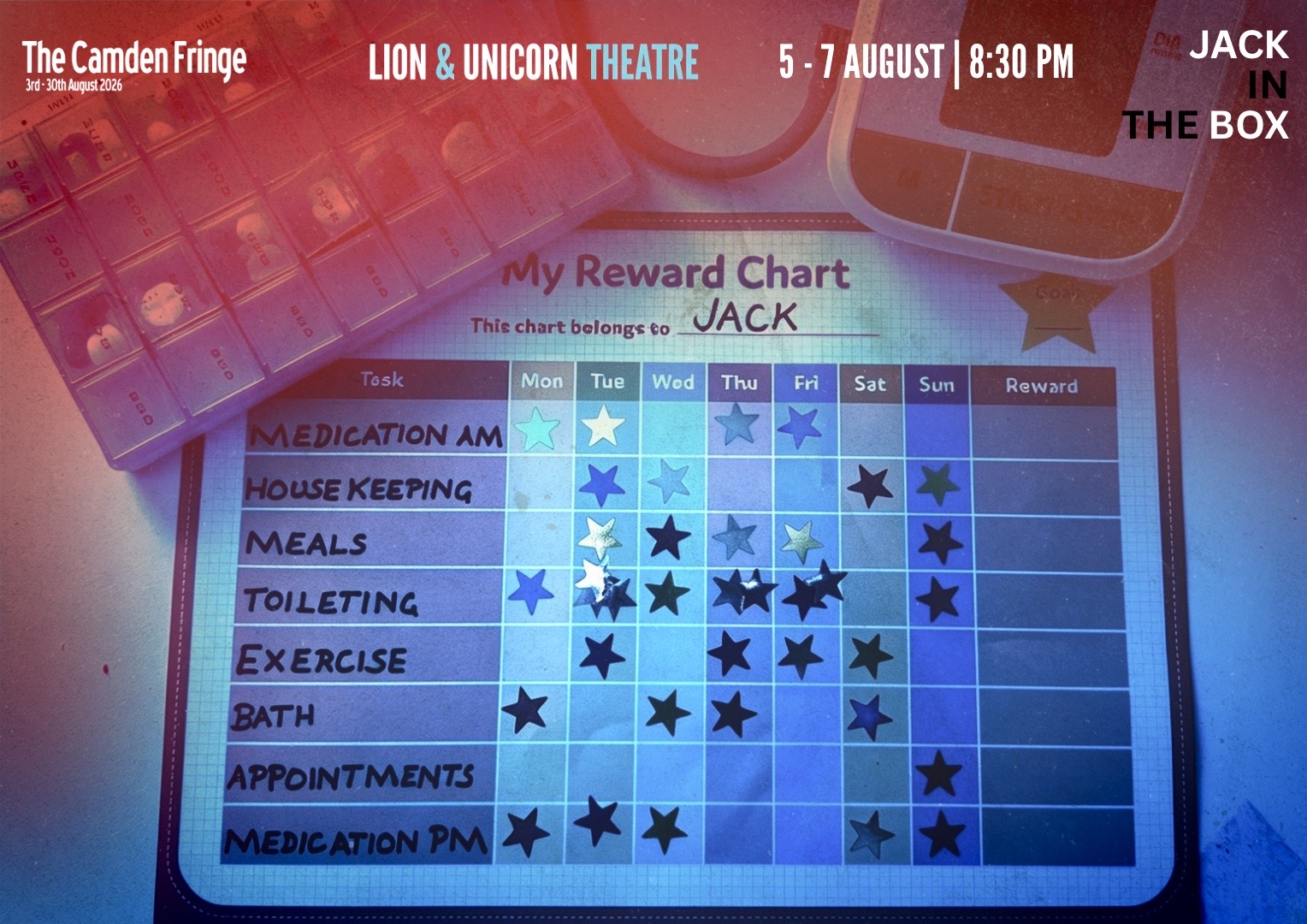
What drew me to Jack was their inner world. The theme park isn’t just an escape; it’s where the part of them that never felt fully seen or loved still exists. I’m fascinated by how that unresolved child self survives into adulthood, even under the weight of responsibility. Jack has spent so long caring for someone else that their own emotional life has become almost instinctive rather than conscious. They make decisions before they can explain them, and guilt arrives at the same moment as the action.
What has been the biggest challenge in realising your own vision on stage?
The biggest challenge has been refusing to settle. Because I’m also the writer, it’s very easy to perform what I intended rather than what’s actually happening in the moment. Every rehearsal, I try to ask a question the writer never asked. Every performance, I look for something the script doesn’t already know. The writer in me wants to protect the play. The performer in me has to keep breaking it open.
How important is audience interaction to you?
Jack speaks directly to the audience, but it isn’t a conversation. It’s a confession. They become witnesses to something they cannot interrupt, fix, or escape. For Jack, the audience is another room full of people watching while nothing changes. That is the relationship the play creates. It isn’t intimate or comforting. It’s the loneliest kind of connection: being fully seen by people who cannot save you.
If your show was a love letter to a specific person, place, or era, who or what would it be?
It would be a love letter to unpaid carers. Not because it celebrates them, but because it refuses to romanticise what they carry. We often call them selfless, resilient, or heroes. I wanted to write to the people who have felt exhausted, trapped, resentful, guilty, and still turned up the next morning. The play says: I see you too.
If you had to describe your show as a colour what would it be, and why?
Red. It begins as the flash of an ambulance light. By the end, it’s the glow of cheap neon. The colour never changes. The meaning does.
Is there a question missing that you feel we should be asking you?
Yes—What do you hope people argue about after they’ve seen the show? I hope they disagree about Jack. If everyone leaves with the same opinion, I’ve probably made the play too simple. I’m not interested in proving a point. I’m interested in creating a space where people wrestle with their own judgments, because that’s what Jack has been doing long before the audience arrived.
Many thanks to Rudra and Aadhya for their time. Jack in the Box plays at Lion and Unicorn Theatre from Wednesday 5 to Friday 7 August as part of Camden Fringe.