A scholarly, restrained portrait of one of our greatest literary figures that, appropriately perhaps, feels overly earnest.Rating
Good
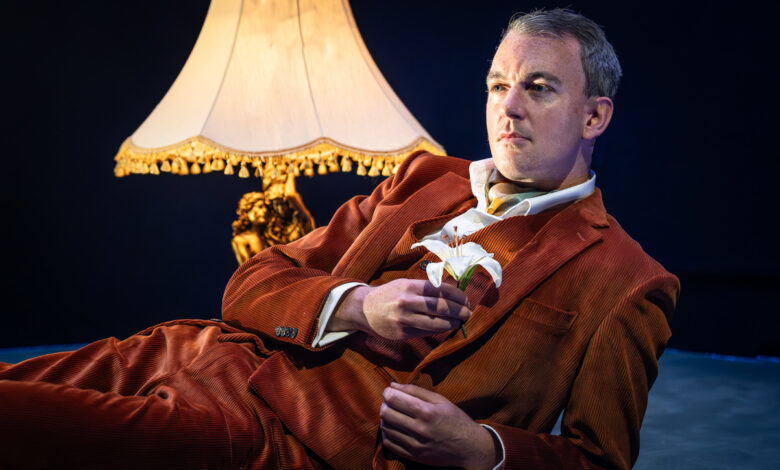
I suspect it’s not the writers’ intention, but Alastair Whatley’s performance in The Importance of Being Oscar feels Reithian rather than Wildean. Lord Reith, the first BBC Director General, promised to educate, inform and entertain, in that order. Whatley, under the solid, precise direction of Michael Fentiman, seems to have similar motivations.
Whatley doesn’t play Oscar, exactly, but he does talk about him a lot. Micheál Mac Liammóir’s dense text traces Wilde’s life, reputation and influence and is, to a degree, an extended exercise in justifying his literary merit. This might have felt necessary in 1960, when the show was written, but we all love Oscar these days, don’t we? He is endlessly quoted, his plays remain regularly revived, and his stories and prose constantly adapted. His life has been examined in countless books, documentaries, films and exhibitions. This is a one-person performance that busies itself with making a case that, in 2026, already seems proven.
We don’t actually get much of Wilde’s work, at least in the first half. Instead, the evening is dominated by biography, literary commentary and measured context. There is much to learn, yet knowledge alone does not make compelling theatre. For all the intelligence in Mac Liammóir’s writing, the material feels curiously remote from the wit and flamboyance of its subject. The second half, at least, gives us De Profundis and The Ballad of Reading Gaol as dramatic readings. The latter, delivered with emotional force and a welcome sense of momentum, forms the highlight of the show. Here, Whatley finally seems to connect with something rawer and more urgent beneath the polished surface. Otherwise, it is all very worthy and sensible. There is narration, analysis and an abundance of biographical anecdote, but precious little drama. Even Wilde’s most painful experiences are approached with the respectful distance of a lecturer, rather than an actor.
Initially, the only real nod to theatricality is a large period lamp sitting within an otherwise modernist circular set comprising twin LED rings that frame the action. It is an intriguing contrast from designer Madeleine Girling. She has placed a recognisably Victorian object inside something more abstract and contemporary. Yet the idea is never developed far enough to become meaningful. In the second act, the lamp is whisked away and replaced with a simple, bland stool. Whatley isn’t exactly bland, but he is incredibly restrained. He doesn’t move very much and, when he does, it is often in odd little circles. He’ll also occasionally turn to an imaginary portal or mirror in the back wall that may or may not represent the past. Volume and pace are occasionally issues, too, with some passages difficult to catch.
There is no doubting the scholarship, discipline or affection behind The Importance of Being Oscar for its subject and source material. What is missing is the performative mischief that is alive and well in Wilde’s writing. We are, thanks to a cold academic tone, always one step removed from the moment. Educated and informed, certainly. Entertained, perhaps, but only intermittently.
Written by Micheál Mac Liammóir
Directed by Michael Fentiman
Design by Madeleine Girling
LX Design by Ben Jacob
Sound Design by Barnaby Race
Produced by Jennifer Amey for Original Theatre
Originating Co-Producer: Reading Rep Theatre
The Importance of Being Oscar plays at the Park Theatre until Saturday 22 August.