A fast-paced farce in an eye-catching set with some strong performances, but a few missed beats.Rating
Good
Seven pretty unusual characters, five locations with lots of dizzying scene switching and a smattering of murder to solve. It’s textbook farce in Bromley tonight.
Murder at Midnight is playwright Torben Betts’ second in a series of murder plays. The first, Murder in the Dark premiered at the Churchill Theatre two years ago, where the follow-up is playing tonight. TV’s Susie Blake has also come from the first play into the second, playing the seemingly age-affected Shirley.
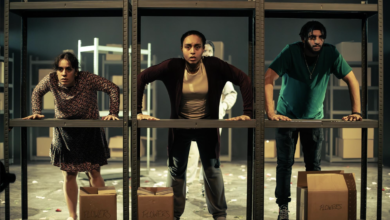
Starting after midnight, we are shown the aftermath of what must have been a bloody evening. The Police Officer on the scene (played by Andy McLeod) briefs us on some facts about the crime scene, a home where we can see into a few different areas. What we’re looking for is the whodunnit and the whytheydunnit.
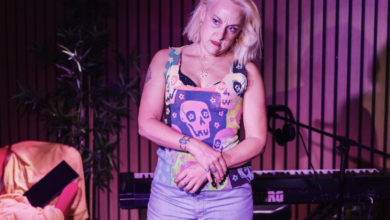
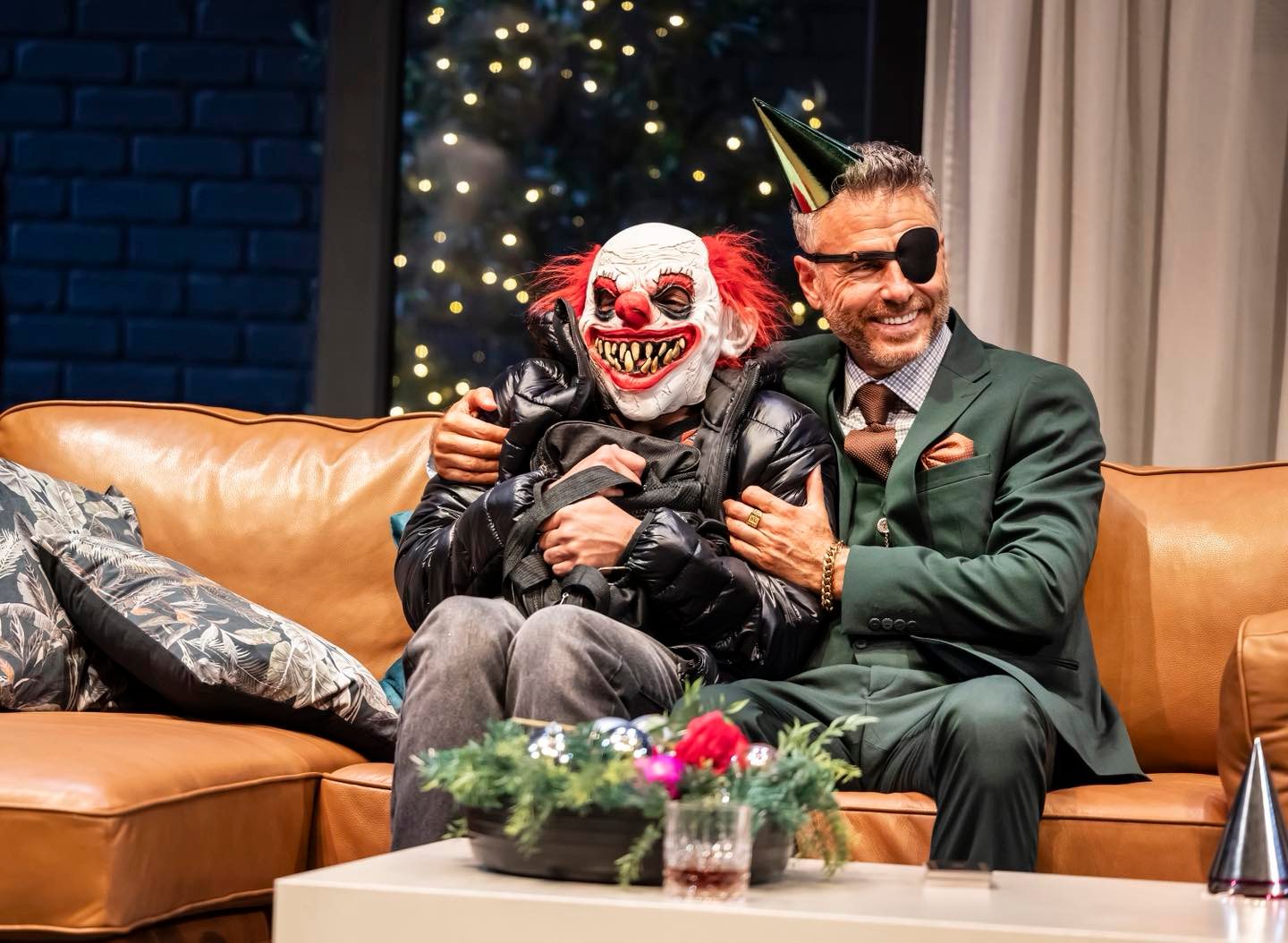
Introduced to the gently outrageous cast of characters, we see a picture slowly building of what could have happened. Is the one-eyed drug lord Jonny (Jason Durr) a cold-blooded killer or just a misguided Robbie Williams fanatic? Or maybe the oafish grunt, Trainwreck (Peter Moreton), or senile old lady, Shirley, finally had enough? The over-the-top caricatures add to the intrigue as we think it really could have been any of them, but some of the characterisations don’t feel consistent or fully measured.
In the cast there are some recognisable TV faces who are understandably in some of the bigger roles, like Blake and EastEnders’ Max Bowden, who plays Paul. But in Murder at Midnight, I felt the characters with less stage time bring the entertainment value. Moreton’s Trainwreck was doltish and endearing, and Callum Balmforth’s Russel gave me some of my bigger giggles.
However, a place where the writing and performances didn’t always seem to meet well was in some of the accent work. Some roles seemed designed to be delivered in a certain way, with natural accents knocking some lines off course. This did influence some of the comic delivery, even if the intention was often still clear.
An eye-catching modern home by designer Colin Falconer was an appealing set, used effectively to keep track of the rather convoluted story. It was a shame, though, that the depth of the set meant that sometimes action at the back was blocked or distracted by cast members in front.
It’s the job of a farce to exaggerate, to be a bit absurd and take us by surprise. For me, Murder at Midnight does miss a couple of beats but is playful and energetic. Funny and clever together, it is an entertaining spectacle which I hope drives Betts to keep writing his murder series.
NB – performance reviewed featured Iryna Poplavska stepping into the role of Lisa and Bella Farr stepping into Poplavska’s role of Cristina.
Written by Torben Betts
Directed by Philip Franks
Produced by Tom Hackney and Alastair Whatley for Original Theatre
Design by Colin Falconer
Lighting by Jason Taylor
Sound and music by Max Pappenheim
Murder at Midnight plays at the Churchill Theatre Bromley until Saturday 29 November, before continuing its tour around the UK until April 2026.