Review: Murder in the Cathedral, Orange Tree Theatre (St. John the Divine)

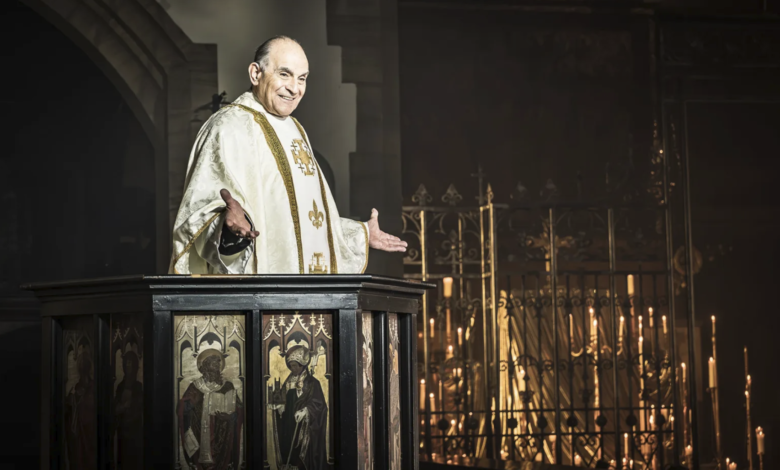
David Suchet commands the pulpit in a gripping tale of faith, power and political convenience.Rating
Excellent
There are few more promising titles for an evening at the theatre than Murder in the Cathedral. T.S. Eliot’s experimental verse drama, first performed in 1935, might not be everyone’s idea of a rollicking night out. Yet, its story of moral resistance in the face of political power feels strikingly relevant today. Fortunately, the Orange Tree Theatre has found a spectacular setting for its revival, and in David Suchet, an actor who makes even the most elaborate theological musings feel gripping.
The play tells the story of Thomas Becket, Archbishop of Canterbury, who returns to England in 1170 after seven years in exile. Once a close friend of Henry II, he has fallen out with the king over the competing authority of Church and Crown. His refusal to back down ends in his murder by four of the king’s knights. Writing amid the political turmoil of the 1930s, Eliot explores the uneasy boundary between moral conviction and fanaticism.
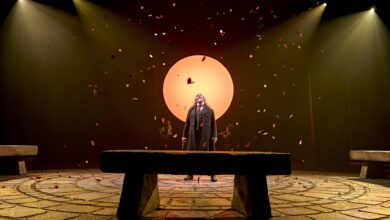
With the Orange Tree temporarily decamped across the road to St John the Divine, Richmond has acquired a magnificent new theatrical space. The duck-egg-blue ceiling, Gothic interior and flickering candles provide a suitably atmospheric backdrop. Suchet makes particularly effective use of the actual pulpit, delivering his sermons from the very place the congregation hears them each week. It’s a production that makes you wonder why more theatres don’t simply borrow a church.
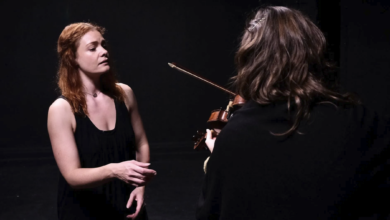
Tom Littler and Francesca Ellis’s production makes excellent use of its surroundings. The Women of Canterbury, barefoot in pale gowns, gather, chant and drum their way through the action, lending proceedings a creeping sense of dread. Orlando Gough’s music adds to the atmosphere, although at times it makes Eliot’s words harder to hear.
And then there is Suchet. Best known as the fastidious Hercule Poirot, he is a commanding Becket, delivering Eliot’s dense verse with impressive precision. He beautifully captures Becket’s journey from uncertainty to the remarkable clarity of the Christmas Day sermon that seals his fate. Impressively, you find yourself leaning in rather than wondering how much longer the sermon has to run.
Eliot’s concerns are hardly confined to the twelfth century. Becket’s clash with the Crown, and the knights’ attempts to dress political violence up as noble duty, have uncomfortable contemporary echoes. Anyone who has watched politicians explain why their latest U-turn was actually a matter of principle may find the whole thing rather familiar.
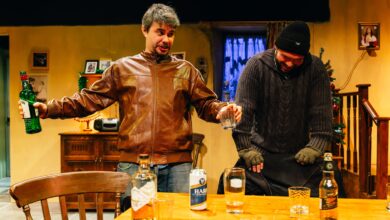
The final exchanges are among the production’s most striking moments. Becket’s murderers turn to the audience to defend their actions, and suddenly the knights snap into the modern day, microphones in hand, working around one another with the nonchalance of performers taking turns at a sketch night. It’s a wonderfully odd gear change, turning medieval religious drama into a satirical monologue show. These leather-clad men cheerfully dress up assassination as public service. The fact that the same actors have played Becket’s tempters makes the point all the sharper: those who try to lure him away from his principles are not so far removed from those who ultimately kill him.
A few passages could do with a lighter touch, but these are minor gripes in an otherwise atmospheric and gripping evening. Suchet is terrific, the setting is hard to beat, and Eliot’s questions about faith, power and principle feel as relevant as ever. Murder in the Cathedral is not the easiest night at the theatre, but it’s a rewarding one – and a reminder that those who insist they’re acting on principle are not always the ones you should trust.
Written by T.S. Eliot
Directed by Tom Littler
Associate Director – Francesca Ellis
Lighting Design by Peter Mumford
Costume Design by Cat Fuller
Set Design by Rob Jones
Music Composed by Orlando Gough
Murder in the Cathedral plays at the Orange Tree Theatre (St. John the Divine Church) until Saturday 7 November.