Review: The Human Voice / The Seven Deadly Sins, Charing Cross Theatre

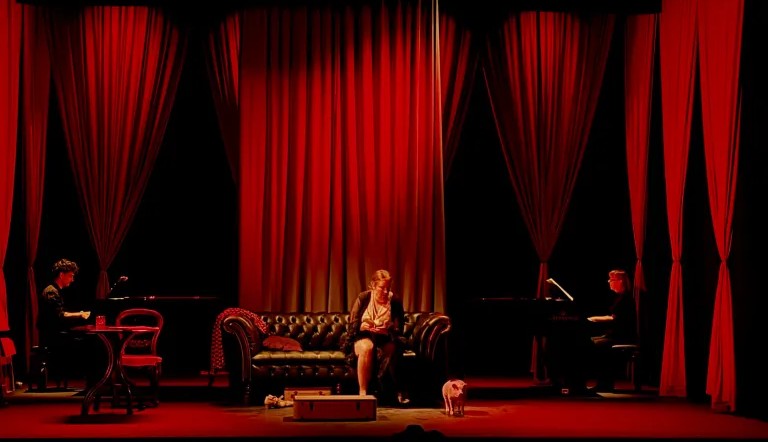
A double bill of two short operas, The Human Voice / The Seven Deadly Sins is a lovely pairing dominated by a great leading vocal performance.Rating
Good
Opera can be a hard sell. Sometimes feeling out of touch or just inaccessible, it can take something creative to draw in the punters who are not already afficionados. Something like a twist, a reimagining, or recontextualising for a modern audience could help in some instances. Or, maybe, as is the case in tonight’s show, taking two existing short works and connecting them with a single narrative thread.
With tonight’s The Human Voice / The Seven Deadly Sins, the Charing Cross Theatre brings together these two twentieth-century works, composed by Kurt Weill and Francis Poulenc respectively. Created alongside two formidable librettists, Bertolt Brecht and Jean Cocteau, these two single-act operas are stunning short demonstrations of the kind of intimate psychological depth that can be achieved in opera.
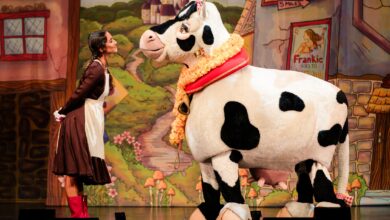
The focal point of both works is one woman who experiences extreme peaks of emotional strain and pressure. With one opera per half, the two halves are brought together by these two women being presented as one, played by Katherine McIndoe. Two different moments of a single lifetime, we first see her in Weill’s The Seven Deadly Sins as Anna, fighting to discover herself, for self-actualisation and is faced with the ugly real world. Taken advantage of, she reaches her goal of providing for her family after experience of each of the titular sins. While focussed on Anna’s trials and discoveries, McIndoe is joined by two male singers, Harry Grigg and Phil Wilcox, who give characterful performances as her family members.
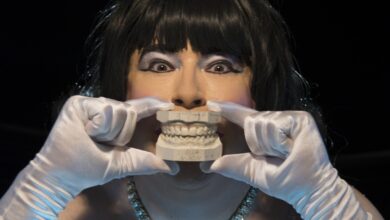
After the interval we see her as Poulenc’s Elle in The Human Voice, this time alone throughout, apart from the mysterious appearance of Adrian Salinero as some sort of flute playing apparition for a minute or so. In theory, we are seeing the same woman later in life, as she appeals and lies and pleads to her lover over the phone. It’s a more introspective second half, but the pairing is really nice. I do wonder, though, if the through narrative could be more clearly demonstrated somewhere, as I would not have realised the thread between the two operas if I had not read it in the programme.
Immense congratulations to McIndoe, our leading lady. Her powerful and enticing voice gives light and shade to the emotional circumstances of both women, and she carries the characters’ journeys with her captivating singing. Though, having reduced the capacity of the theatre, we are close to these intimate performances and do see the instances where some more detailed direction from director Alejandro Bonatto may help some moments to keep feeling moving between musical phrases.
Supporting the dextrous performances is, of course, the music. The two musical directors, Adrian Salinero and Elspeth Wilkes, also accompany the performances and play these reduced versions of the operas with all the colour of the full versions. Further sentiment and pathos is also supported by subtle but still potent lighting by lighting designer Adam King.
The two agonising journeys of Anna and Elle pair beautifully. Maybe a direct connection between them could add something if presented clearly, but I’m not even sure it is needed. The intimate and breathtaking performances very naturally carry all the pain, toil and dejection of these lovely, accessible short operas.
Music by Kurt Weill (The Seven Deadly Sins) and Francis Poulenc (The Human Voice)
Libretto by Bertolt Brecht (The Seven Deadly Sins) and Jean Cocteau (The Human Voice)
Directed by Alejandro Bonatto
Produced by Steven M Levey for Charing Cross Theatre Productions Ltd.
Musical direction by Adrian Salinero (The Seven Deadly Sins) and Elspeth Wilkes (The Human Voice)
Lighting design by Adam King
Set design by Alejandro Bonatto
Costume design by Ruth Keeling and Hannah Stevens
The Human Voice and The Seven Deadly Sins plays as a double bill at Charing Cross Theatre until Saturday 19 September.