A woman fights with her imaginary friend while traveling through her memoriesRating
Okay
It’s not unusual for a child to have an imaginary friend. For a thirty-something-year-old, though, it might be seen as a little odd.
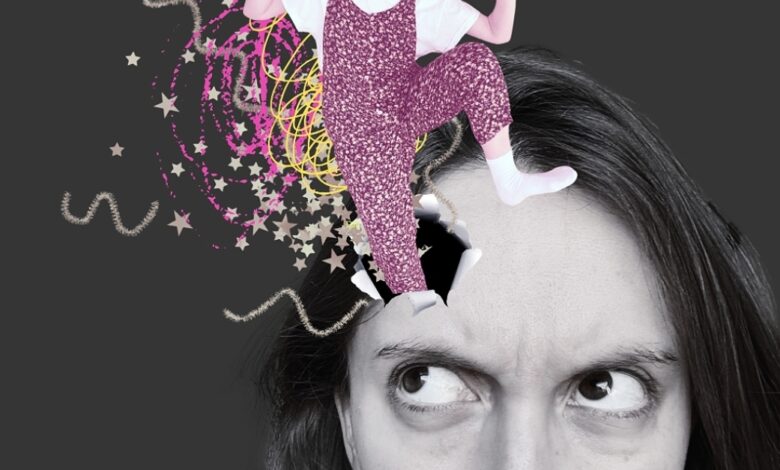
Emmeline (Emma Graveling) is having the best day ever. Everything is going perfectly: she got a seat on the Tube for once, she’s just had a promotion at work, and to top it all off her boyfriend has proposed. For some reason, though, she’s not happy. In fact, she’s thinking about maybe killing herself. Enter her imaginary friend (Emily Hooley), who prompts Emmaline to go back through her past and work out why she isn’t satisfied.
The story plays out across a series of memories, cardboard signifiers of which are pulled, inexplicably, from an old-fashioned pram. Non-chronologically, these go from Emmeline’s childhood to her teenage years, her first job and the 2020 lockdown.
The intensity of events throughout the play feels slightly incongruous with their consequences. It’s not really clear why Emmaline is considering suicide, and the root of many of her problems seems to go back to her parents’ divorce – obviously an impactful event, but never presented as particularly awful. The play feels like listening in on someone’s hypnotherapy session, tracing behaviours and emotions back to their roots; perhaps interesting psychologically, but Emmaline’s realisations are less groundbreaking from an audience perspective.
The real conflict is Emmaline’s fear of taking a creative leap. She’s always wanted to be an author, but years of rejection have left her disheartened with the whole prospect. Her imaginary friend encourages her creativity, urging her to just commit to a project, however the pressures of the real world, and the belief that no one will care about her work, hold her back. If the play focused on this as Emmaline’s central issue, it could be more impactful.
Despite being only an hour long, the show does lag towards the end. There are perhaps a few too many flashbacks, and some ideas are repeated. Stripping the story back to its basics and removing certain scenes might help – rants about AI are always appreciated, but here it just doesn’t fit.
Other scenes are excellent, such as the one poking fun at Emmaline’s teenage self (and the general state of teenagerhood in the 2000s). There are also some great creative decisions throughout, from pills turning to Skittles with deft sleight of hand to lip-synching along with pre-recorded speech. At one point, dialogue is distorted, censored as Emmaline refuses to acknowledge her own actions. These moments really stand out, and show clever craftsmanship.
The Little Woman in My Head Must Die has an interesting concept and shows clear signs of creativity. It just needs some polish and a more focused approach.
Writers: Emma Graveling, Emily Hooley
Guest director: Ellie Brewster
Voice coach: Sophie Austin
The Little Woman In My Head Must Die played from 18-20 August at Upstairs at the Gatehouse