A thoughtful and ambitious look at intimacy, memory, and the stories we tell ourselves about loveRating
Good
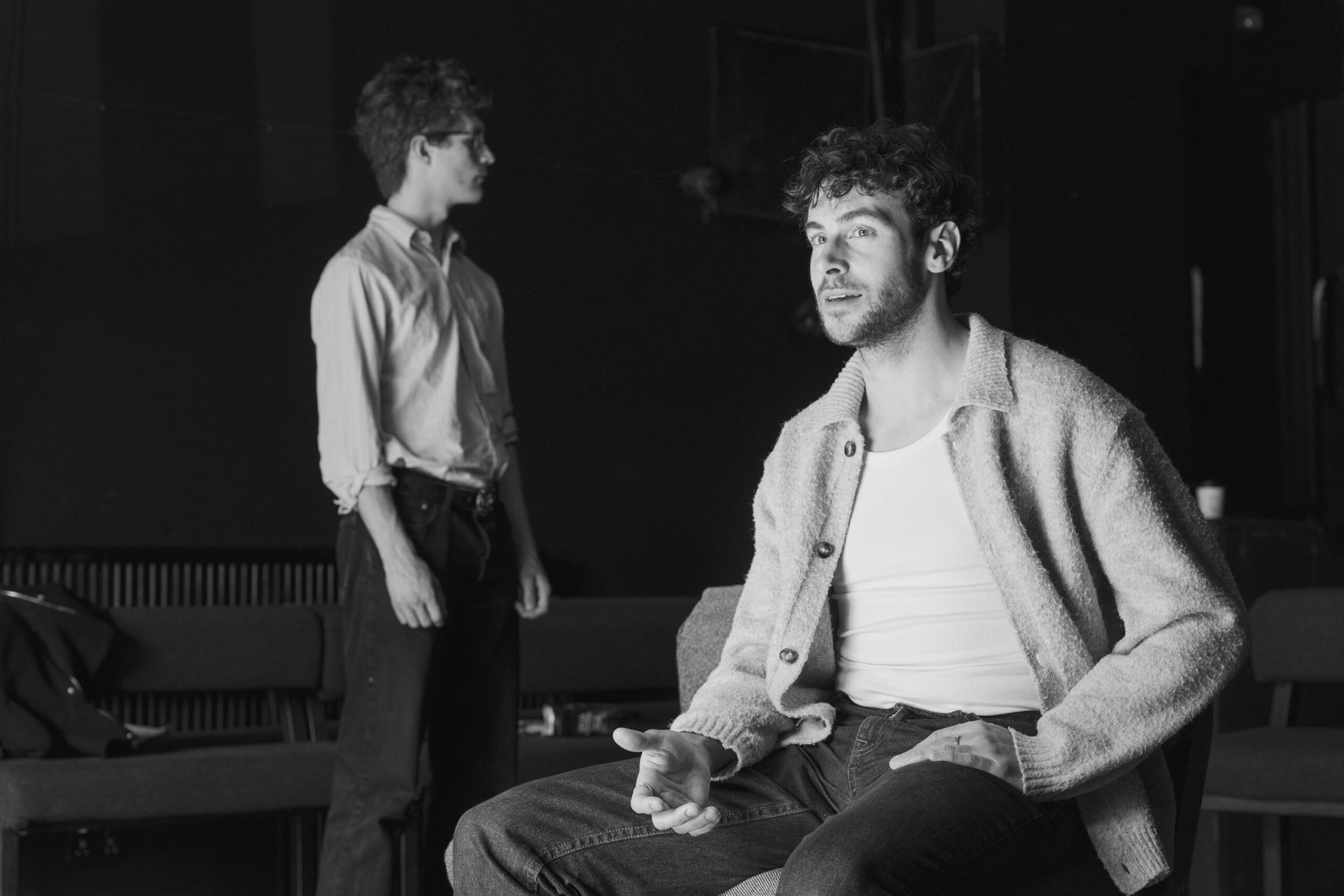
Queer relationships, like any others, are layered: joyful, volatile, tender, and, at times, deeply toxic. Attachment Theory, written by Liam Scanlon, dives headfirst into that complexity. With an intriguing premise and richly drawn characters, the play follows Edward (Marley Brown) and Ryan (Dan Holland), a couple who unknowingly end up seeing the same therapist, Dr Lucarelli (Bernice Togher). One is a troubled ex-monk haunted by his past; the other, a privileged English painter dealing with a terrible drug addiction.
Rather than unfolding in real time, much of the play positions the audience as listeners to the aftermath. Edward and Ryan sit side by side but “not in the same room” as they recount their relationship to Dr Lucarelli instead of fully reliving it together. This shows how each man understands or misremembers the relationship but also creates a sense of distance. The therapist becomes the main point of address. For long stretches, the emotional core is described rather than directly experienced, which limits the drama’s immediacy.
The writing itself is striking. Scanlon’s language is muscular and assured, giving each character a unique and carefully shaped voice. The confessions have a heightened, almost theatrical feel that seems deliberate. These men think deeply, build their own myths, and speak in ways that show both who they are and how they want others to see them. The structure, moving between therapy sessions, is clear and effective, but the play truly comes alive when Edward and Ryan are allowed to exist in the same space, speaking directly to one another. Brown and Holland are both compelling performers in their own right, but together their chemistry ignites. Their dynamic is messy, uncomfortable, and undeniably charged – twisted, toxic, sexy, and dangerous. You can’t quite look away, and against better judgment, you find yourself rooting for them.
Dr Lucarelli acts as a mediator but seems the character seems a bit underused. She provides structure for the men’s revelations, yet her role remains mostly the same. She is vocally soft and static, which is certainly believable for how one would imagine a therapist to be; but being a passive intermediary whom the two men address for most of the play sometimes slows the rhythm and momentum. She ultimately stands and explodes into a barrage of insults, which feels slightly out of character.
The production’s main challenges lie in its staging and pace. The design is simple, with no lighting or sound cues. While a restrained approach can be effective, here it sometimes makes the play feel less theatrical and static, especially since the script is full of backstory, metaphor, and emotional depth. The grounded staging doesn’t always meet the ambition of the writing. That said, the actors – Brown in particular – work hard to counter this through detailed physicality, strong vocal choices, and clear characterisation. Even so, the pacing dips at times and the energy occasionally falters.
Attachment Theory is a thoughtful and ambitious look at intimacy, memory, and the stories we tell ourselves about love. Sometimes its structure and restrained staging create a sense of distance, but the writing and performances are undeniably strong, especially when the main relationship is given space to develop. The play is messy, searching, and unsettling in the right ways, offering a portrait of connection that resists easy answers. With a greater sense of immediacy and theatrical dynamism, it could be truly gripping, but even as it stands, it leaves you with plenty to sit with long after the lights go down.
Written by Liam Scanlon
Directed by Dom Stephens
Produced by Hannah Noël Brennan
Attachment Theory plays at The Bread and Roses Theatre until Saturday 18 April.