Pros: Powerful performances and storytelling brought haunted and magical lands to life.
Cons: Erm, none. The missing fireplace? A mesmerising night of transformation and storytelling that will fire up your wildest imagination.
summary
Rating
Excellent
There is something about storytelling that whisks you back to your childhood, when your imagination was more flexible and your tendency to disbelief less developed. This particular art form conjures up images of cosy fireplaces, grandparents and heavy blankets to hide under should a story become too terrifying. It is one of the most ancient and visceral forms of human expression and, when done well, will take you on journeys that can be enchanting, scary and beautiful all at once.
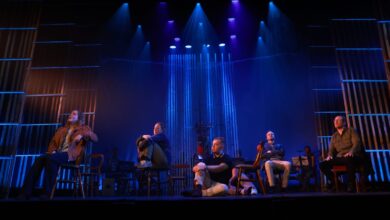
Never was this demonstrated more succinctly than at Soho Theatre Upstairs this week. The Crick Crack Club champions storytelling as a contemporary performance art, and this was their second of three performances running at the Soho Theatre Upstairs this spring. Godfrey Duncan, also known as The Unorthodox Unprecedented Preacher or TUUP, and Jan Blake, a leading authority of Afro-Caribbean folklore, are well-established storytelling practitioners. Both have a unique, engaging style, a whole whack of charisma and the curious ability to make the hair on the back of listeners’ necks stand on end.
The pair took their spell-bound audience on a mythical adventure of metamorphosing humans during the night of transformations Shifter. Beautiful wives turned into claw-footed serpents and wandering men into sly hyenas, hunting and being hunted in turn. Young brides sang mysterious songs to husbands and sons, casting spells on them to disguise their true selves. Young hopeful men dabbled in magic, realising too late what harm an ill-advised wish can do.
TUUP cleverly combined his storytelling with performance, bringing his characters to life: a dignified man one moment, a crawling, yelping animal the next. Jan Blake’s performance meanwhile was powerful, passionate and brimming with energy. I loved how she laced her stories with hauntingly beautiful singing, and how, like TUUP, she made sure the audience weren’t just passive listeners. Their mesmerising performances brought the wildest and most gory tales to life, leaving you with the uncanny feeling that you yourself had just been through a transformation – turning back into that quivering child under the blankets.
Performers: Jan Blake and TUUP
Playing Until: The Crick Crack Club will next be at Soho Theatre on 14 March 2016 performing Universe.
Box Office: 020 7478 0100
Booking Link: http://www.sohotheatre.com/whats-on/universe/