Pros: A confident one-woman show that explores familiar themes in a thoughtful way, in a fantastically unique and special venue.
Cons: There’s some confusion in style and delivery which holds the piece back and disrupts the audience’s connection to an otherwise very open character. A courageous performance of a deeply emotional theme, told with a unique voice. Annie McKenzie’s creative exploration of grief, relationships and purpose is a show to look out for, and with some bolder stylistic decisions, could become unmissable.
summary
Rating
Good
Walking through the Leake Street tunnel and into the Vaults, the artwork and atmosphere led me to anticipate something special. It really is a stunning venue with a completely unique, underground feel – perfect for exciting and innovative theatre. Whilst Happiness is a Cup of Tea doesn’t fully reach the potential of the space, it is a brave, meaningful performance, which explores relatable themes with poignancy and originality. The show’s honesty and passion earn it its place in the festival.
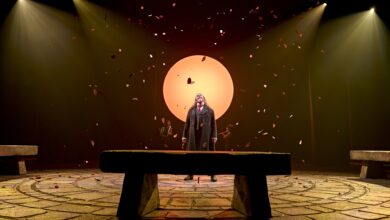
Actress and writer Annie McKenzie performs this one-woman show, described as ‘part autobiography, part character piece,’ with exuberance and commitment. She plays Fiona, a young woman returning home to Beachy Head, who is faced with the task of writing her mother’s eulogy. The setting is portrayed effectively through a simple yet terrific combination of sound, wind and lighting, which has a wonderful effect on the walls of the Pit, where this performance takes place. The set, again, is fairly minimalistic, allowing McKenzie to use the space thoughtfully.
Fiona’s unique outlook on life, which she views predominately in terms of death, captured my attention from the very beginning. Death is such a commonly explored subject, yet McKenzie succeeds in finding something new to say. I also found the theme of remembering very interested. Stories change and are disrupted as Fiona becomes confused as to what is a memory and what is imagined. It is a wonderful touch in a story of rediscovery, and I would love to see it expanded even more. Fiona’s conflict, and the deadline of the funeral, give each memory and imagined scenario a purpose, preventing the piece from becoming too indulgent. This is testament to McKenzie’s skill and promise as a scriptwriter, which really must be commended.
The play is largely a one-sided conversation, interspersed with more poetic story-telling. The breaks from naturalism distracted me at first. However, as both narratives progressed and began to weave together, I recognised the beauty and importance of both. Whilst I came to appreciate the mixing of styles, the inconsistency within each style – both in the script and its delivery – prevents the play from reaching its full potential. The usual informal, conversational tone is frequently flooded with long, illustrative language, often delivered in a very classical manner. Such lines don’t flow in a natural, ‘stream of consciousness’-like manner, which undermines the plot and the character’s authenticity. Some descriptions caught my attention for being exceptionally clever or well crafted, but I did not want my attention to be caught! I desperately wanted to stay in Fiona’s world. Given Fiona’s scramble to find fitting words for an impending eulogy, the play seems to call for a feeling of spontaneity, so I feel the piece has enough to say without relying on such crafted analogy and description. For this style of language to feel truly impulsive, it would need to be Fiona’s constant voice, and her characterisation would need to change accordingly as well.
Regardless of however the play continues to develop, I am confident that Happiness Is a Cup of Tea will remain a show to look out for, as it has such purpose. It seems to be born out of a genuine drive to explore loss, rather than a writer searching for a topic, which makes it so powerful. If it does not enlighten an audience, it can certainly lead audiences to their own enlightenment, as I found the thoughts it provoked stayed with me long after the performance was over. For me, this is the sign of a play that deserves to be seen!
Author: Annie McKenzie
Director: Michael Tonkin-Jones
Box Office: 0871 220 0260
Booking Link: http://www.vaultfestival.com/event/happiness-is-a-cup-of-tea/2016-02-27/
Booking Until: 28 February 2016