A fascinating life and a play that leaves me wanting to learn more. Rating
Good!
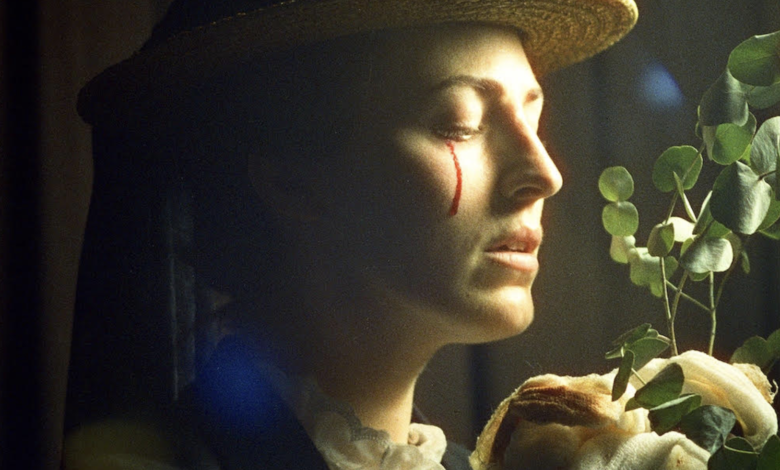
In the 1880s, after a 72-day voyage, Irish immigrant Daisy Bates (Georgia Nicholas) arrives in Australia – having conveniently misplaced her documents, so allowing her to start afresh, pretending to be more than she is. In search of a rich husband and a new life, Australia doesn’t quite offer that in the end, but Daisy develops a deep connection with the Aboriginal people and their suffering. She learns their languages, spending many decades of her life studying and recording their traditions. Written and directed by Georgia Nicholas, too, this one-woman play gives us a brief overview of this fascinating – and true – story.
It takes a while for Kabbarli: An Irishwoman in the Desert to get to the heart of this tale. We spend a lot of time with Bates on her marriages and working her way into Australian society, the real nub of the story coming later, much later, and it feels like the balance could be shifted a fair bit more in favour of Bates’ later years. Even within this, the flow can be quite uneven, with light and sound cues clearly not lining up.
Early on, we learn that part of the reason Daisy can connect and empathise with the Aboriginal people is her own experience of colonisation. There is a particularly interesting thread where Nicholas suggests an overlap between music and mysticism in the Celtic and Aboriginal traditions. Yet, in a fascinating postscript, we learn that until her death, Daisy was a believer in the British Empire. The contradiction is enormous: someone who could recognise some of her own history in another colonised people, finding commonality within traditions, but at the same time keeping a belief in the colonial system that oppressed both peoples. It feels like a really unexplored aspect and one crying out for more
Nicholas’ Irish accent leans heavily into a stereotypical ‘Oirish’ accent, and it grates. That aside, she does a good job differentiating the characters and showing Bates presenting herself differently to others depending on their status and what she might want from them.
Bates’ solidarity is not nothing, and Kabbarli ultimately credits Bates with recording tens of thousands of words of Aboriginal languages and pieces of Australian history. That work and the contradictions around her life are what make the story so fascinating – and I did walk out wanting to read more about it all.
There is huge potential in the story Nicholas is telling and the way she is telling it. Kabbarli is a fascinating story with a fascinating woman at its centre, and it feels like with a little more space given to Bate’s later years and her contradictions, it could grow considerably.
Written and Directed by Georgia Nicholas
Produced by Walk in Her Shoes Productions
Kabbarli: An Irishwoman in the Desert has finished its performances at the Etcetera Theatre as part of the Camden Fringe Run.