Equal parts ridiculous and moving, To Be Frank is wonderfully eccentric, finding magic in the simplest of props and turning physical comedy into something surprisingly profound. Rating
I wasn’t entirely sure what I was walking into with To Be Frank. I’d never seen a clowning show before, and a non-verbal take on Frankenstein sounded like it could go in any number of directions. Within minutes, though, any uncertainty had vanished. Frank arrived with all the elegance of a collapsing wardrobe, crashing into the stage and immediately winning over the audience. The laughter started early and barely let up, but what was most surprising was how quickly the show found genuine warmth beneath all the chaos.
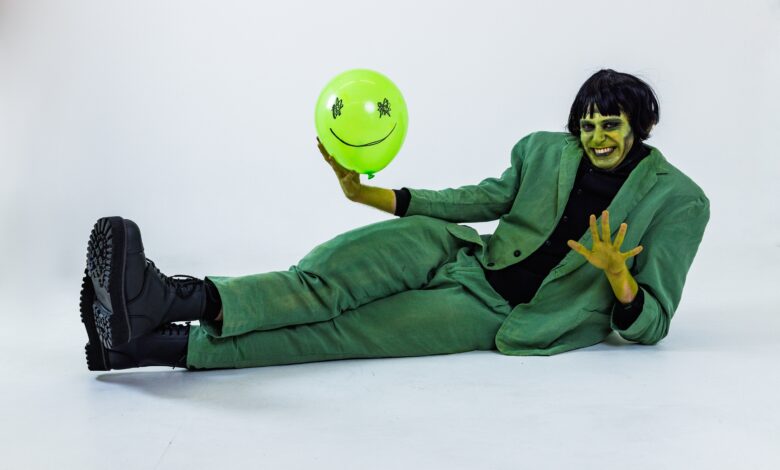
Frank spends much of the performance trying to work out how to exist. His body seems to have been assembled without consulting him first. Limbs fly in directions he isn’t expecting, simple tasks become monumental challenges, and every new discovery is as exciting as it is confusing. Michael Hockey‘s physical performance is extraordinary. Without relying on dialogue, he creates a character who is instantly readable. A twitch of the face, a sudden freeze, an awkward stumble across the stage; somehow every movement tells us exactly what Frank is thinking. A large part of the show’s success comes from how unpredictable it feels. Frank is constantly watching the audience, responding to them, learning from them. Some of the biggest laughs arise from these moments of interaction. It gives the performance an energy that would be impossible to recreate in exactly the same way twice.
One of the cleverest elements is the use of balloons. On paper, it sounds almost absurd that such a simple prop could sustain so much of the show’s emotional and comic weight, yet Hockey continually finds new possibilities within it. The balloon is transformed again and again through subtle theatrical tricks, shifts in movement and ingenious backstage work: it’s hugely inventive. Just when it seems the performance has exhausted every possible use for a balloon, it reveals another. Rather than relying on elaborate effects, we learn how much can be achieved through imagination, precision and a willingness to trust the audience. It is a deceptively simple piece of theatre-making that ends up feeling remarkably sophisticated.
Equally important is Alanna Hall‘s live score, performed from the side of the stage but never confined to the background. At times the music seems to follow Frank’s movements, punctuating every collapse and triumph. Then, just as quickly, the relationship reverses, and Frank appears to be chasing the music instead. The score shifts effortlessly between playful, atmospheric and gloriously loud, binding the whole production together while giving it much of its pulse. I found myself watching Hall almost as much as Hockey, fascinated by the conversation unfolding between them.
What impressed me most about To Be Frank is its confidence in simple ideas. A performer, a guitar, a balloon and a stage become the ingredients for something inventive, funny and unexpectedly moving. Hockey has created a show that embraces absurdity without ever hiding behind it. Beneath the clowning is a story about connection, care and what it means to learn from the people around us. As it continues its run at the Edinburgh Fringe, it will be exciting to see how it evolves with different audiences and spaces. Hockey and Hall are hugely talented artists, and To Be Frank seems like the kind of production that will develop in interesting directions while retaining the charm that makes it so enjoyable now.
Created by Michael Hockey
Musician and Composer: Alanna Hall
Directed by Oli Bates
Produced by Charlotte Pleasants
To Be Frank has finished its run in London. It next plays at Pleasance Courtyard, Edinburgh from Wednesday 5 to Sunday 30 August.