Jeyasingh’s contemporary dance interpretation of The Tempest is a tidal wave of interesting postcolonial ideas, but few reach the shore. Rating
Good
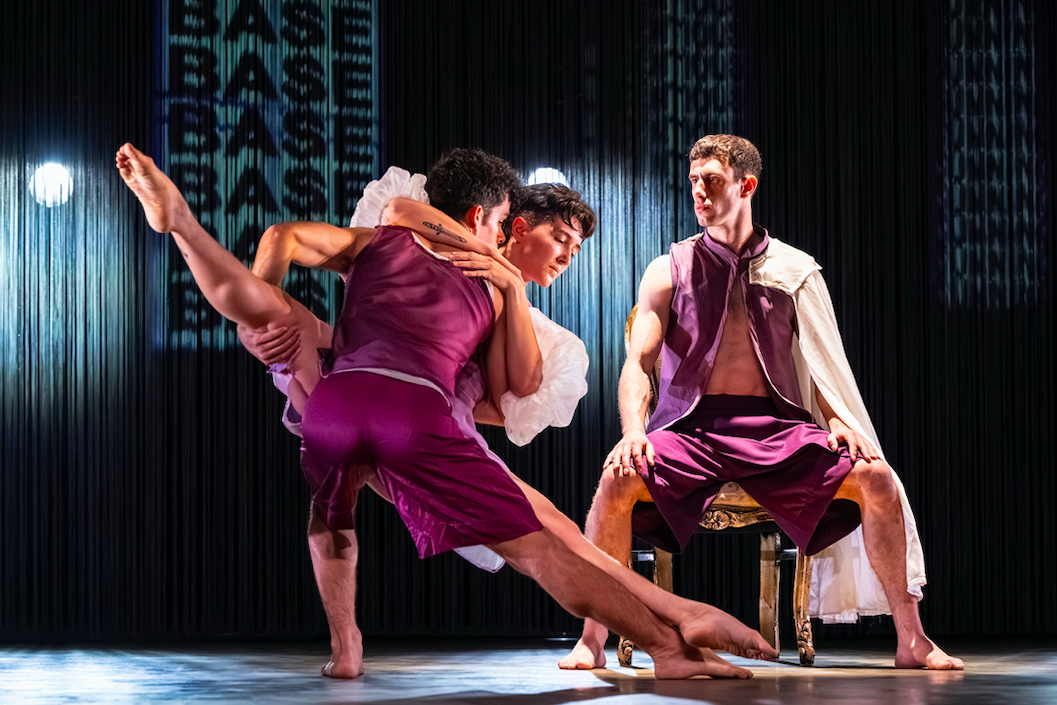
At the heart of We Caliban is an ambition to reimagine Shakespeare’s colonial tale, one of unfamiliar lands and “savages”, by instead giving agency to the historically villainised character. Shobana Jeyasingh opts to present Caliban as a collective; the titular “We” is embodied by a dance ensemble that opens the piece with a beautiful sequence of intertwined bodies and visual nods to Hindu gods. It is the first major departure from Shakespeare’s play, giving the audience a glimpse of Caliban’s community before Prospero and Miranda’s colonial intervention.
Fred DeFaye’s idyllic sound design and Jeyasingh’s harmonic choreography present a thriving ecosystem within this precolonial land, where community is cherished and knowledge is abundant. Prop books are read, exchanged and cleverly used in an elegant moment where one of the dancers walks across the stage, propped up by fellow islanders holding out books as stepping stones. Literature becomes a recurring theme, representing a postcolonial interrogation of how language systems and imposed hierarchies of knowledge can be dangerous weapons of colonial oppression.
Despite a promising opening scene, the piece fails to explore the expansive concepts it introduces in enough depth. Books become overused symbolism, while the reliance on projected and spoken quotes begins to feel uncompellingly overt. The Tempest’s complex racial dynamics are highlighted to the audience, yet the choreography of the collective as Caliban lacks the tangible, exciting distinction to offer a developed, fresh perspective on those themes. In the accompanying programme, the creative team point out that Caliban’s speech is as poetic and advanced as that of any other characters in The Tempest, despite his description as a “savage”. This fruitful analysis of the play should open the door for innovative choreography that reflects the sophistication, agency and resistance of Caliban’s prose. Despite this, We Caliban struggles to define where it retells Shakespeare’s tale and where it reimagines it, creating a structural hybrid that sacrifices tonal clarity.
Despite the ebbs and flows of its emotional impact, Jeyasingh’s choreography is undeniably impressive, executed with elegance by the talented company of Shobana Jeyasingh Dance. Moments of high drama, such Caliban’s accusation and the following storm, brilliantly stir the audience and are amplified by Thierry Pécou’s mighty compositions. Floriaan Ganzevoort’s thrilling lighting design casts haunting shadows behind the dancers’ sharp movements and Mayou Trikerioti’s set is particularly impressive during the accusation scene, vaguely resembling a court room using only projections. Harry Ondrak-Wright performs Prospero with elegance and precision, while Raúl Reinoso Acanda impresses as a conflicted Caliban. In an unnamed role, Tanisha Addicott emerges as a standout performer and a joy to watch throughout the piece, demonstrating an ease and compelling conviction that beautifully serves the work’s ambition.
Reinoso Acanda and Addicott perform the most moving choreography of the night in the final scene. Here, Jeyasingh’s choreography successfully explores the complex re-negotiation of identity, language and space in the aftermath of colonial intervention. While elements of We Caliban stumble over storytelling and struggle to define the piece’s perspective, the excellent opening and closing scenes are where its choreography shines. Using powerful, fluid movements, Jeyasingh’s finale inspiringly explores how colonisation imposes and erases culture within a landscape and how resistance is reborn.
We Caliban is a postcolonial exploration that treads water, lacking the conceptual clarity to present an original voice or fully embody the themes it explores. Technically beautiful nonetheless, the piece presents pockets of deeply moving choreography performed by a masterful company.
Concept, Choreography and Direction by: Shobana Jeyasingh
Executive Producer: Ghislaine Granger
Composer: Thierry Pécou (By arrangement with Schott Music, Mainz).
This show has completed its current run.