Interviews

Interview: Six rooms and A Wedding

Daphna Attias talks forming space, family, feuds and friendship

Dante or Die is an award-winning, international theatre company that creates unique and accessible site-specific performances in often surprising locations. From churches, to prisons, to shopping centres and outdoor public spaces, they place theatre at the heart of the everyday world to encourage people to imagine life differently. 

Marking their 20th anniversary, 2026 sees the revival of their landmark production I Do. This story of a wedding celebration takes place across six hotel rooms, with the audience moving through spaces, piecing the tale together from multiple perspectives. We were delighted to chat about the show with director Daphna Attias, and discuss coming full circle on 20 years of theatrical shapeshifting.


Daphna – Happy New Year! It’s great to talk to you again, especially as you’re celebrating this really special year for Dante or Die. How does it feel to have reached this incredible twenty year milestone?

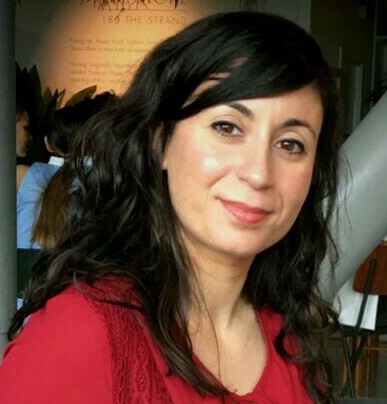
Daphna Attias, Co-Artistic Director of Dante or Die

Thank you, and Happy New Year! It honestly feels quite surreal. When Terry O’Donovan and I started Dante or Die, we never imagined we’d still be here twenty years later, continuing to make work that excites us and, hopefully, surprises audiences. It feels incredibly special, but also quite humbling.

Reaching this milestone has made us reflect on how much the company has grown and evolved, while still holding on to the core of what we do, creating intimate experiences that place audiences at the heart of the story. There’s a sense of pride in looking back at the journey, the collaborators we’ve worked with, and the risks we’ve taken along the way but also a strong feeling of momentum. It doesn’t feel like an ending or a nostalgic moment; it feels like a chance to re-energise, to look forward, and to keep asking bold questions about how and where theatre can happen.

Dante or Die has always pioneered intrepid, innovative site-specific performance yet manages to keeps the fragile human condition firmly at its heart to create resonant, often tangible post-show impact. Have you seen this approach influencing the wider theatre industry over the last two decades?

I think we’ve definitely seen a shift over the last twenty years in how audiences and artists think about where theatre can live and how it can be experienced. When we started, site-specific and immersive work still felt quite niche, and there was often a sense that innovation in form might come at the expense of emotional depth. What’s been really encouraging is seeing that those two things no longer feel opposed.

For us, the form has always been in service of the human story. Placing an audience in a hotel room, a self storage building or a changing room in a leisure centre, isn’t about spectacle for its own sake, it’s about creating proximity, vulnerability and empathy. And allowing people to look at familiar everyday spaces in a different light. When you remove the traditional distance of a stage, the fragile human condition becomes impossible to ignore. I do feel that this way of thinking has increasingly filtered into the wider industry, with more artists exploring immersive or site-responsive work.

What excites me most is seeing how audiences now seem more open to these experiences too. There’s a real appetite for work that lingers beyond the performance, that you carry with you afterwards. If Dante Or Die has contributed in any way to that conversation, to encouraging theatre that feels personal, embodied and emotionally resonant – then that feels like a meaningful legacy to be part of.

What has evolved in your production style over the years? You’ve clearly embraced new technologies and had to react to some difficult moments, including the Covid pandemic.

I think one of the things that evolved most is our confidence in letting form emerge from the question we’re asking, rather than feeling the need to lead with a particular aesthetic. In the early years there was a lot of experimentation, often driven by curiosity and instinct, and over time that’s settled into a clearer sense of purpose. We’re more precise now about why we’re using a particular space, technology or structure, and how it serves the emotional journey of the audience.

Technology has definitely become a more integrated part of our storytelling. Whether it’s a video podcast, an interactive film or an installation, we use technology to deepen intimacy and connection, not to distract from it. The aim is always to heighten presence and emotional truth, especially in site-specific settings where the audience is already so close to the action. We see it as a direct development of working in real sites. Our lives just evolved to be more in screens so we started exploring digital spaces as performative spaces. 

The Covid pandemic was, of course, a hugely challenging moment, but it also forced a period of free experimentation. It made us question what is essential about live experience and how we maintain human connection when physical proximity is limited or disrupted. It allowed us to make one on one performances or really take the time to work in new mediums. Some of the approaches we developed during that time, in terms of flexibility, hybridity and resilience, have stayed with us.

Can you tell us about reviving I Do, and why you wanted to bring this particular show back right now?

I Do has been an incredibly important part of Dante or Die’s history. It was one of those early shows where form and content really clicked for us, and it revealed so much about how we wanted to make theatre intimate, emotionally honest, and deeply connected to its environment. As we celebrate the company’s twentieth anniversary, it feels like the perfect piece to revisit with fresh eyes, especially for audiences who may not have seen it before, or who experienced it in earlier incarnations.

Its portrayal of love, family and the chaos that unfolds in the moments before a wedding still resonates on so many levels. Those themes feel timeless, but they also land differently now, both for us as artists and for audiences. Thirteen years on, we’re bringing a bit more life experience and relationship experience into the work, which has really shaped this revival.

It’s not about recreating the show as it was. We got back together with the writer Chloë Moss almost a year ago, and started to plot out changes. We wanted to allow the piece to respond to the world we’re living in now – and we’re working with a brand new cast who bring their own energy and perspectives to it. That combination makes the revival feel alive and exciting. Less about looking back, and more about giving I Do a new life for this moment.

Has much been changed in this revival? Is it a new cast?

While the heart of I Do is absolutely still there, we didn’t want to simply recreate the show as it was thirteen years ago. We’ve had a lot of fun revisiting the characters, and Chloë has managed to expand a lot of nuance within characters. We’ve been reflecting both how the world has shifted and how our own perspectives have evolved over time. There’s hopefully more nuance to the relationships now, informed by a bit more life experience on all our parts. And some specific details that we’ve expanded upon – a pregnancy, awareness of mental health…

It is also a completely new cast, which has been incredibly exciting. Terry used to play the best man but he’s now playing the cleaner – he’s the only one from the original who is still performing. The cast are amazing. They bring fresh energy, instincts and emotional truth to the piece, allowing it to live and breathe in a new way. For me, that combination of a reworked script and new performers makes this feel like a genuine reimagining rather than a revival, honouring the original, but very much rooted in the present moment.

You’re touring from London to Reading and Manchester performing in Malmaison hotels – lovely choice! How did that relationship come about?

It feels like a full circle moment for us. The relationship with Reading goes right back to the very beginnings of I Do. The very first R&D for the show in 2012 actually took place in the halls of residence at the University of Reading, which was where we first started exploring the idea of staging a wedding story in a corridor and six rooms. The second R&D then happened at the Malmaison in Reading, commissioned by Southstreet, and that experience was pivotal in shaping what the show ultimately became.

After that, we went on to perform I Do in Reading Malmaison three times, so returning there now,  and doing so in Malmaison hotels as part of a wider tour to London and Manchester feels incredibly meaningful. 

And when this wedding party is over are there more celebrations planned for Dante or Die in the year ahead?

Yes – very much so. While I Do is a big and joyful part of our twentieth anniversary year, it’s only one chapter of it. Alongside revisiting this earlier work, we’re also in the process of developing a brand-new piece, which feels equally important as a way of marking where the company is now and where it’s heading.

The new work is part documentary and part installation, and it will explore themes of migration, something that feels incredibly potent both on a personal level for me and on a wider political and social level. As with all our work, we’re still discovering what form it wants to take, and that sense of not quite knowing yet is something I really value. It’s often in that space of uncertainty that we surprise ourselves most.

So this anniversary year is really about holding two impulses side by side; looking back at a piece that helped define us, and simultaneously pushing forward into new territory. That balance feels very true to Dante or Die, celebrating the journey so far while staying curious, restless and open to what’s next.


Thanks very much to Daphna for telling us all about this unique production. Let’s raise a toast to twenty years of Dante or Die! 

I Do is touring from Tuesday 20 January to Sunday 22 February:

Tuesday 20 January to Sunday 8 February, Malmaison London, 18-21 Charterhouse Square, London, EC1M 6AH. Booking details through Barbican website.

Wednesday 11 to Saturday 14 February, Malmaison Reading, 18-20 Station Road, Reading, RG1 1JX. Booking details through the South Street website.

Wednesday 18 to Sunday 22 February, Malmaison Deansgate, 23 Princess Street, Manchester, M2 4ER. Booking details through the Lowry website.

Mary Pollard

By her own admission Mary goes to the theatre far too much, and will watch just about anything. Her favourite musical is Matilda, which she has seen 18 times, but she’s also an Anthony Neilson and Shakespeare fan - go figure. She has a long history with Richmond Theatre, but is currently helping at Shakespeare's Globe in the archive. She's also having fun being ET's specialist in children's theatre and puppetry! Mary now insists on being called The Master having used the Covid pandemic to achieve an award winning MA in London's Theatre and Performance.

Related Articles

Back to top button