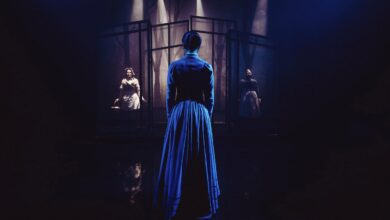
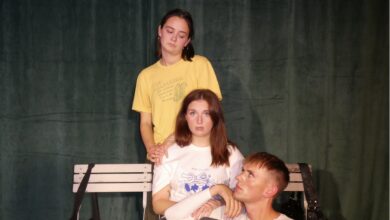
A dazzling array of talent illuminates this popular musical by taking it back to square one. Rating
Unmissable!
It’s forty years since Chess, the Benny Andersson, Björn Ulvaeus (of ABBA fame) and Tim Rice musical, first opened less than a kilometre away from the Royal Academy of Music, at the West End’s Prince Edward Theatre. It was a production famously beset with problems. Original director Michael Bennett withdrew from rehearsals through illness and later sadly died, forcing his replacement, Trevor Nunn, to push Bennett’s technically ambitious production over the line.
This directorial dissonance resulted in a mixed reception. Critics have since rarely deviated from the somewhat lazy narrative that Chess is simply a difficult show. Its authors have subsequently been unable, together or apart, to resist tinkering with it, rendering it bloated and unrecognisable and giving critics the chance to revel in the inevitable pun that it has a ‘chequered’ history.
This amateur production conclusively changes that narrative. I’ve long been an admirer of the work of the RAM’s Music Theatre department. The mid-year medley shows radiate promise and it’s deeply satisfying to see that potential coalesce around a substantial work in which they have successfully cast the entire department across two alternating casts.
Chess’s original concept album’s massed pop and classical forces proved punishingly difficult to recreate in the theatre pit of 1986. Here, with an orchestra comprising the next generation of top-tier orchestral talent, an onstage chorus packed with future leading performers and Mike Walker’s pristine and beautifully balanced sound design, Chess has never sounded better, especially in its huge choral numbers. Musical director George Jackson might approach some of the numbers at whiplash-inducing tempi but still leaves sufficient room for musical and emotional expression. Onstage, diction and phrasing are immaculate, allowing the full wit and sophistication of Rice’s lyrics to shine.
Andersson wrote with little regard for the ranges of traditional theatrical voices, and the resulting score has humbled many a household name. Rewrites are awash with key changes and octave shifts simply to make it performable. Yet, miraculously, this exceptionally talented young cast does not need such accommodations.
Laura Araiza Inasaridse’s Florence is possibly the most impressive performance I have ever seen in the role: warm, assured and commanding. Emilio Moreno Arias, as Freddie, has to negotiate one of the toughest vocal ranges in musical theatre, yet dispatches ‘Pity the Child’ with such confidence that the audience is left feeling he could happily give even more. Adam Haddour’s Anatoly combines power with vulnerability in a magnificent ‘Anthem’. James Wang brings sinister gravitas to Molokov and Rachelle Ojomo gives Svetlana warmth, vulnerability and a beautifully lyrical tone.
Tying all this together is the astute direction of Bruce Guthrie. Where his predecessors have felt empowered to rewrite the show, Guthrie respects the original source material. To make the show work, he applies a vice-like grip to the narrative through thoughtful choices of movement, phrasing and stagecraft, elegantly housed in Andrzej Goulding’s thoughtful and stunning set. The result is a show in which the story flows effortlessly and in which we can finally empathise with the complex central characters. His directorial choices show a deep understanding of the text, and his attention to subtle but important details is what gives this production its gut-punch finale.
I’ve followed this show for forty years, watching it slowly stray from its original form. This assured and informed production is a delight because it deftly directs Chess back to square one, and the result is an absolute triumph. Chess never needed fixing. It just needed the right talent, and at the Royal Academy of Music, it finally found it.
Directed by Bruce Guthrie
Choreography by Ben Harley
Set & Video Design by Andrzej Goulding
Costume Design by Sophia Pardon
Sound Design by Mike Walker
Lighting Design by Imogen Clarke & Rob Halliday
Original Orchestrations & Arrangements by Anders Eljas
Musical Directors: George Jackson & Nathan Feeney
Chess plays at the Royal Academy of Music until Sunday 5 July.