Despite a fascinating historical setup, this production fails to find its heart, resulting in a repetitive, humdrum taleRating
Ok
Most famous now for his novel The Master and Margarita, it may surprise many that early Soviet writer Mikhail Bulgakov suffered immense persecution and censorship in a country that at first welcomed then repressed artists as it moved from post-revolutionary fervour to Stalinist purges. Bulgakov lived under virtual house arrest and saw his work banned for daring to humanize characters and groups deemed antithetical to the Soviet worldview, his only respite coming via direct intervention from Stalin himself.
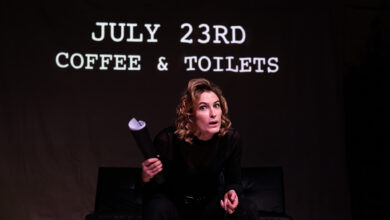
It’s this period of Bulgakov’s life that is the focus of Juan Mayorga’s original Spanish text – here translated by Klaudia Novelles, who also plays Bulgakov’s wife – which promises to be a weighty and thrilling deep dive into artistic expression, the deep damage of state censorship, and the fragile psyche of Bulgakov himself.
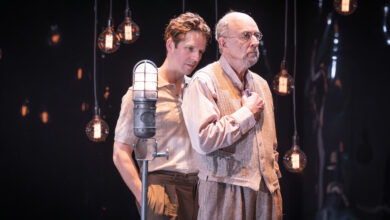
Unfortunately, what we get instead is a rather humdrum tale that sees Bulgakov (Baris Apaydin) write essentially the same letter of appeal to Stalin as his long-suffering wife struggles to smuggle them out of the country, with an imaginary Stalin (Luca Saraceni-Gunner) arriving about halfway through to somehow fail to liven up proceedings. Somehow, with such a fascinating setup, the play commits the worst theatrical crime of all: it’s dead boring.
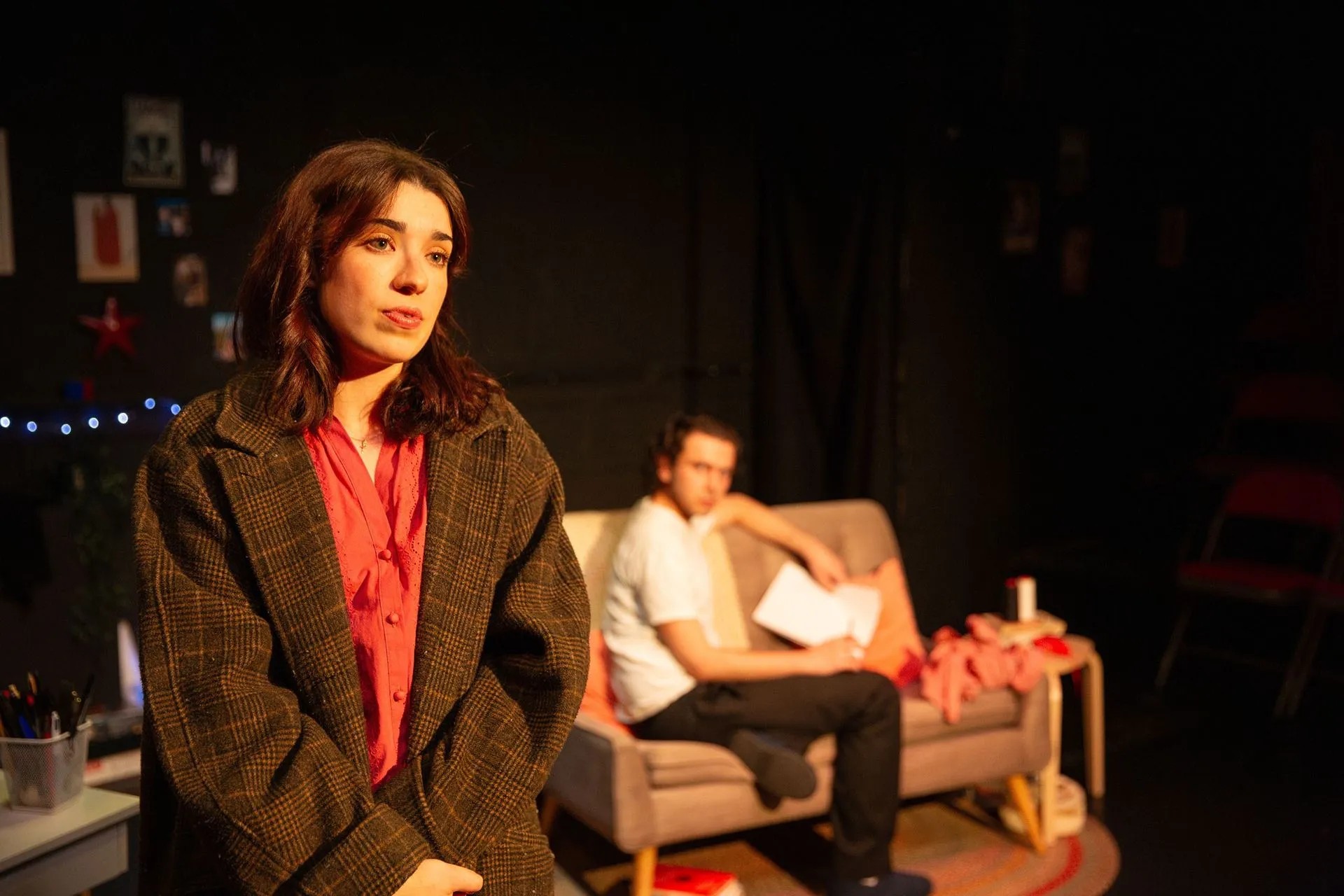
A small amount of this is due to the production itself – a combination of actors who never seem to fully inhabit their characters, direction that achieves volume from those same actors while failing to get their actions to coalesce with their words, and design elements that are either crude or completely missing, such as sound.
But more than anything it falls at the feet of a script that endlessly repeats itself and that, despite the enthralling themes at play, fails to actually get to the heart of anything. Something may have been lost in translation, but a notable example of both these failings comes when major events or figures of the period are brought up, such as Yevgeny Zamyatin and Vladimir Mayakovsky. When you hear these names, get ready to hear them again about a dozen times as basic facts of their lives are repeated ad nauseum while anything interesting or human about them is neglected. They are spoken of as if their Wikipedia articles are being recited and not as the actual flesh and blood people Bulgakov would have known. For example, Mayakovsky being one of the loudest voices criticising Bulgakov’s work at the time. Like with much of the script, what should be delightful becomes dull. There is a failure to find humanity beneath historical novelty.
The company states on the programme that they aim to champion overlooked foreign-language work, and this is a noble goal that will hopefully continue. In this instance, however, the wrong work has been selected, as despite the possibility of improving certain production missteps, this ultimately feels like a version of Bulgakov’s arresting life that is simply not worth telling.
Produced by ThroughLine Collective
Directed by Madeleine Rich
Written by Juan Mayorga (in a translation by Klaudia Novelles)
Production Design by Amelia Feeney
Light and Sound Design by Brian Rudnicki
Love Letters to Stalin has completed its run at the Golden Goose Theatre