
Rebecca Atkinson-Lord celebrates a forthcoming season of bold new work in the Hebrides
An Tobar and Mull Theatre holds a unique place as the Scottish Hebrides’ only producing theatre and multi-artform creative hub. It clearly takes this responsibility very seriously, with a newly launched programme of events that not just entertains but focuses on engagement with the landscape and how the arts can be a force for a more sustainable future. We were excited to learn more, so asked Artistic Director and Chief Executive Rebecca Atkinson-Lord to tell us about the organisation’s vision for the coming years.
Rebecca, thanks so much for talking with us today. Can you tell us a bit about An Tobar and Mull Theatre – its location and audiences?
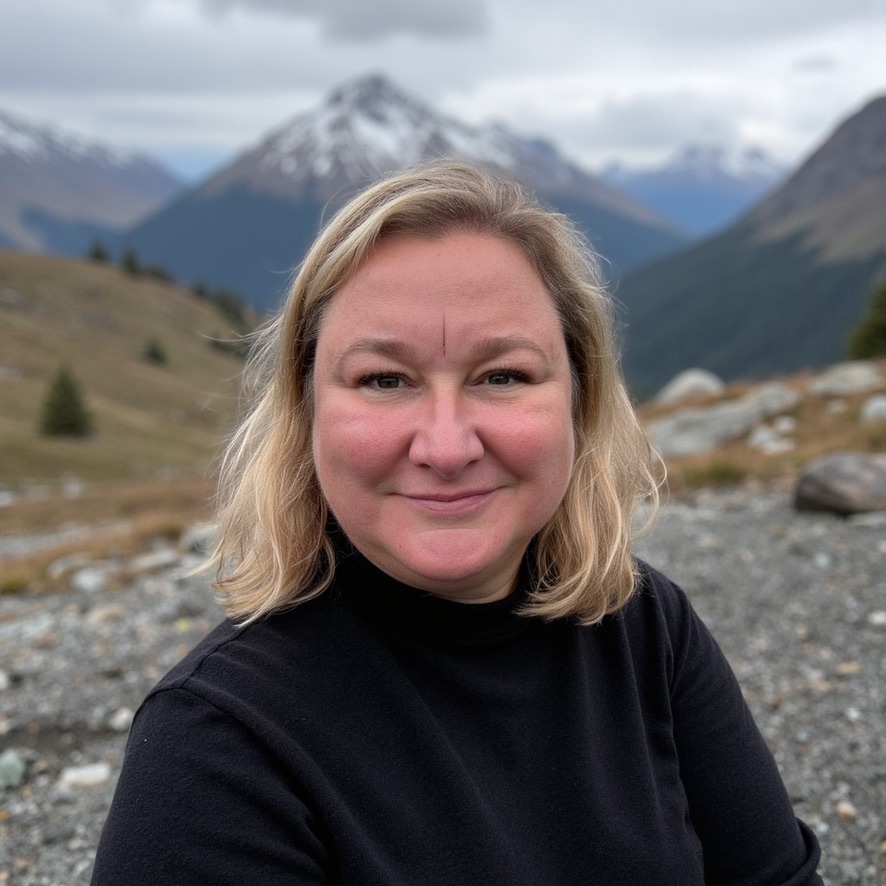
Photo credit: An Tobar
An Tobar and Mull Theatre is a small arts organisation with ideas above its station based on the Isle of Mull in the Hebrides. It’s a place people think of as remote, on the very edge of the Atlantic. For me that sense of being on the edge is really valuable – because it allows us to look at things from a distance and, perhaps gives us a different and valuable perspective on the rest of the UK. We’re not responding to what the future might be, we’re helping to shape it.
We’re the only producing theatre in the Hebrides, but we’re also a genuinely multi-artform space: a gallery, a music venue, a creative learning hub, and a civic gathering place. We’re part of the daily life of the island, a place where people come not just to see work, but to meet, think, and imagine together. The questions the world is asking right now are already being lived here. The role of culture is to help us understand what to do next and to help our audience imagine a better way of living for us all.
Our audience is both intensely local and outward-facing. Mull has a permanent population of around 3,000 people, but that rises to around 17,000 each year when seasonal workers arrive, and we welcome around 700,000 visitors annually. So even in our immediate context, we’re engaging with a constantly shifting and diverse audience.
Beyond that, our work tours nationally and internationally, and that’s a vital part of our purpose. For me, a core part of what we do is to hold space for island voices and experiences within a global cultural discourse. Not as something niche or peripheral, but as something that offers real insight into the questions we’re all grappling with.
What drives me is the idea that work made in a place like Mull can hold both specificity and reach. It can be deeply rooted in island life and culture, in the realities of this landscape, and still speak with clarity and confidence into much wider conversations.
You have an ambitious season of events coming up. What was the inspiration for it?
The starting point was a simple but quite urgent question: what is culture for, right now?
We Know Where We’re Going is our answer to that. The title comes from the Powell and Pressburger film set on Mull, but for me it’s also about setting a direction, not just artistically, but socially and environmentally.

We’ve used the United Nations Sustainable Development Goals as a kind of compass. Not to make preachy issue-based work, but to help distil what really matters in the stories we choose to tell. They give us a shared way of talking about the big challenges, climate, inequality, how we care for one another and the world around us. But I wasn’t interested in creating a programme that explains those ideas. I wanted to make something that people could feel.
So the inspiration was to build a season where those themes are lived through story, music, image and experience. Where you might come in for a night at the theatre or a gig or an exhibition, and find yourself thinking differently about your place in the world by the time you leave.
What excites me is that this work is growing out of Mull. This isn’t theory for us, these are questions we’re living with every day. And that gives the programme a kind of immediacy and honesty that I think audiences really respond to.
Can you talk a bit about the themes in the programme and how you will separate them across several years?
Rather than treating the programme like a series of separate themes, we’ve approached it as a journey that audiences can step into and return to over time.
Each year we bring one of the Sustainable Development Goals into sharper focus, but what really matters is how those ideas come to life in the work itself. This year, we’re centring on Life on Land, and that opens up a whole world of experiences, from powerful theatre and live music to immersive outdoor work and hands-on creative workshops.

You might find yourself walking through Aros Park with a story unfolding in your ears, sitting in the theatre watching a moment from Scottish history come vividly to life, or surrounded by artwork that makes you see the landscape differently. The themes are there, but they’re carried through experience rather than explanation.
Over the three years, the programme builds and expands, but each season is designed to stand on its own as something rich, surprising and deeply enjoyable. You can come for a single event and have a brilliant night out, or you can follow the thread across the years and see a bigger picture start to emerge.
For me, it’s about creating work that draws people in first through curiosity and pleasure, and then stays with them because it’s asking something meaningful.
Many of the events resonate with inclusion, ranging from community participation, to access through British Sign Language, to work for young audiences. What was the thinking behind that?
For me, inclusion is not a theme, it’s a responsibility, and on an island like Mull, it’s also a complex and sometimes uncomfortable conversation.
Mull has a deep and rich cultural heritage, rooted in Gaelic language and traditions, but like many places, that heritage has been shaped, and at times overwritten, by successive waves of incomers over centuries. That history doesn’t just sit in the past, it lives in the present. It can create real tension around questions of belonging, identity and who gets to take up space on a small island.
So when we talk about inclusion, we have to be honest about that complexity. It’s not simply about opening the doors wider. It’s about asking: how do we hold space for multiple experiences of this place at once? How do we honour and protect what is indigenous and rooted here, while also recognising that new voices and perspectives are part of the evolving story of the island?
That thinking shapes the programme in very practical ways, from who is making work here, to how we invite participation, to the kinds of stories we choose to tell. It also shapes the way we hold the space itself, as somewhere that can accommodate difference, disagreement and dialogue.
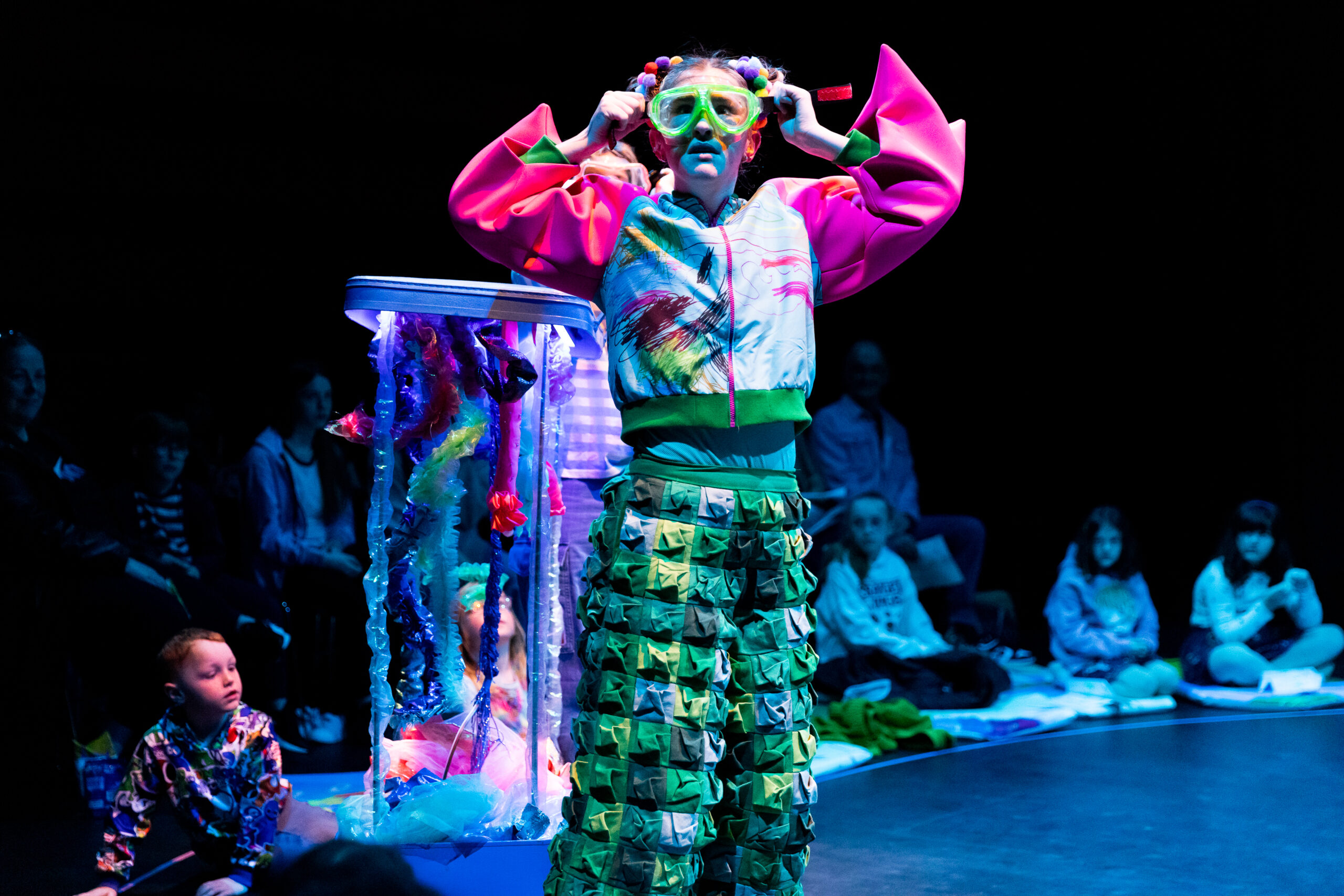
Clare Adam and Autistic Dance Artist, Lesley Howard
In many ways, Mull is a microcosm of much wider global questions about identity, migration, heritage and coexistence. What the arts allow us to do is to explore those questions with nuance and humanity, to create space where people can encounter perspectives beyond their own, and perhaps begin to see the value in that complexity.
That feels like essential work right now.
Despite being a fairly remote creative hub you don’t seem to have difficulties reaching audiences, or bringing in a vast range of creative collaborations. How does this work? How is island life reflected within the programme?
Island life is the starting point for everything we do, but I’m very deliberate about how we frame it.
I’m not interested in presenting Mull as picturesque or peripheral. What I see instead is a place where many of the defining questions of our time are being lived in real terms, climate, sustainability, community, cultural identity.
You see that reflected in the programme through work that engages directly with landscape and environment, but also through the social dynamics of the work, ideas of resilience, interdependence, and care.
For me, Mull offers a kind of clarity. The systems we rely on are more visible here. The consequences of decisions are more immediate. And that makes it a powerful place from which to ask bigger questions.
It’s not about bringing the world to Mull. It’s about recognising that Mull already has something important to say to the world.
I think what we’re proving, quite quietly but very clearly, is that cultural leadership doesn’t have to be rooted in metropolitan centres.
What we have on Mull is a different kind of creative ecology. Artists come here because it offers something increasingly rare: space to think, time to develop, and a depth of engagement with both place and people. Audiences encounter work differently here too, there’s a closeness, a sense that something is being shared rather than simply presented.
But none of that happens by accident. It’s built through long-term relationships, with artists, with partners, and with our community. We invest in those relationships over time, and that creates a flow of ideas and collaboration that extends far beyond the island.
Crucially, we are ambitious about what this place can hold. We don’t scale our thinking down because of geography, we let geography sharpen it. Being on Mull brings a clarity about what matters, and that clarity feeds directly into the work.
We often talk about AT&MT’s work as a beacon – lighting the way out into the world and back home all at once. I’m interested in the exchange between local and global, how work made here travels out into the world, and how those wider conversations return and reshape what we do. That movement, in both directions, is where the energy is.
And I think there’s something else happening too. At a time when many of the world’s biggest challenges are being felt most acutely in places that are often described as “peripheral”, there is a real opportunity for leadership to emerge from those edges.
Mull is one of those places. And what we’re building here is not just a programme, but a proposition: that bold, internationally relevant cultural work can be made anywhere, and that some of the most vital perspectives on our shared future might come from exactly these kinds of places.

Stand and Deliver: The Lee Jeans Sit-In
Thanks very much to Rebecca for this amazing insight on what promises to be an exciting time for An Tobar and Mull Theatre.
You can find out more about the programme of events below.