Review: The Rite of Spring/Mirror, Sadler’s Wells
Sadler’s Wells East

An inventive double bill that brings AI and live motion capture to contemporary dance, yet is
underwhelming in its executionRating
Ok
AI seems to be the hot topic dominating most industries at the minute. But what does it mean for the arts? Alexander Whitley Dance Company bring that very dilemma to the stage of Sadler’s Wells East for the double bill The Rite of Spring/Mirror. Utilising a combination of dance, live motion capture and AI in a unique dance endeavour, these two pieces dive headfirst into the ongoing battle between human and technology.
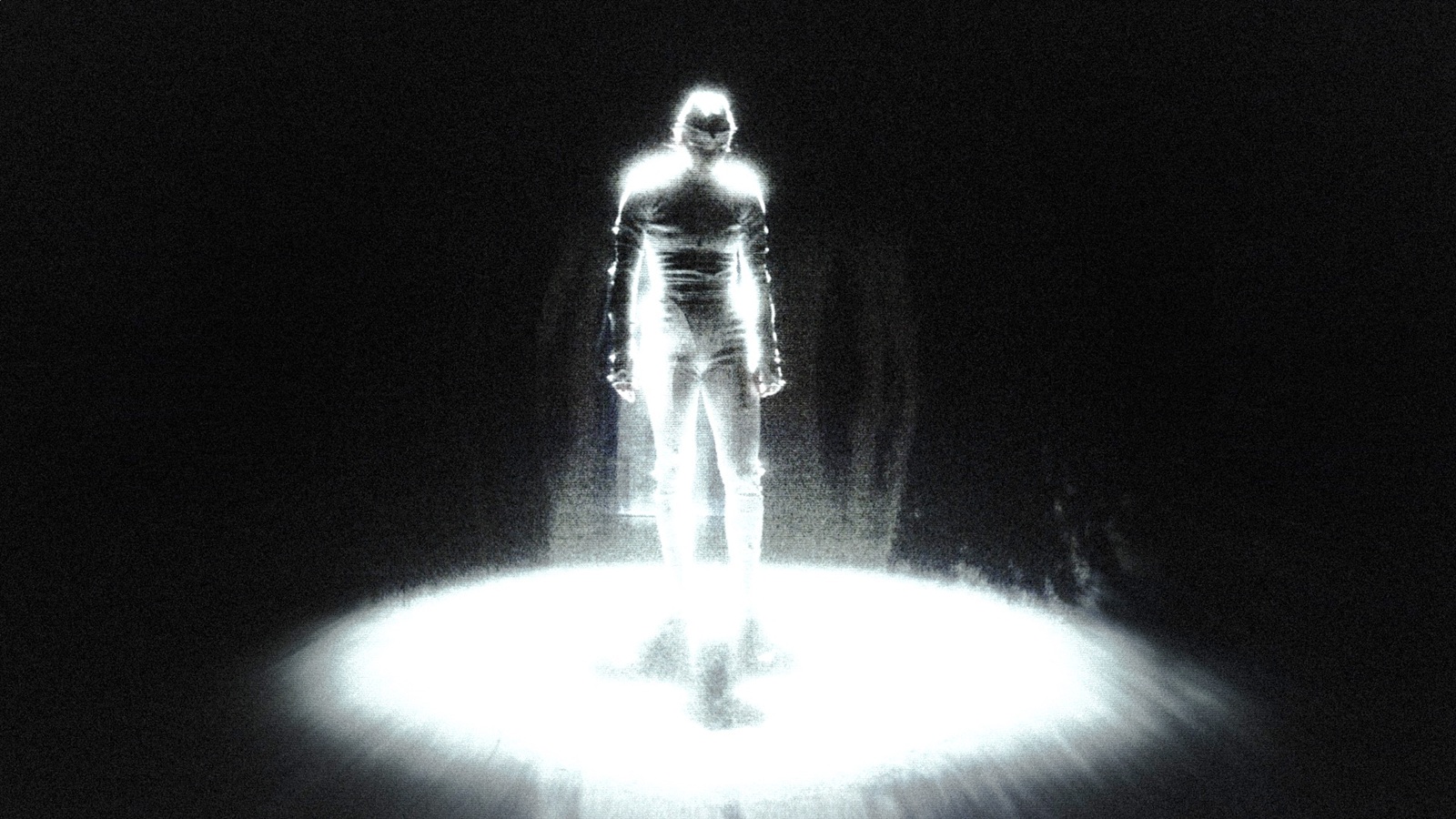
The evening begins with Mirror, a duet that follows a fairly average relationship narrative; boy meets girl, there’s tension, she leaves, then they reunite in embrace. Technology becomes the crux of their disconnection, driving a wedge between the human selves. At first, they dance with beautiful connection and symmetry, but as technology surfaces, the relationship becomes strained, exacerbated by more individualistic and distanced movements. This is enhanced by the use of technology. Skin-tight Lycra costumes peppered with tracking dots project ‘mirror’ versions of the dancers onto screens situated both behind and in front of the performers. Rectangular screens partition each dancer and projected digitised landscapes feed into the ever growing anxiety induced by concerns over technology and the loss of what makes us human.
Both this use of technology and lighting are at points detrimental to the dancers’ performance. Low lighting and projections that cover them often obscure and shadow their articulated movements, making it difficult to see. However, at other points they’re used to great benefit, with strobing lights that evoke a digitised, fractured dancer in a mesmerising, visual way. Mirror is evidently a commentary on worries about AI consuming the self (as visually depicted here) and causing rifts in human relationships, but as a viewer, one can’t help but feel a bit frustrated.
Whitley’s take on The Rite of Spring – always a feat for choreographers given its cult status in the arts – uses these technological elements in a less obtrusive way for viewers. This version retains the themes of community, violence and primality, yet replaces nature with technology, a seemingly nuanced take for the contemporary climate. Motion capture here creates an increasing multiplicity of digitised dancers projected on the screen behind, as they surround the sacrifice in primal attack, wrapping cords around them from a maypole that sits centre stage.
The choreography begins well, matching the suffocating, heightening tension of Stravinsky‘s score before moments of distorted sound bring us back to anxieties surrounding technology. However, the piece loses pacing at the most critical point of the sacrifice and never regains it, resulting in an underwhelming interpretation of this iconic score. Both Mirror and The Rite of Spring struggle with pacing and tension building. Whilst it is intriguing to see the introduction of AI into theatre spaces, this double bill has not convinced me that it is a step in the right direction for the dance industry. Here, it is a nuanced, clever idea that does not translate well in its execution.
Artistic direction and choreography by Alexander Whitley
Creative technology by Luca Biada
Costume and set design by Mirella Weingarten
Lighting design by Joshie Harriette
Dramaturgy by Joshie Harriette
Music by Galya Bisengalieva (Mirror) and Igor Stravinsky, Orchestre Philharmonique du Luxembourg (The Rite of Spring)
The Rite of Spring/ Mirror plays at Sadler’s Wells until Saturday 21 March.