Verse and invertebrates combine in a fun-filled hour of music and musings on mini beasts.Rating
Excellent!
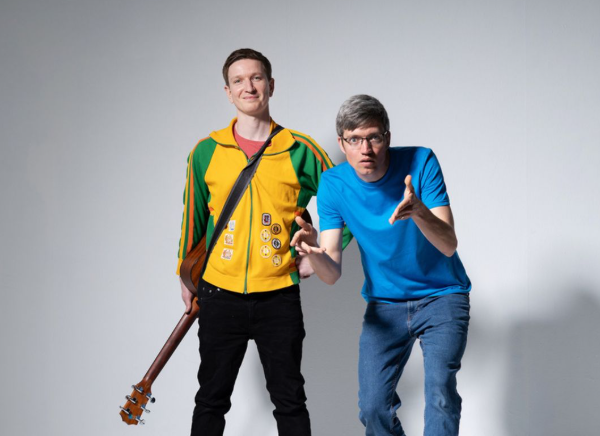
Amongst the things that kids love the most must surely be the bug hunt. We’ve all done it – rolling logs to check for insects, studying caterpillars and their incredible metamorphosis into beautiful butterflies. It’s an adventure often best undertaken with friends, and here at the Half Moon Theatre we were offered just that, in an entire hour of exciting insect investigation and information with the amazing duo that is poet Simon Mole and musician Gecko.
The Great Big Bug Show is no ordinary lecture on insects. It’s brought vibrantly to life by Mole’s poetry and Gecko’s upbeat, memorable music (would it be too cheesy to say there are earworms in his repertoire?). The pair are a great team who treat their audience with friendly respect and seem genuinely interested in their responses as they encourage them to discuss the topic through a variety of user-friendly interactions. It’s all very chilled and improvised, creating an upbeat vibe in the room.
From knowledge that millipedes existed millions of years before dinosaurs, to discussion of habitats, there are loads of fun facts to be shared, delivered with energy, rhythm and an inclusive approach. Often this is through amusing, punchy poetry, such as when we learn of the bombardier beetle and get to join in with the ‘pop pop pop’ noise with which he warns off a frog. Extracts from Mole’s books are projected in large format at the rear of the stage so that families can read and understand the poems for themselves, adding an extra level of access.
The audience members are locked into the show from the earliest moments, literally becoming part of the conversation when Gecko records their reaction to add to a loop track. He’s a great addition to Mole’s poetic rapping as he improvises and creates brilliant background music, perfect for when we all become leafeater ants and race to get leaves around the auditorium. The song ‘Rock and Roll Ladybird’ is a big hit, with the audience contributing silly ideas for dance moves, which we then all get to try out.
The show ensures that entertainment and laughter are foremost in importance while conveying the factual content, and with a suggested audience age range of 4-11 years, there is really something for everyone to enjoy. There are some excellent gags, including Mole learning the bees’ waggle dance from Duolingo. A highlight involves a simple magic trick that sees Gecko disappear from behind a curtain, only to be found shrunk to the size of an ant. Small members of the audience literally gasped as he vanished into thin air!
What the piece might benefit from, perhaps, is a few more images of actual bugs: they’re talked about and impersonated, but we don’t see many pictures of them, which is a little distancing from reality. Nonetheless, the conversation about conservation starts here in a highly fun and collaborative way.
This is a joyful hour of family fun that’s informative in the most inclusive manner and an excellent opportunity to get some poetry and music into your life. You’ll leave the theatre bopping along – perhaps picking up the book to read on the way out – and encouraged to think about how we can help bugs and the environment, which is a valuable lesson indeed.
Written by Simon Mole
Music by Gecko
The Great Big Bug Show, aimed at ages 4-11, has completed its run at the Halfmoon Theatre