A devastating solo performance with a beautiful score, exposing the truth behind wartime “comfort stations”.Rating
Unmissable!
This is an important slice of history that has too often been ignored. The Comfort Woman at Omnibus Theatre, which has been revised since its 2024 run, is a remarkable solo performance of sobering storytelling that confronts the Japanese military’s system of enforced sexual slavery with stark, unflinching clarity. This new version deepens the experience through the addition of live music, with Ji Eun Jung performing on the gayageum, a traditional Korean instrument rarely heard in the UK. This beautiful underscoring heightens the emotional gravity of the piece.
Some context first: in the late nineteenth and early twentieth century, Japan began to grow as a colonial power in Asia. As countries such as Taiwan and Korea fell under Japanese control, its military began regulating brothels near battle zones, in an attempt to control soldiers’ behaviour and limit the spread of sexually transmitted diseases. These became known as “comfort stations”. Korea became a central hub for this network of institutionalised sexual slavery.
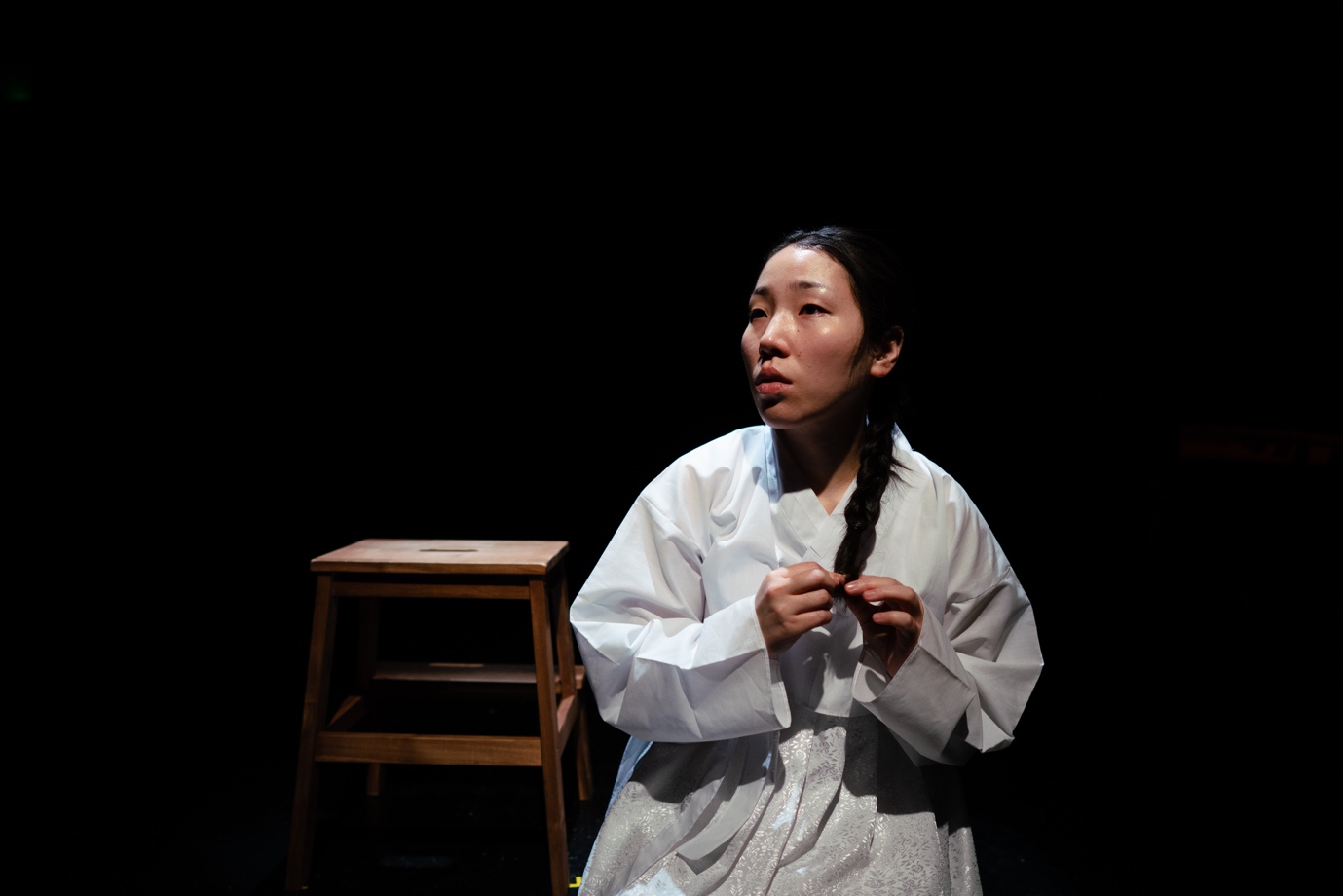
From this context emerges the story of Minja. Created from countless real testimonies of women subjected to unimaginable violence, the seventy-minute performance is inevitably intense. But it is also gripping and deeply human. Minjeong Kim, who also wrote the piece, delivers a performance of extraordinary emotional precision. Dressed only in a simple white robe, Minja’s journey from innocence to devastation unfolds before us with heartbreaking clarity. Kim holds the audience in a state of quiet attention, showcasing raw vulnerability.
Under the deft direction of Anna Udras, the physical storytelling becomes a pivotal tool. Moments such as Minja hauling heavy barrels of makgeolli, or enduring invasive medical examinations at the hands of military doctors, are chillingly staged. Abigail Sage’s lighting design enriches the production, shifting subtly between day and night while transforming the stage into a series of locations, with elegant simplicity.
When liberation for Minja – and the thousands of other girls – finally comes after years of brutality, it is not presented as triumph. Instead, the emotional wreckage remains. Minja, broken by what she’s endured, asks in anguish: “Was this my fault?” Only at the play’s conclusion do the stark facts emerge. Minja was just thirteen when she was taken. It’s estimated up to 200,000 women were forced into sexual slavery during the Second World War. An official apology from Japan has yet to come.
The addition of Jung’s live gayageum score proves to be a quietly transformative element. The mournful, fervent soundscape is threaded through the narrative, intensifying its emotional force. The production now feels even more fully realised: one woman’s story standing in for thousands.
This is a sobering and essential piece of theatre. With clarity, dignity and immense craft, the creative team have ensured this painful chapter of history is not allowed to fade into silence.
Written by Minjeong Kim
Directed by Anna Udras
Music and arrangements by Ji Eun Jung
Produced by Olivia Woods
Movement director: Laure Bachelot
Lighting director: Abigail Sage
The Comfort Woman has now completed its run.